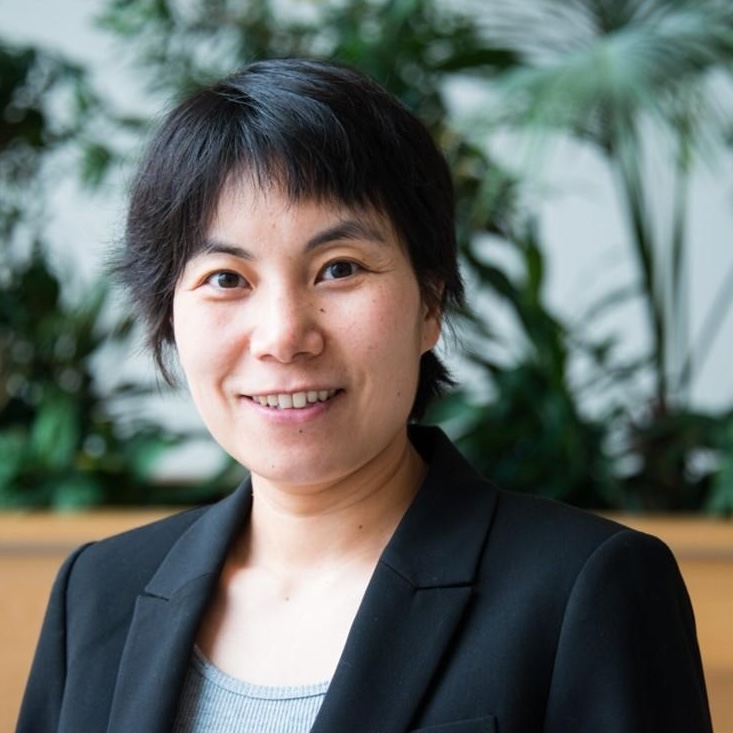
Education and Training:
- Postdoc, Department of Plant Biology, Carnegie Institution for Science, Stanford, 2010-2016
- PhD, University of Wisconsin-Madison, 2005-2009
- BS, Nankai University, China, 2001-2005
Professional Experience:
- 01/2024-present, Associate Member & Principal Investigator
Donald Danforth Plant Science Center ( DDPSC ) - 10/2016-12/2023, Assistant Member & Principal Investigator, DDPSC
- 11/2017-present, Adjunct Faculty, Department of Biology, Washington University in St. Louis ( WUSTL )
- 11/2017-present, Adjunct Faculty, Division of Plant Science, University of Missouri-Columbia ( UM )
- 04/2024-present, Adjunct Faculty, Department of Biology, University of Missouri-St. Louis ( UMSL )
Current Research Interests:
The Zhang lab studies how photosynthetic cells respond to high temperatures by using both green algae and land plants as models, with focus on photosynthesis.
Heat stress impairs plant growth and reduces crop yield. Global warming increases the frequency with which photosynthetic organisms are exposed to damaging high temperatures. To engineer crops with higher thermo-tolerance, it is imperative to understand how photosynthetic cells sense and respond to high temperatures.
Photosynthesis uses sunlight energy to make food, and it is essential for agricultural production. However, photosynthesis is one of the most heat-sensitive processes in plants. To meet the future raising global food demand, we need to increase agricultural yield by engineering more robust and more efficient photosynthesis that can adapt to high temperatures. To achieve this goal, it is crucial to understand how photosynthesis responds to high temperatures and what factors limit its adaptation.
Our research employs two main model organisms:
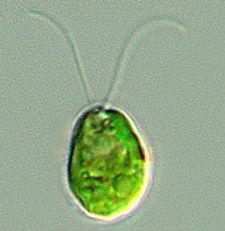
1. The eukaryotic, unicellular green alga Chlamydomonas reinhardtii is a powerful model to study cellular processes, especially photosynthesis and stress responses. Chlamydomonas has these advantages for research : (1) it grows fast (6-8 h doubling time), is haploid, has ample genetic and genomic resources with high gene editing efficiency (CRISPR); (2) it has a genome-saturating, indexed, mutant library, facilitating both reverse and forward genetic screens under heat stress; (3) it has high-throughput and quantitative barcoding approach, enabling tracking growth rates of individual mutants in pooled cultures and screening for heat-sensitive mutants at genome-wide scale; (4) it grows in light by photosynthesis but also in dark with supplied carbon source, allowing maintenance of photosynthetic mutants in dark or low light; (5) its unicellular nature is suitable for functional genomics with several well-developed high-throughput, genome-wide techniques.
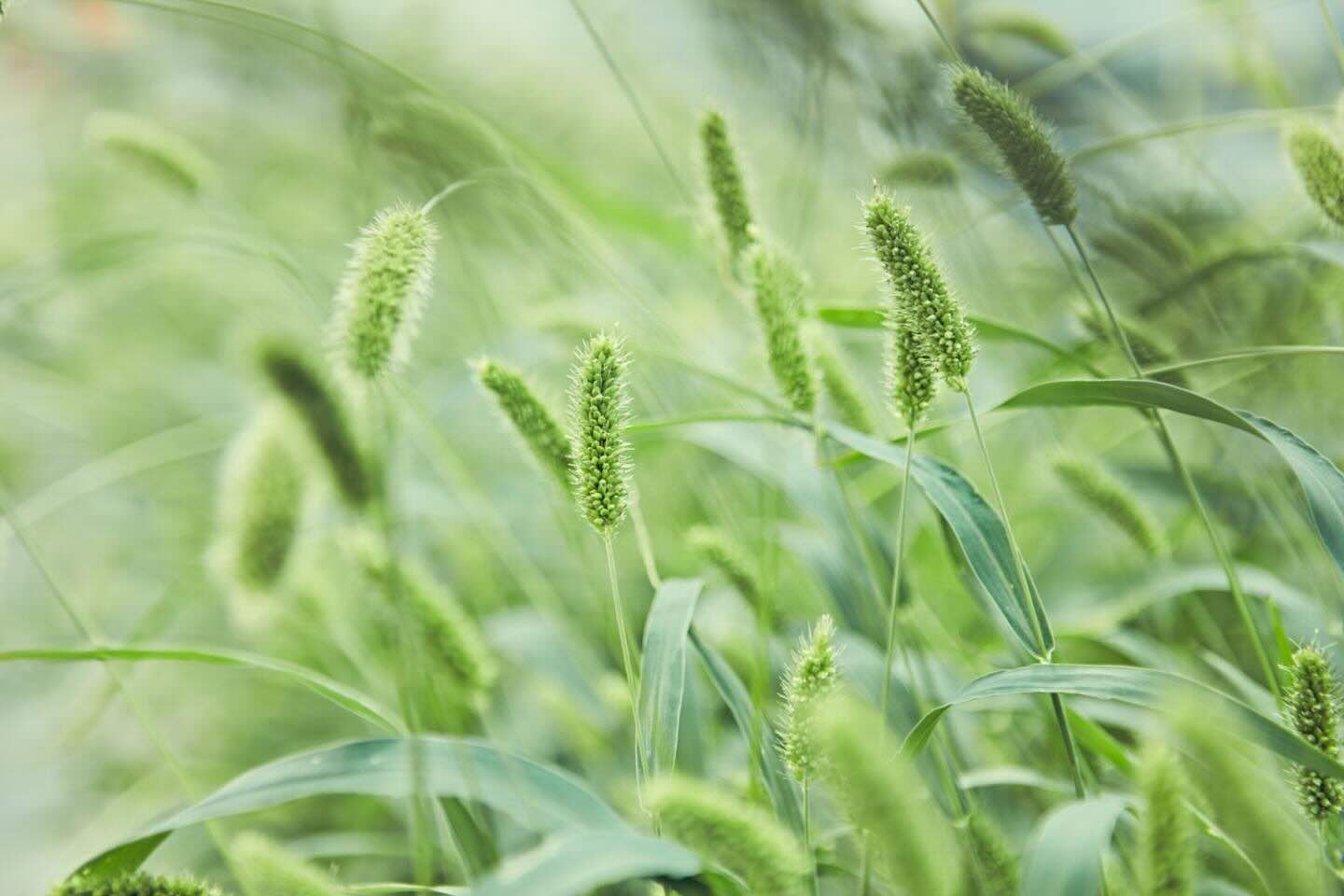
2. The green foxtail C 4 grass model Setaria viridis , is an excellent model for studying C 4 photosynthesis . Many plants use C 3 photosynthesis, in which the first carbon compound produced contains three carbon atoms, e.g. rice, wheat, and soybean. Some important staple crops utilize C 4 photosynthesis, in which the first carbon compound produced contains four carbon atoms, e.g., maize, sorghum, and sugarcane. C 4 photosynthesis has higher tolerance to high temperatures and drought than C 3 photosynthesis. Understanding the regulation of C 4 photosynthesis can help improve the efficiency and stress tolerance of C 3 photosynthesis. Setaria has these advantages to study C 4 photosynthesis : (1) it has short stature and relatively short generation time (8~10 weeks from seed to seed, 2 weeks from sowing to sufficient size for photosynthetic measurements); (2) it has a smaller genome size (400 Mb versus 2.3-2.7 Gb in maize) and yet a similar number of genes as maize (38,000 in Setaria versus 33,000 in maize); (3) it self-pollinates and produces hundreds of seeds; (4) it has highly efficient transformation protocols (up to 25%, from transformation to the T0 plantlets in about 10 weeks), advanced forward genetics protocols, and high-throughput phenotyping tools; (5) more importantly, Setaria is an excellent model species for bioenergy crops, maize and sorghum, as all three belong to the same C 4 photosynthesis subtype (NADP-ME type).
Recent Teaching Activities:
Photosynthesis: light reaction, carbon fixation, and photoprotection
Algal biology and tools
Stress responses
Publications:
Graduate Student Recruitment:
Zhang Lab is seeking highly motivated graduate students. If you are interested, please contact Ru Zhang at rzhang@danforthcenter.org with a CV and a 1-2-page research statement with career goals.
Contact Information:
Ru Zhang
Donald Danforth Plant Science Center (DDPSC)
975 N Warson Road, Olivette, MO 63132, USA