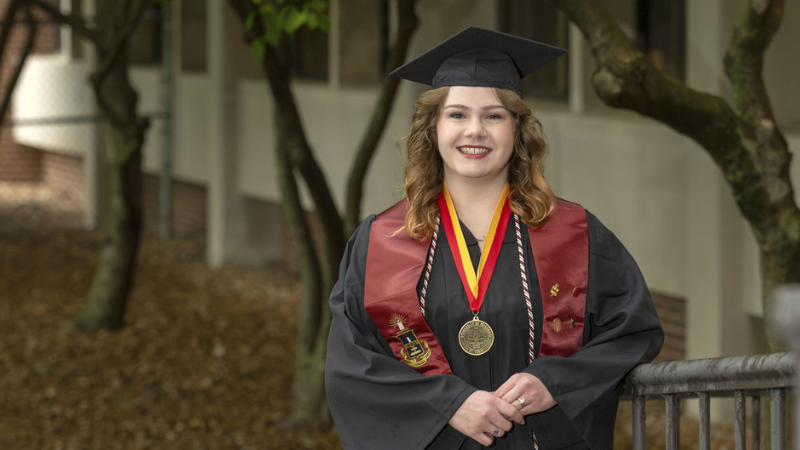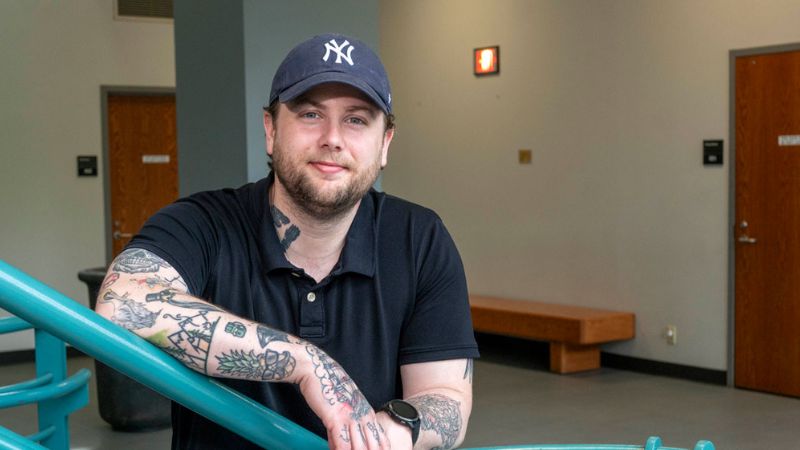
The Supplemental Instruction (SI) program provides academic support for students in large, required, historically challenging courses. Faculty members first collaborate with the CTL Senior Coordinator for Student Embedded Support Programs to identify potential SI Leader. These SI Leaders are undergraduate students who have taken the course, done well, and are then embedded back into the course. The SI Leaders attend lecture, participate in class activities, and serve as a model student for their peers. Additionally, they hold regular, voluntary study sessions outside of class to help students develop study skills and master challenging course content.
Want to Be an SI Leader?
Fall 2026 applications have closed. Check back in October for Spring 2027 opportunities!
SI Leaders earn $18 per hour for approximately ten hours per week. Returning SI Leaders will have an opportunity to become Head SI Leaders and earn $20 per hour. To be eligible, students must have taken the course before and done well (B+ or higher). Students of all races, religions, gender identities, sexual orientations, national origins, ages, disability statuses, and veteran statuses are encouraged to apply.
In Fall 2025, UMSL launched an updated strategic approach to SI, concentrating resources on courses where additional support can make the biggest difference for student success. Building on that progress, we are continuing to partner with academic leaders and department chairs to prioritize historically challenging, high-enrollment courses and are aiming to provide SI support for the in-person sections of these courses.
For courses with online sections, we will work with instructors to determine if the pacing and content of their section align with the in-person section, and they are welcome to extend the invitation to their students to join the SI sessions.
We are grateful for the many faculty who have engaged with us through this transition and look forward to deepening these collaborations. We will continue to share updates as we evaluate outcomes and refine our approach.
- ACCTNG 2400: Fundamentals of Financial Accounting
- ACCTNG 2410: Managerial Accounting
- BIOL 1131: Human Physiology and Anatomy I
- BIOL 1162: General Microbiology
- BIOL 1821: Introductory Biology: Organisms and the Environment
- BIOL 1831: Introductory Biology: From Molecules to Organisms
- BIOL 2012: Genetics
- BUS AD 1107: Quantitative Methods for Business
- BUS AD 2900: Legal Environment of Business
- CHEM 1111: Introductory Chemistry I
- CHEM 1121: Introductory Chemistry II
- CRIMIN 1100: Introduction to Criminology and Criminal Justice
- ECON 1000: Economics in Everyday Life
- ECON 1001: Principles of Microeconomics
- ECON 1002: Principles of Macroeconomics
- INF SYS 2800: Information Systems Concepts and Applications
- MATH 1020: Contemporary Mathematics
- MATH 1030: College Algebra
- MATH 1035: Trigonometry
- MATH 1100: Basic Calculus
- MATH 1105: Basic Probability and Statistics
- MATH 1320: Introduction to Probability and Statistics
- MATH 1800: Analytic Geometry and Calculus I
- MATH 1900: Analytic Geometry and Calculus II
- PHYSICS 1011: Basic Physics I
- PHYSICS 2111: Physics: Mechanics and Heat
- PSYCH 2201: Psychological Statistics
- SCMA 3300: Business Analytics and Statistics
What Students Are Saying About SI
I began to look forward to my Monday SI session with the regular people that showed up and it was nice to have that camaraderie outside class.It also was relieving to learn that many people had the same struggles with the same topics.

The SI Leader had a very positive impact on my experience at UMSL. Their support helped me succeed in this challenging course, which made me feel more confident in my ability to succeed in college-level classes. Seeing a peer leader who was knowledgeable and approachable also helped me feel more connected to the campus community and the support resources available to students.

The most rewarding part of my job has been hearing feedback from students that they seem to actually be grasping the information better. I also quite enjoyed just developing a greater command of the material and building a foundation that could be beneficial to not just me, but my hypothetical future semester(s) at teaching others.
Being an SI leader has led me to become much more empathetic towards all of my professors, because I am now easily able to put myself in their place when they are teaching, and understand their struggles. It has also helped me to understand that a large aspect of being a good teacher and role model is simply being approachable. When students feel comfortable asking questions and giving feedback, it makes the learning process easier on everyone and more productive overall.
The most rewarding part of my job as an SI leader has been helping students learn how to critically analyze various philosophical articles and arguments throughout the semester. Hearing the excitement in a student's voice when they finally understand an argument or come up with a creative critique is incredibly gratifying and makes me feel like I am being useful to students.
This experience has shown me that successful learning is not only determined by grades.
SI Leaders in the News