Director Reda Amer
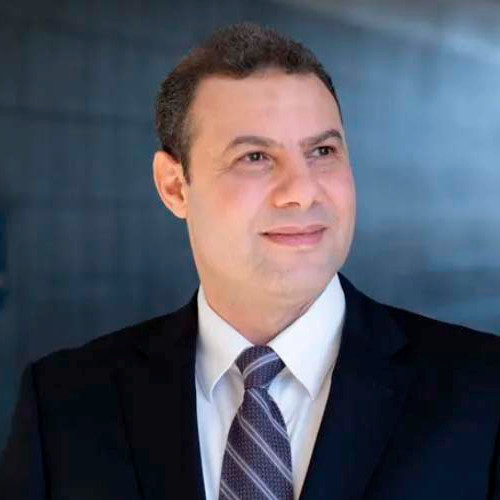 Dr. Reda Amer is a geospatial scientist, educator, researcher, and academic leader with more than 25 years of experience advancing geospatial science, technology, and higher education. He serves as the Founding Director of the UMSL Geospatial Collaborative and a tenured Associate Professor of Computer Science at the University of Missouri–St. Louis.
As Founding Director, Dr. Amer leads a university-wide interdisciplinary initiative dedicated to advancing geospatial education, research, innovation, and workforce development. He has established strategic partnerships with government agencies, academic institutions, and industry leaders. He also initiated and leads the regional Geospatial Workforce Development Program, connecting academia, government, and industry to strengthen the geospatial talent pipeline and expand opportunities for education, research, and innovation.
Dr. Amer is advancing Geospatial Super Intelligence (GeoSI) by integrating super intelligence, Earth observation, and intelligent geospatial analytics to accelerate scientific discovery, enhance geospatial intelligence (GEOINT), and support informed decision-making. His expertise spans Geographic Information Systems (GIS), remote sensing, geophysics, geomatics, computer vision, LiDAR, synthetic aperture radar (SAR/InSAR), photogrammetry, and advanced spatial analytics. His interdisciplinary research addresses challenges in GEOINT, environmental monitoring, coastal resilience, critical mineral and rare earth element (REE) exploration, natural resource management, and sustainable development.
Before joining UMSL, Dr. Amer held academic and geospatial leadership roles at Tulane University and Lamar University, contributing to the development of geospatial academic programs and interdisciplinary research. He has authored numerous scholarly publications, mentored students and researchers, and presented his work at national and international conferences.
Dr. Amer earned his Ph.D. in Geophysics and a Graduate Certificate in Geospatial Science from Saint Louis University. He is committed to advancing geospatial innovation, strengthening partnerships across academia, government, and industry, and preparing the next generation of geospatial scientists and technology leaders.
VADM Robert Sharp
Former Director of the National Geospatial-Intelligence Agency
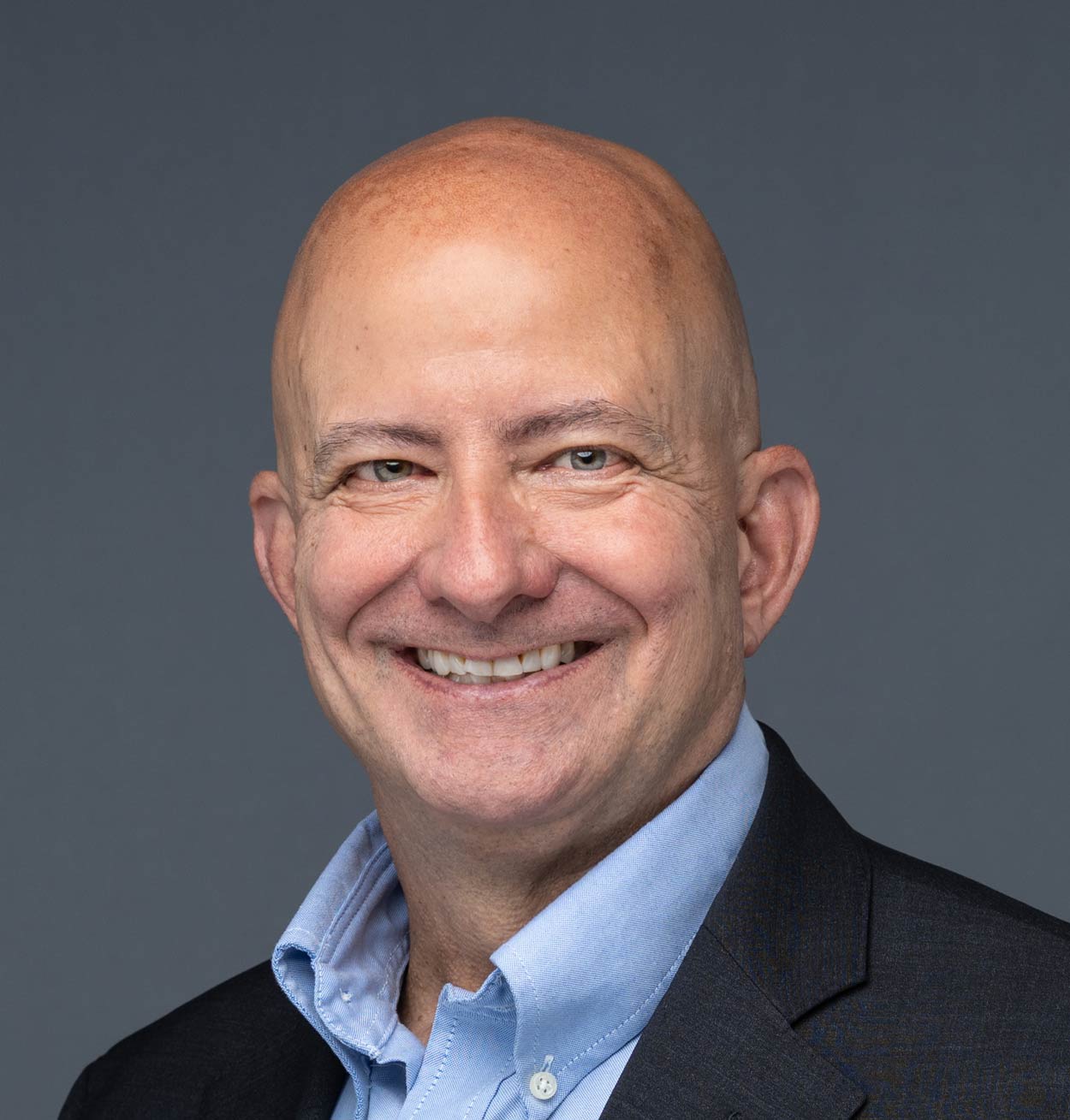
Vice Admiral Bob Sharp, USN (Ret.) served as the Director of the National Geospatial-Intelligence Agency, one of our nation’s premier intelligence agencies, from February 2019 until June 2022.
As Director, he and his team were responsible for delivering world-class geospatial intelligence to provide a decisive advantage to policy makers, military service members, intelligence professionals, first responders, and international partners. He was accountable for over 14,000 civilian, military and contractor employees working around the clock and globe in over 120 locations world-wide.
Bob served as a Naval Intelligence Officer for over 34 years, and as a leader within the Navy’s Information Warfare Community since its inception. He has decades of leadership experience in the Intelligence, Defense, and National Security arenas.
He is known for his extensive experience developing and motivating cohesive teams to solve complex problems in dynamic situations. He leveraged the global pandemic challenges as an opportunity to reimagine and improve business processes, helping his agency emerge stronger, more agile, and more human from the experience.
He holds a Bachelor of Arts from the University of the Pacific and a Master of Science degree in National Resource Strategy from the Industrial College of the Armed Forces.
Geospatial Instructors
 Gizelle Cota, Assistant Teaching Professor
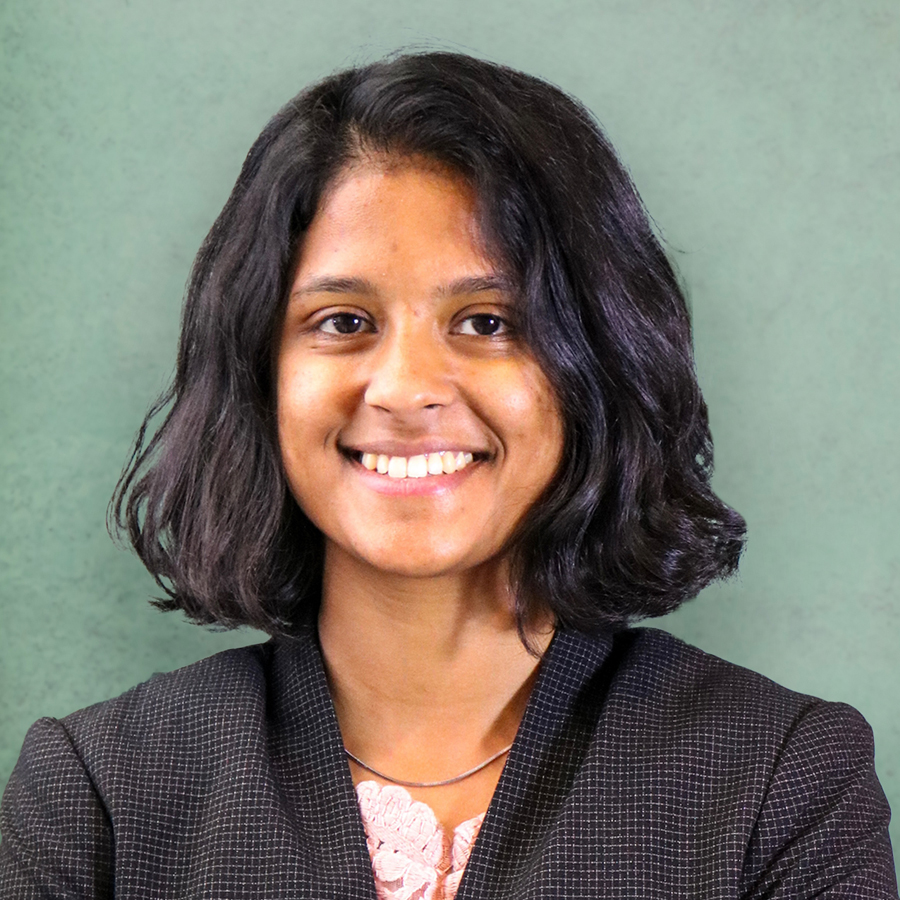
Ms. Gizelle Cota holds a Master’s degree in Geographic Information Science (GIS) from Saint Louis University and a Bachelor’s degree in Geology from the University of Mumbai. Her graduate research focused on leveraging machine learning, remote sensing imagery, and GIS methodologies to address forest conservation challenges and analyze the impact of human geography on the Betampona Nature Reserve in Madagascar.
Ms. Cota has since built a varied career in the geospatial field through her expertise in GIS analysis and geospatial data science. As a GIS Analyst for the Saint Louis Development Corporation, she managed and maintained the organization’s geospatial datasets and developed interactive web applications to enhance public engagement and facilitate data accessibility for community stakeholders.
Subsequently, Ms. Cota served as a Geospatial Data Scientist at the Taylor Geospatial Institute at Saint Louis University, where she contributed to advanced geospatial research. In this role, she supported faculty projects by integrating geospatial data and methodologies, while also playing a key role in developing and maintaining comprehensive documentation for drone data collection and processing workflows.
Ms. Cota’s background in GIS, machine learning and geospatial technology brings invaluable expertise to the UMSL Geospatial Collaborative. Her work exemplifies the application of geospatial science to solve complex environmental and societal challenges.
Geospatial Researchers
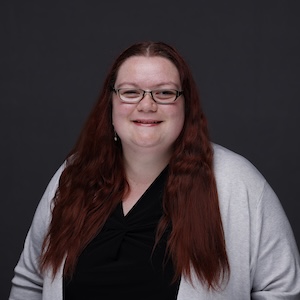
Dr. Emily Graves is currently a Post-Doctoral researcher at the University of Missouri - St. Louis' Geospatial Collaborative, where her research focuses on combining remote sensing data analysis with machine learning. Her projects include identifying regions along the western coast of Alaska at risk for coastal erosion, sea level rise, flooding, and permafrost thaw subsidence.
Dr. Graves completed her Ph.D. in Geophysics at the University of Alaska Fairbanks. Her dissertation utilized interferometric synthetic aperture radar (InSAR) and gravimetry measurements from the Gravity Recovery and Climate Experiment (GRACE) satellites to quantify surface deformation from natural and anthropogenic sources and explore aquifer dynamics in the American Southwest. She completed her Master's degree in Geophysics at the University of Texas at El Paso and a Bachelor's degree in Geology at Lake Superior State University.
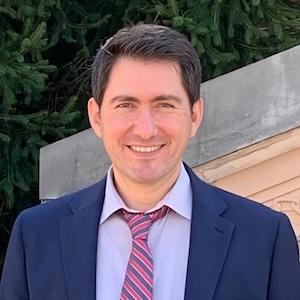 Mehdi Javid is a Postdoctoral Researcher at the UMSL Geospatial Collaborative, where he develops GeoAI and machine learning methods for large-scale geospatial data analysis. His research focuses on remote sensing, computer vision, geospatial foundation models, and artificial intelligence for environmental and public health applications, including wildfire risk prediction and disease transmission modeling. He holds a Ph.D. in Mechanical Engineering and a master's degree in Data Analytics from the Georgia Institute of Technology, bringing an interdisciplinary perspective that bridges engineering, data science, and geospatial analytics. His work emphasizes developing scalable AI solutions that integrate satellite imagery, spatial data, and advanced machine learning techniques to address complex scientific and societal challenges. Mehdi is passionate about translating cutting-edge AI research into practical tools that support decision-making and advance geospatial science.
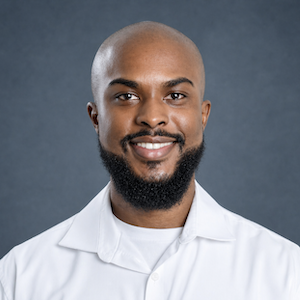 Dr. Martell Bell is a Postdoctoral Fellow with the UMSL Geospatial Collaborative, where he applies artificial intelligence and machine learning to complex geospatial challenges. His current research focuses on AI-enabled analysis of drone footage for rapid disaster assessment and the development of accessible technologies that support natural-hazard preparedness, emergency response, and community recovery. He also mentors undergraduate and graduate researchers in research design, technical communication, and responsible AI development.
Dr. Bell earned his B.S., M.S., and Ph.D. in Mechanical Engineering from the University of Iowa, where his doctoral research examined data-efficient computer vision for manufacturing automation. His broader interests span geospatial AI, computer vision, engineering education, and the development of practical technologies that improve decision-making and serve communities.
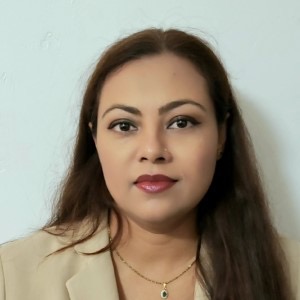 Dr. Afsheen Sadaf is a Postdoctoral Scholar at the UMSL Geospatial Collaborative, University of Missouri–St. Louis and served as a Postdoctoral Research Associate and Graduate Teaching Assistant/Instructor in the school of Landscape Architecture and Planning, University of Florida. Her research integrates geospatial technologies, environmental planning, and data-driven decision-making to address complex sustainability, resilience, and environmental challenges. Her expertise encompasses sustainability and environmental planning, coastal/watershed resilience, climate adaptation, urban and regional planning, environmental justice, and the interactions between health and the built environment.
Dr. Sadaf applies advanced geospatial and analytical techniques, including Geographic Information Systems (GIS), remote sensing, machine learning (ML), deep learning (DL), GeoAI, spatial statistics, environmental assessment, ecological and coastal modeling, and qualitative research methods. Her research focuses on developing innovative geospatial frameworks and decision-support systems for wetland and watershed monitoring, urban agriculture, climate resilience, land-use and land-cover change analysis, ecosystem restoration, and nature-based solutions. She has published in journals such as Cities & Health, Annals of GIS, Frontiers in Ecology and Evolution, Frontiers in Environmental Science (Environmental Informatics and Remote Sensing), and Remote Sensing and received multiple honors including the ACSP Marsha Ritzdorf Award, ACSP Diversity Fellowship, and multiple fellowships from the UF Graduate School.
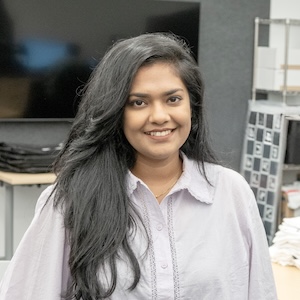 Dr. Supria Sarkar is a Research Scientist at UMSL Geospatial Collaborative, specializing in satellite remote sensing, machine learning and advanced Earth observation analytics. She earned her Doctor of Philosophy in Geoinformatics and Geospatial Analytics from Saint Louis University, following a Master of Science in Geography and Environmental Resources from Southern Illinois University Carbondale and a Bachelor of Science in Soil, Water and Environment from the University of Dhaka.
Her research focuses on applying advanced machine learning, remote sensing and GIS to address critical agricultural and environmental challenges. She integrates high-resolution satellite imagery, unmanned aerial vehicle (UAV) sensor data, and deep neural networks to monitor crop biophysical traits, forecast crop yields and assess seed composition at regional scales. Her work also leverages automated data pipelines and multi-sensor platforms to transform raw Earth observation data into actionable environmental insights.
Dr. Sarkar actively pursues innovative research and interdisciplinary collaborations to address pressing ecological and food security challenges. Her future research aims to advance the integration of GeoAI with multi-sensor satellite data fusion to develop scalable predictive frameworks for agriculture and natural resource management. Through peer-reviewed publications in scientific journals and ongoing academic collaborations, she is committed to developing data-driven approaches for sustainable resource monitoring, global environmental assessment and precision agriculture.
Geospatial Operations and Program Support
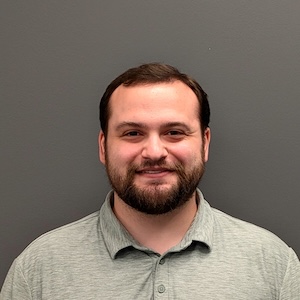 Zach Ridings serves as Lab Manager for the Advanced Geospatial Labs within the UMSL Geospatial Collaborative at the University of Missouri–St. Louis. In this role, he manages and maintains specialized equipment and supports faculty, students, and research partners in applying emerging technologies to geospatial research and education.
His four years of experience as an extended reality developer have provided him with expertise across a broad range of visualization and data-collection technologies. His technical background includes augmented and virtual reality application development, Unity and Unreal Engine, photogrammetry, LiDAR and point-cloud processing, Gaussian splatting, and neural radiance fields (NeRFs).
Zach holds a Bachelor of Arts in Games and Game Design from Webster University, with a minor in Film, Television, and Video Production. He also holds an FAA Part 107 Remote Pilot Certificate.
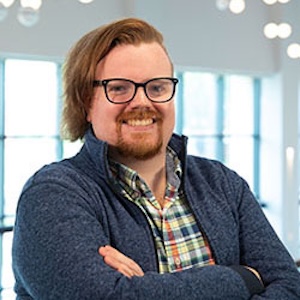 Tyler Norman has worked as the Financial Business Specialist for the UMSL Geospatial Collaborative since January 2026. He holds a bachelor’s degree in Mathematics and Economics from Missouri University of Science and Technology and has prior experience working at higher education institutions including Drury University and the University of Wisconsin-Madison.
Tyler is passionate about supporting students, faculty, and staff with any financial processes and administrative needs, including but not limited to reimbursements, form preparation, purchasing assistance, and budget reconciliation. He is always happy to help, so if you have a financial question or need assistance, please stop by his office or give him a call!