Each fellow applies a cycle of inquiry that involves five steps to address a site-determined problem of practice while embedding learning science research.
Cycle of Inquiry Process:
- Step one consists of launching an inquiry process in which fellows, the program core leadership, and school leaders identify a problem of practice and develop an approved data collection plan, in collaboration with school leaders, to study the problem and subsequently develop an instructional plan to address it.
- Step two focuses on studying the ability of fellows to collect qualitative and quantitative data, which is approved by school leaders and related to the framing of the problem of practice.
- Step three involves interpreting the data. Fellows, school members, core leadership team members, and mentors will analyze and discuss data to achieve a common understanding of the problem and identify gaps between current, relevant practices and practices designed to impact the targeted problem of practice.
- Step four involves teachers testing the ideas of change in their classrooms and, along with fellows and school leaders, collecting data on the effectiveness of the plan of change.
- Step five involves analyzing and discussing the outcomes and impacts of the overall data collected in Steps one through four to determine whether the protocols for each step of the Inquiry Cycle were effective. Case study results consist of a conceptual analysis of the summaries of each step provided by the fellows.
The Fellow's Experience with Problems of Practice
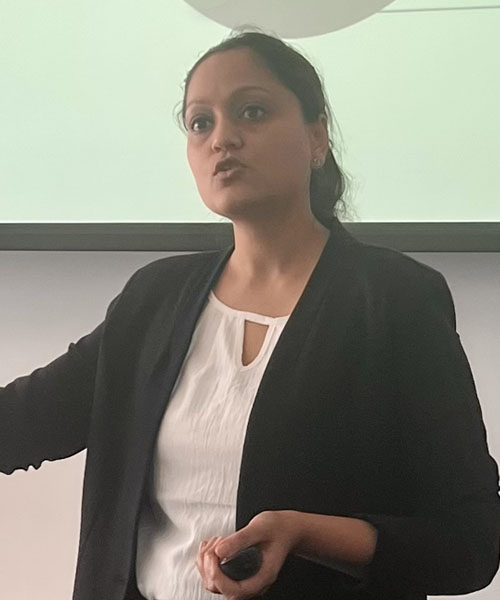
Dr. Pallavi Aggarwal's Problem of Practice (PoP)
Problem of Practice:
The focus of this project was to evaluate the effectiveness of a coaching model paired with an instructional template to increase student engagement and academic progress. The coaching model, with the revised observation rubric, is guided by the Theory of Change.
Successes:
Co-designed a coaching model and the revised instructional template, based on learning by scientific design principles, with the site leaders. Successfully piloted the coaching model with the template using AI (M2). Developed a coaching tracker to monitor the progress of teachers’ instructional practices with its impact on student outcomes. Co-wrote and was awarded the grant by the Innovative Technology Education Fund (ITEF) association of $44,296 to use M2 to provide real-time instructional feedback to the teachers and support instructional coaches in coaching teachers in specific instructional practice.
The previous years' system support for teachers resulted in 86% teacher retention in the school.
Challenges:
To successfully implement the coaching model next year with increased student outcomes and better teacher support.
Products:
Sample Targeted Instruction Template
Feedback Rubric for Lesson Template
Classroom Management and Student Engagement form
Dr. Debra Cole's Problem of Practice (POP)
Problem of Practice:
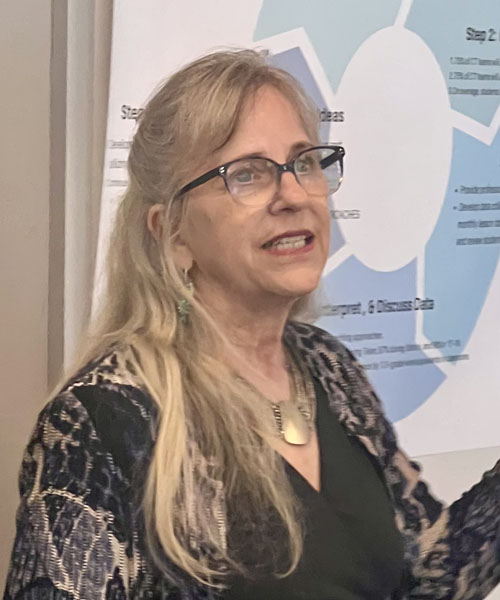
Throughout 2023 and 2024, Dr. Debra Cole and school leadership worked through a cycle of inquiry to invigorate co-teaching and accelerate learning after COVID shutdowns greatly diminished opportunities for co-teaching. After analyzing initial observational data, leaders set goals for co-teachers to co-plan and utilize multiple co-teaching approaches to improve student engagement and achievement.
Successes
While the school fell short in its co-planning goal (5 out of 8 teams co-planned co-teaching approaches), 6 out of 8 teams were successfully utilizing multiple co-teaching approaches by April 2024. Student engagement increased in classrooms where various small-group approaches were observed. Students in those classrooms grew more than 1.3 grade level equivalents in Literacy and Math, which was another success.
Products
Over the summer of 2024, the UMSL fellow and leadership team developed a Co-teaching Handbook with Expectations to sustain success from Year 1 and to replicate effective co-teaching with four new co-teaching teams during 2024-2025. Adapted lesson planning templates included a section called "co-teaching" to remind teachers to discuss and implement a variety of co-teaching approaches in every lesson to maximize student engagement and differentiation. This emphasized the use of the Parallel Co-teaching Approach for 50% of Tier 1 instruction in Math and Literacy.
Strategies Utilized:
Strategies for meeting the partnership goals include (1) providing professional development on research-based co-teaching approaches and the importance of co-planning, (2) cognitive coaching around the indicators of quality co-teaching partnerships as described in Are We Really Co-teachers? (Villa et al., 2004), and (3) ongoing assessment of on-task behavior using an “ Assessment of % On-Task ” tool (Knight, 2013) during full-lesson and walk-through observations.
Dr. Debra Cole's Year 1 Summaries: One School's Journey to Collaborative Planning and Co-Teaching Excellence
Dr. Debra Cole's Year 2 Summary: Co-Teaching Excellence For Achievement and Full Inclusion
Dr. Paula Miller's Problem of Practice (POP)
Problem of Practice:
Dr. Paula Miller's PoP focuses on the feedback methods used by UMSL's clinical educators during Practicum I and II, which are not fully aligned with Missouri Educator Evaluation System (MEES) indicators. The lack of alignment hampers the development of teacher-candidate’s foundational skills, making it difficult for them to support PreK-12 students effectively.
Successes:
Publishing articles, presenting at the Society for Information Technology and Teacher Education (SITE) conferences and the Adult Education Research Conference (AERC), and facilitating professional development on Cognitive Coaching using tools like GoReact, SPSS, Canva, and other emerging software programs were all successes of Dr. Paula Miller.
Challenges:
Navigating the Teacher Preparation Program (TPP) networks and aligning the POP with the Cognitive Coaching framework were challenging for her. To address this, she co-facilitated Cognitive Coaching workshops for clinical educators, introducing the framework through interactive activities like “Jeoparty” and focusing on data-specific, self-directed, and reflective feedback principles. The goal was to improve clinical educators’ feedback skills, empowering them to enhance their professional learning and meet the academic needs of PreK-12 students.
Dr. Taylor Lawson-Smith's Problem of Practice (PoP)
Problem of Practice:
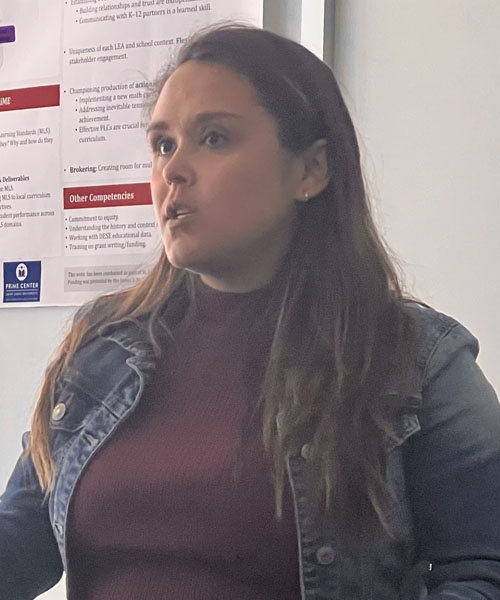
Dr. Lawson-Smith’s Problem of Practice for the year was to increase implementation of tools and practices for effective instructional coaching.
Successes:
Fellow and instructional coaches co-designed a rubric for more objective feedback for teacher observations. Coaches found the rubric easy to use and effective for tracking progress and facilitating reflective discussions with their teachers.
Challenges:
The rubric was not used with fidelity for the first coaching cycle
Products:
Observational Rubric for Lesson Observations
Dr. Lawson- Smith Year 1 Summary
Dr. Jamie Martin's Problem of Practice (PoP)
Problem of Practice:
Dr. Martin’s site requested assistance with the implementation of Project-Based Learning (PBL) across the teaching staff.
Successes:
Implementation levels for the site have increased from 33% prior to partnership to 93%;
Challenges:
Despite significant organizational changes have created hurdles for site teachers and leaders
Products:
Extensive PBL Resource Repository, including: over 25 co-designed PBL units,
Self-Assessment Implementation Rubric
Dr. Martin's Year 1 Summary: Project-Based Learning, Durable Skills, and Joy
Dr. Jacob Steiss's Problem of Practice (PoP)
Problem of Practice:
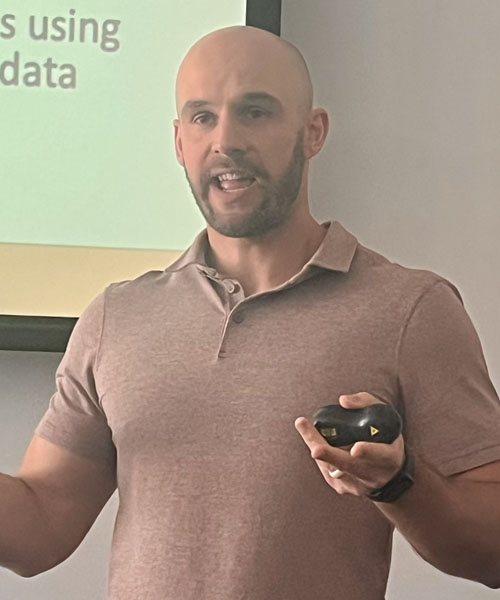
Dr. Jacob Steiss's PoP focuses on improving literacy instruction. The following three subgoals guide this goal: 1) improve standards alignment in literacy instruction, 2) increase student engagement and evidence-based instructional strategies in lessons, and 3) establish more consistent use of data to drive instructional decisions.
Successes:
Forming good relationships with a few key school leaders early allowed access to classroom instruction and leadership meetings. Subsequently, this helped illustrate a comprehensive view of all the factors affecting students’ literacy development. The school’s willingness to quickly try and learn from solutions to improve literacy helped develop a working protocol for literacy instruction across five grade levels was also a success.
Challenges:
Being data-rich does not necessarily mean such data can improve instruction and learning. A persistent challenge has been establishing which data sources directly relate to the school’s goal of improving teacher instruction. A related challenge is determining what types of decisions might be made from data before it is collected so data-based conversations are productive and tied to improving literacy instruction.
Dr. Steiss's Year 1 Summary: Learning Sciences and Teacher Preparation Coursework
Dr. Dawn Thieman's Problem of Practice (PoP)
Problem of Practice:
Adult learners often enter apprenticeship teacher preparation pathways with prior professional learning, work experience, and demonstrated competencies that are not always formally recognized. This work focuses on developing clear, consistent, and equitable CPL/PLA processes to recognize prior learning and support adult learners’ progress in educator preparation programs.
Success:
This year’s work strengthened understanding of how CPL/PLA can support adult learners in apprenticeship teacher preparation pathways. A review of literature and stakeholder input helped identify key considerations for recognizing prior professional learning in relation to program expectations, course outcomes, and professional standards.
Challenges:
Key challenges include ensuring CPL/PLA processes are rigorous, transparent, and equitable while remaining accessible to adult learners seeking educator certification.
Products:
This year’s products included stakeholder surveys, CPL/PLA guidance materials, and process maps to support the integration of CPL/PLA into teacher preparation pathways. Survey results and guidance materials were disseminated to stakeholders to inform shared understanding, planning, and next steps for recognizing adult learners’ prior professional learning and experience.
Dr. Pete White's Problem of Practice (PoP)
Problem of Practice:
Dr. White’s Problem of Practice, in partnership with the UMSL Charter School Office, utilizes a multi-site approach to consider how schools measure and intentionally target student Durable Skill development and mastery.
Successes:
Schools are interested in improving outcomes specifically related to discipline and recognize moving “upstream” to target social skill acquisition outside of incidents of student misbehavior. Teachers have found tools and efforts useful and desire more learning to improve their implementation.
Challenges:
Schools have many competing priorities which draw their attention from school-wide systems instead down to daily needs. Despite valuing the work and efforts to prioritize, it is difficult to keep long-term goals for students at the forefront of day-to-day efforts.
Products:
Built and refined the Durable Skill Measurement Tool at multiple locations which utilizes teacher knowledge of students to evaluate student progression towards Durable Skill development. Leveled for varied age and context-specific factors, the basic notion is that we ought to make visible for longer-term student success. Currently working to map Character Strong and Second Steps to direct skills so teachers can teach targeted lessons for skill development.
Durable Skill Measurement Tool
Dr. Kim Starkey's Problem of Practice (PoP)
Problem of Practice:
Dr. Starkey worked to support elementary teachers’ classroom management skills.
Successes:
At the classroom level, the work supported teachers in refining instructional practice through structured reflection, shared sense-making, and real-time feedback. Teachers engaged consistently and demonstrated differentiated competence in adapting their approaches to meet student needs. The process generated clear, actionable insight into classroom dynamics, student engagement, and instructional decision-making. These results indicate that translational approaches can lead to differentiated coaching cycles to meet the needs of all teachers.
Challenges:
Variation in student support and instructional needs across classrooms made it difficult to establish consistent learning conditions and limited the effectiveness of Tier 1 instruction. While teachers demonstrated differentiated competence, differences in classroom management structures—particularly around expectations, reset routines, and monitoring—created uneven environments for student learning. These patterns indicate a need for more consistent, high-leverage practices, such as attention to transitions and cooperative learning structures, to stabilize classrooms while still allowing for differentiated support.