International School Climate and Prosocial Education Trends Study
Project Duration: Ongoing
The Center for Character and Citizenship is leading an international collaborative effort to better understand how schools across diverse cultural, economic, and educational contexts are promoting human flourishing through prosocial education.
Led by Dr. Jonathan Cohen and Dr. Melinda Bier, the International School Climate and Prosocial Education Trends Study brings together researchers, policymakers, practitioners, and educational leaders from low-, middle-, and high-income countries to examine current research, policy, and practice in K–12 education.
Rather than focusing on a single educational initiative, the project explores the broader movement toward creating schools where students and educators can thrive academically, socially, emotionally, morally, and civically. Through international collaboration, the study seeks to identify shared strengths, emerging challenges, and promising practices that can inform educational improvement across diverse contexts.
Why Prosocial Education?
Around the world, educators increasingly recognize that schools play a vital role not only in academic learning but also in supporting students' social, emotional, moral, civic, and psychological development. Research consistently shows that students learn best in environments where they feel physically and emotionally safe, experience positive relationships, are actively engaged in learning, and develop a strong sense of belonging.
The term prosocial education encompasses several complementary educational approaches that intentionally support these outcomes, including:
- Character Education
- Social and Emotional Learning (SEL)
- School Climate Improvement
- Whole Child Education
- Civic Education
- School-Based Mental Health Promotion
Although these approaches often use different terminology and frameworks, they share a common commitment to fostering healthy relationships, positive school cultures, and learning environments where students and educators can flourish.
The International School Climate and Prosocial Education Trends Study seeks to better understand how these approaches are being implemented across different countries and educational systems, what challenges schools face, and what promising practices are emerging around the world.
Our Mission
We believe that flourishing schools intentionally cultivate the conditions that allow every member of the school community to grow academically, socially, emotionally, morally, and civically.
Our mission is to build an international network of researchers, practitioners, and educational leaders dedicated to advancing knowledge about prosocial education and supporting school communities where students, educators, and families experience safety, belonging, engagement, and well-being.
Through ongoing collaboration, this network studies educational policies, research, and practices across low-, middle-, and high-income countries to better understand how schools can create learning environments that promote human flourishing for all members of the community.
Wave One: Mapping Global Trends
The first phase of the project—Wave One—focused on developing and administering an international survey examining current trends in prosocial education research, policy, and practice.
Designed collaboratively by members of the international research team, the survey explored how different countries are approaching school climate, character education, social and emotional learning, whole child education, civic education, and school-based mental health promotion.
The survey was translated into six languages and completed by 278 respondents representing 27 countries, making it one of the first international efforts to systematically document global trends in prosocial education.
The study examines questions such as:
- What educational approaches are most commonly used across different countries?
- How are governments and educational systems supporting prosocial education?
- What challenges do educators face when implementing these approaches?
- Where do researchers and practitioners see the greatest opportunities for future growth?
Current and Future Research
The research team is currently analyzing the Wave One data and preparing a series of publications examining trends across regions and educational contexts.
Planned publications include:
- International overview of global trends in prosocial education
- North American trends
- Latin American trends
- India and Nepal trends
- Kenya-informed perspectives
- Comparative analyses across income levels and educational systems
These studies will provide one of the most comprehensive pictures to date of how prosocial education is evolving around the world and will help inform future research, educational policy, and school improvement efforts.
Wave One also lays the foundation for future waves of international data collection, allowing researchers to examine how prosocial education continues to develop over time.
Partnerships and Collaboration
International collaboration is central to this project.
Improving school climate and supporting student well-being require partnerships among researchers, educators, policymakers, school leaders, and community organizations. By bringing together diverse perspectives and experiences, the project creates opportunities to share evidence-based practices while recognizing the importance of local culture and context.
This collaborative network also supports ongoing dialogue among professionals working across related fields—including character education, social and emotional learning, school climate, whole child education, and school-based mental health—to identify common goals and strengthen collective impact.
Current partner organizations include:
- International Observatory for School Climate and Violence Prevention
- Bullying Research Network (University of Nebraska–Lincoln)
- Center for Character and Citizenship
Meet the Global Research Team
The International School Climate and Prosocial Education Trends Study brings together an interdisciplinary team of researchers and practitioners representing universities, nonprofit organizations, and educational institutions from around the world.
Together, the team contributes expertise in school climate, character education, social and emotional learning, educational leadership, civic education, school mental health, educational policy, and implementation science.
(Could we include a small photo of each member with their name, position, institution, and country? And then make it clickable so that people can’t see a longer bio if they want to. The bios are on a separate document; see: Bios – School Climate)
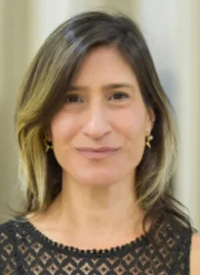
Ruth Berkowitz
Senior Lecturer, University of Haifa
Israel
Jayanti Bhatia
International Education Consultant, World Bank
India

Melinda C. Bier
Co-Chair
Teresa M. Fischer Professor of Citizenship Education,
Co-Director, Center for Character and Citizenship,
University of Missouri-St Louis, USA

Julie C. Boissonneault
Assistant Professor, Université Laval
Canada
Philip Brown
Fellow, Center for Applied Psychology
Rutgers University,
USA

Patricia A. Ciccone
Educational Consultant, School Climate Consultants
USA

Jonathan Cohen
Co-Chair
Distinguished Scholar, Center for Character and Citizenship
University of Missouri-St Louis, USA
Jo Ann Freiberg
Educational Consultant, School Climate Consultants
USA
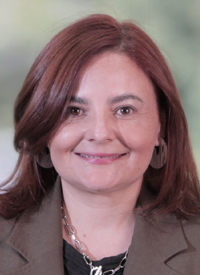
Ligia García-Béjar
Dean of the School of Education and Psychology,
Universidad Panamericana, Mexico

Deborah Green
Senior Lecturer, University of South Australia
Australia
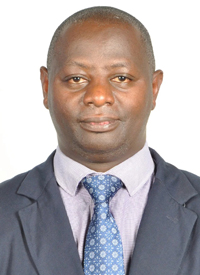
Peter Kingori
Director of the Character Education Programme
Centre for Character and Leadership, Kenya
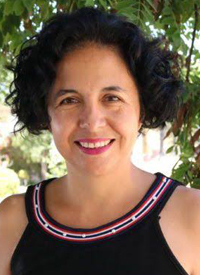
Veronica Lopez
Director, Center for Research in Inclusive Education
Full Professor, Pontificia Universidad Católica de Valparaíso
Chile
Norihiro Miyako
Deputy Center Director and Senior Researcher
Guidance and Counseling Research Center,
National Institute for Educational Policy Research (NIER)
Japan

Adriano Moro
Researcher at the Department of Educational Research
Carlos Chagas Foundation
Brazil
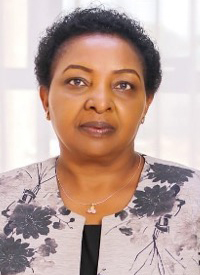
Grace Ngugi Maina
Deputy Director of Special Programs, Kenya Institute of Curriculum Development
Kenya
Daniela Salgado
Director of Research, Universidad Panamericana
Mexico
Mitsuru Taki
Honorary staff
National Institute for Educational Policy Research (NIER)
Japan
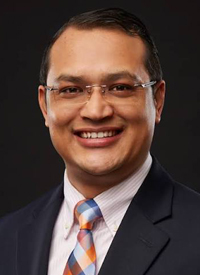
Amrit Thapa
Senior Lecturer, Graduate School of Education
University of Pennsylvania
USA and Nepal

Robert Thornberg
Professor of Education, Linköping University
Sweden
Collaborators and Acknowledgments
The success of the International School Climate and Prosocial Education Trends Study has been made possible through the generous support and collaboration of colleagues around the world. We are especially grateful to the following individuals, whose expertise and professional networks were invaluable in the development, translation, dissemination, and promotion of the Wave One survey:
Catherine Blaya (France)
Senior Professor of Education Sciences – Sociology of Education, École Supérieure du Professorat et de l'Éducation (ESPE), Université Nice Sophia Antipolis; Co-founder, International Observatory for School Violence Prevention.
Lars Dietrich (Germany)
Educator and researcher, Institute of Rehabilitation Sciences, Humboldt-Universität zu Berlin. His work focuses on school–family–community partnerships and the professional development of teachers in social and emotional competence.
Hugue Nkoutchou (Cameroon)
Founder and Head, Public Policy in Africa Initiative; Founder and CEO, KapFou. Author of the book “Change: A New Development Model for African Countries”.
Andrea Pulskamp (United States)
Health and Safety Implementation Consultant, Colorado Department of Education.
We are deeply appreciative of their contributions to advancing this international collaboration.
Looking Ahead
The International School Climate and Prosocial Education Trends Study represents an ongoing effort to strengthen the global understanding of how schools can foster human flourishing. By connecting researchers and practitioners across countries and educational traditions, the project seeks to generate knowledge that supports healthier school communities, informs educational policy, and advances evidence-based practices that benefit students, educators, families, and society.