Office of Research Header

Research & Commercialization News

UMSL Team Wins UM Faculty Entrepreneur of the Year 2009 Award

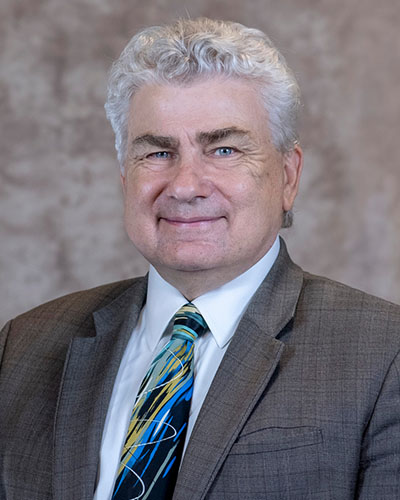
Dr. Christopher Spilling, Professor and Chair, Department of Chemistry, and Dr. Wesley Harris, Professor of Chemistry, are being recognized as a team for their entrepreneurial work to commercialize an invention designed to remove toxic aluminum contaminants found in feeding solutions used for intravenous feeding of premature infants. The have been selected to receive the 2009 Faculty Entrepreneur of the Year Award.

spilling harris  
Dr. Christopher Spilling Dr. Wesley Harris  

The UM Faculty Entrepreneur of the Year Award is given annually to a faculty member for a record of entrepreneurial innovation that demonstrates commercial utility, contributes to public welfare, and brings visibility to the University of Missouri. The award will be presented June 4, 2009, at a ceremony in Kansas City.

Spilling and Harris, along with their collaborators at the University of Kentucky, established a company, ALKYMOS, Inc., in 2006 to commercialize their innovative solution to the aluminum toxicity problem, an invention that includes a chelating resin and a filter cartridge. Both UM and UK have licensed their rights in the technology to ALKYMOS to further develop the technology.

The need for this technology is substantial. In the United States, approximately 12% of all births are premature, and most premature infants require intravenous feeding with total parenteral nutrition (TPN) solutions because they do not tolerate oral feeding.

Aluminum is a common contaminant in the component solutions used to prepare the TPN mixtures.  While aluminum exposure may not be a problem to healthy adults, premature neonates with their poorly developed kidney function represent a population at great risk of aluminum toxicity that can lead to serious conditions such as metabolic bone disease, impaired mental development and anemia. The Food and Drug Administration recognizes this problem and has established an upper limit on the amount of aluminum that should be present in the TPN solutions; however, industry continues having difficulty meeting these standards because there is no viable technology available to effectively remove this aluminum.

ALKYMOS, as part of a Phase I STTR grant, is currently developing new chelating resins and flow-though cartridges that can remove aluminum from solutions as they are being added to the final TPN mixture. 

So when will this technology be available?

"We would still like to see some technical improvements in the device before we start though the FDA approval process," Harris said.  "We would like to get this done in the next 2-3 months, although research is inherently unpredictable.  Once we settle on a final compound for our device, then we need about 18 months to prepare and test the commercial product for FDA approval.  We have a phase II STTR application pending to fund this work." 

According to Spilling and Harris, their personal motivation is to improve the health outcomes for premature infants. However, there is significant commercial value in this project, both to ALKYMOS and to the universities. 

And the technology might have additional uses. "We just submitted an NIH proposal that would focus on a different medical application," said Harris.

The team represents the second UMSL winner of the Faculty Entrepreneur of the Year Award; the award program began in 2002. Harris noted that it is rewarding to be recognized by peers within the University. "These are people who are themselves highly qualified and understand the technology, so to receive a favorable opinion from this community is about as high an honor as one can get."

Spilling and Harris represent the first team to win this award, but they feel it is likely to become a more common occurrence because research is becoming ever increasingly interdisciplinary. "I strongly believe in the advantages of interdisciplinary research, so I am pleased we were the first in this regard," Harris said. "In this particular case, the team approach was essential."

Read the UMSL Press Release on ALKYMOS: "UMSL chemists discover way to cut toxicity in premies"