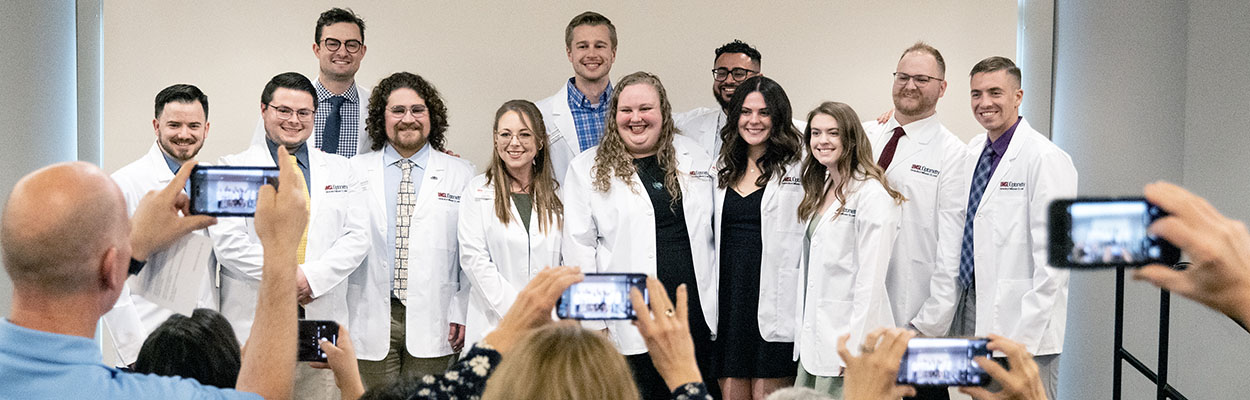
Focus your career on helping others with UMSL’s accredited optometry degree
Prepare for a rewarding career in optometry with the Doctor of Optometry (OD) program at the University of Missouri–St. Louis. Our comprehensive, accredited optometry degree equips you with the sought-after knowledge, cutting-edge skills and hands-on experience needed to excel in your optometrist career. From day one, you’ll engage in immersive clinical training, learning to diagnose, manage and treat a wide range of eye conditions.
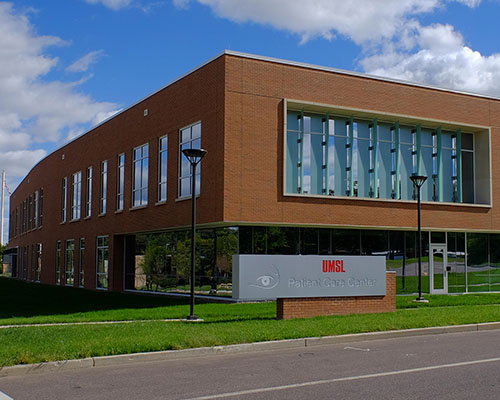
UMSL’s Doctor of Optometry program emphasizes real-world applications, combining rigorous study with practical experience to ensure you’re fully prepared for the demands of this dynamic field. With diverse clinical opportunities and access to state-of-the-art patient care facilities, our optometry degree empowers the next generation of optometrists and vision researchers to make a meaningful impact in the communities they serve.
How to become an optometrist
A career in optometry demands a strong commitment to education and patient care. Start by meeting prerequisite requirements to qualify for admission into optometry school. Accepted students typically have undergraduate degrees in biology, chemistry or other science-related fields. An accredited optometry program usually involves four years of study, leading to a Doctor of Optometry degree. To practice, you’ll need to pass the National Board of Examiners in Optometry (NBEO) three-part exam. Many optometrists also choose to specialize through residency programs in areas like pediatrics or geriatrics.
Program type:
Doctorate, OD
Format:
On-Campus
Take the next step
Request more information below:
Why earn your Doctor of Optometry at UMSL?
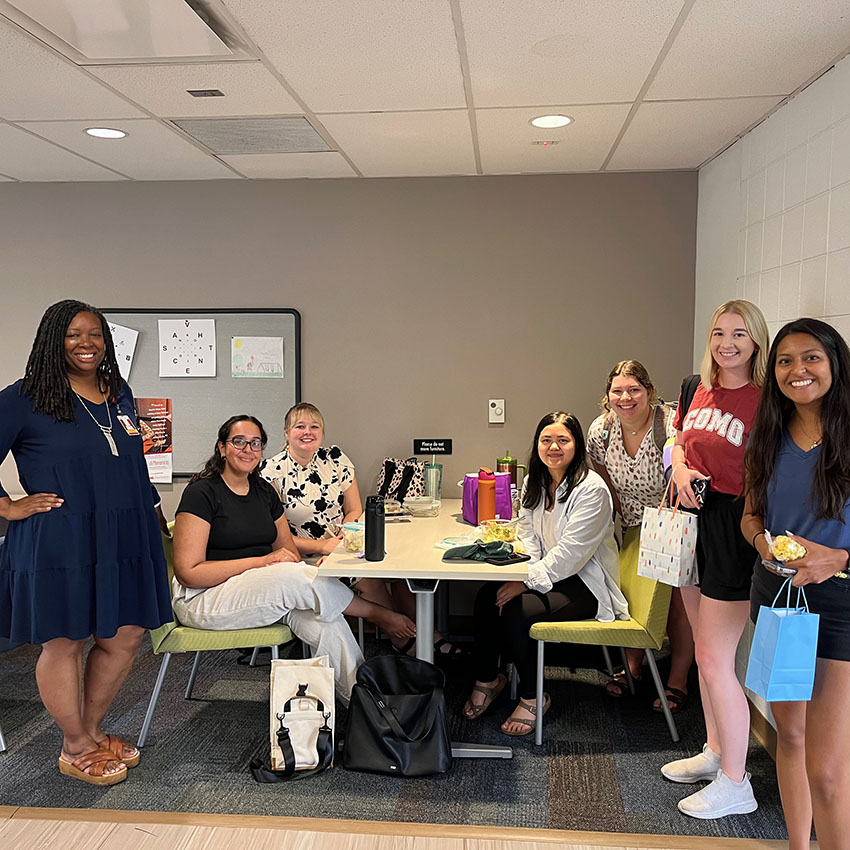
UMSL’s College of Optometry is deeply committed to student success and impactful community engagement. Our Doctor of Optometry program offers a supportive learning environment with a focus on your optometry career preparation. As an UMSL optometry degree student, you’ll benefit from:
- Collaborative learning: Small class sizes promote a collaborative atmosphere, fostering meaningful interactions and personalized mentorship to help you thrive academically and professionally.
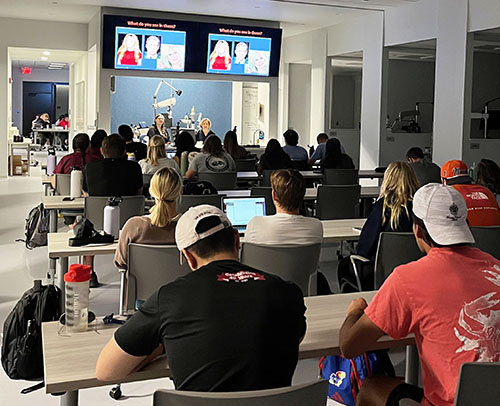
- Cutting-edge facilities: Engage in hands-on clinical training from your first year, utilizing our innovative patient care and preclinical training facilities. These opportunities prepare you to excel in modern optometric practice.
- Expert faculty: UMSL’s caring and engaged College of Optometry faculty are experts in the field. Their dedication to student mentorship ensures you receive the guidance and support to achieve your optometrist career goals.
What can you do with your optometry degree?
The Doctor of Optometry degree from UMSL prepares you for a fulfilling career in various health-care and research settings. Optometrists can work in a range of environments, including outpatient care centers, private practices, specialty clinics and research institutions, where they provide essential eye care services and contribute to advancements in the field.
Fueled by the rising demand for health-care services, the U.S. Bureau of Labor Statistics projects that careers in optometry will grow 9% by 2032, far outpacing the average growth rate for all occupations. Reflecting this demand, the BLS reported a median annual salary for optometrists of $131,860 in May 2023, with top earners making over $204,100.
Whether you choose to pursue an optometry career in patient care or research, our Doctor of Optometry degree equips you with the skills and expertise to thrive in this dynamic and rewarding field.
131,860
9
Where do optometrists work?
- Academic Institutions
- Hospitals
- Military/Goverment setting
- Outpatient care centers
- Physicians' office
- Private practice
- Research institutions
- Retail optical stores
- Verterans' hospitals
The College of Optometry uses a rolling admissions process when admitting students. Students are encouraged to apply early for consideration of interview. The admissions committee will review your application once it has been deemed complete.
Application Requirements
Applicants to the UMSL College of Optometry must submit:
- OptomCAS application
- 3 Letters of recommendations
- One (1) of the letters of recommendation must come from a practicing optometrist.
- The remaining two (2) letters can come from anyone who can speak about you from a professional and ethical standpoint, such as an instructor, employer, club advisor, clergy, or coach.
- We accept committee letters with the condition they include a letter from an optometrist.
- All letters and evaluations must be submitted through the OptomCAS system.
- All transcripts/grades
- Supplemental application
- OAT scores or other national test score.
- We consider the OAT, MCAT, DAT, PCAT and GRE for admission into the optometry program at UMSL. The OAT remains the preferred exam, but we do consider other exams. The OAT is administered online through various testing centers. Visit opted.org for more details.
Supplemental application and acceptance fees
Applicants are required to pay a $50 supplemental application fee. Applicants who are admitted will pay a $500 deposit to reserve their spot in the admitted class. Neither the supplemental application fee nor the deposit is refundable. The deposit will be credited towards tuition for the first semester.
Prerequisites
The following prerequisites are required for admission into UMSL-College of Optometry. Prerequisites must be completed prior to entering optometry school. Prerequisites do not have to be completed to be considered for an interview.
All courses used to satisfy the admission requirements must have been taken at an institution accredited by an accreditation body recognized by the US Department of Education (international applicants must submit transcripts through one of the recognized transcript evaluation services).
Applicants must have completed 90 semester or 135 quarter hours prior to matriculation. The applicant cannot apply more than 60 semester hours (or 90 quarter hours) earned at a two-year institution toward the credit hour requirement.
Applicant's holding a bachelor's degree will be given preference over applicants with similar academic credentials who do not have a degree.
All prerequisites must be completed with a "C-" or higher.
| Course | Semester(s) | Quarter(s) |
|---|---|---|
| English |
2
|
3
|
| General Biology with labs |
2
|
3
|
| Microbiology with lab |
1
|
1
|
| Physics with lab Algebra or calculus based accepted |
2
|
3
|
| General Chemistry with lab |
2
|
3
|
| Organic Chemistry with lab |
1
|
2
|
| Calculus |
1
|
1
|
| Statistics |
1
|
1
|
| Psychology |
1
|
1
|
| Liberal Arts/Humanities |
2
|
2
|
Strongly recommended courses: Anatomy and Physiology, Biochemistry, Cell Biology, Immunology, Neurosciences, Histology, Embryology, Business Courses
AP CREDIT POLICY:
The College of Optometry has adopted the following Advanced Placement (AP) credit policy:
Advanced Placement (AP), International Baccalaureate (IB), and/or College-Level Examination Program (CLEP) Credit is acceptable if the credits were accepted by your undergraduate institution and appear on your undergraduate transcript. We will accept prerequisite courses taken online provided they were offered by an accredited college or university. In-person laboratories are strongly preferred. The course name must appear on your transcript with the transfer credits. If not, you will have to contact College Board to request your AP scores and have those sent to UMSL Admissions.
If you have further questions please call 1-888-EYE-UMSL or email student services optometry@umsystem.edu.
Plan of study
Due to advances in the optometric profession, sequencing of courses may change. The courses listed are subject to change through normal academic procedures.
First Year
Fall Semester
| Semester | Credit Hours | Lecture | Lab |
|---|---|---|---|
| 8010 Anatomy, Physiology and Disease Processes I | 5 | 4 | 2 |
| 8020 Basic and Clinical Optics I | 4 | 3 | 2 |
| 8030 Introduction to Optometry | 1 | 1 | |
| 8040 Neuroanatomy | 4 | 3 | 2 |
| 8050 Basic and Applied Immunology | 2 | 2 | |
| 8060 Biochemistry | 2 | 2 | |
| 8090 Case-Based Discovery for the Developing Clinician | 1 | 1 | |
| 8080 Clinical Optometry I | 2 | 1 | 2 |
Spring Semester
| Semester | Credit Hours | Lecture | Lab |
|---|---|---|---|
| 8110 Anatomy, Physiology and Disease Processes II | 4 | 3 | 2 |
| 8120 Basic and Clinical Optics II | 5 | 4 | 2 |
| 8160 Anatomy and Physiology of the Eye | 5 | 4 | 2 |
| 8180 Clinical Optometry II | 5 | 3 | 4 |
| 8190 Introduction to Clinical Diagnostic Reasoning | 1 | 1 | |
| 8230 Interpersonal Communication | 1 | 1 |
Second Year
Fall Semester
| Semester | Credit Hours | Lecture | Lab |
|---|---|---|---|
| 8220 Ophthalmic Optics | 4 | 3 | 2 |
| 8240 Ocular Motility | 2 | 2 | |
| 8250 Monocular Sensory Processes | 5 | 4 | 2 |
| 8260 General and Ocular Pharmacology | 4 | 3 | 2 |
| 8280 Clinical Optometry III | 4 | 2 | 4 |
Spring Semester
| Semester | Credit Hours | Lecture | Lab |
|---|---|---|---|
| 8320 Ophthalmic Dispensing | 1 | 2 | |
| 8340 Binocular Vision and Space Perception | 4 | 3 | 2 |
| 8370 Foundations of Ocular and Systemic Disease and Management I | 5 | 4 | 2 |
| 8380 Clinical Optometry IV | 2 | 1 | 2 |
| 8390 Specialty Clinic Laboratory | 1 | 2 | |
| 8391 Clinical Topics in Contact lenses | 1 | 1 | |
| 8392 Clinical Topics in Binocular Vision and Pediatric Optometry | 1 | 1 | |
| 8393 Clinical Topics in Low Vision | 1 | 1 | |
| 8560 Public Health and Epidemiology | 2 | 2 |
Third Year
Summer Semester
| Semester | Credit Hours | Lecture | Lab |
|---|---|---|---|
| 8460 Foundations of Ocular and Systemic Disease and Management II | 2 | 2 | |
| 8540 Binocular Vision Anomalies | 4 | 3 | 2 |
| 8650 Geriatric Optometry | 2 | 2 | |
| 8450 Introduction to Primary Care Clinic | 4 | 8 |
Fall Semester
| Semester | Credit Hours | Lecture | Lab |
|---|---|---|---|
| 8470 Pharmaceutical Management in Patient Care | 2 | 2 | |
| 8500 Primary Care Clinic I | 6 | 12 | |
| 8520 Contact Lenses I | 3 | 2 | 2 |
| 8550 Low Vision | 2 | 1 | 2 |
| 8570 Advanced Topics in Ocular and Systemic Disease & Management | 6 | 5 | 2 |
| 8640 Pediatric Optometry | 2 | 2 |
Spring Semester
| Semester | Credit Hours | Lecture | Lab |
|---|---|---|---|
| 8600 Primary Care Clinic II | 6 | 12 | |
| 8620 Contact Lenses II | 2 | 2 | |
| 8630 Practice Management I | 3 | 3 | |
| 8645 Neurologic Diseases | 2 | 2 | |
| 8660 Contact Lens Specialty Clinic | 1 | 2 | |
| 8670 Comprehensive Case Review and Analysis | 1 | 1 | |
| 8680 Ophthalmic Lasers | 2 | 2 | |
| 8690 Pediatric/Binocular Vision Specialty Clinic | 1 | 2 |
Fourth Year
six clinical rotation and 2 courses required
Category 1 UM-St. Louis (Must enroll in OPTOM 8700, OPTOM 8710 and OPTOM 8720 concurrently.)
Category 2 Institutional
OPTOM 8780 External Rotation in Institutional Patient Care - 7
Category 3 Ocular Disease
OPTOM 8790 External Rotation in Ocular Disease Patient Care - 7
Category 4 Community
Category 5 Specialty
Category 6 Elective
Required Courses
Elective Courses in the College of Optometry
Student and Professional Organizations
UMSL College of Optometry offers several opportunities for you to connect with peers and network with others in the optometry field. Get involved with one of our Recognized Student Organizations or professional associations, including:
- American Academy of Optometry
- American Optometric Student Association
- Missouri Optometric Student Association
- National Optometric Student Association
- Optometric Vision Development and Rehabilitation Association
- Private Practice Club
- Fellowship of Christian Optometrists
- Student Volunteer Optometric Services to Humanity
Optometry Scholars Program
UMSL’s Optometry Scholars Program provides a unique opportunity for Doctor of Optometry students to deepen their involvement in the field of optometry through hands-on research. This program pairs students with faculty mentors who guide them through research projects that align with their interests and career goals. Participants gain valuable research experience, contribute to scholarly publications and present their findings at conferences.
Career Services
The UMSL Optometry program offers a Practice Management course that covers resume building, contracts, contract negotiation and more. In addition, the College provides a career job board with opportunities across the country.
Networking
Within the optometric community, UMSL optometry students have access to leading professionals in business, research, entrepreneurship, nonprofit, government and community organizations, industry partnerships and with optometrists in all practice modalities.