Neurodynamics Header


Welcome to the Center for Neurodynamics


Image_Place_HolderThe Center for Neurodynamics was founded in 1996 by Frank Moss, Lon Wilkens, and Steve Lehmkuhle.

Initial studies focused on the role of noise and nonlinear dynamics in biological systems, leading to the first demonstration of behavioral stochastic resonance in a living animal, the paddlefish.

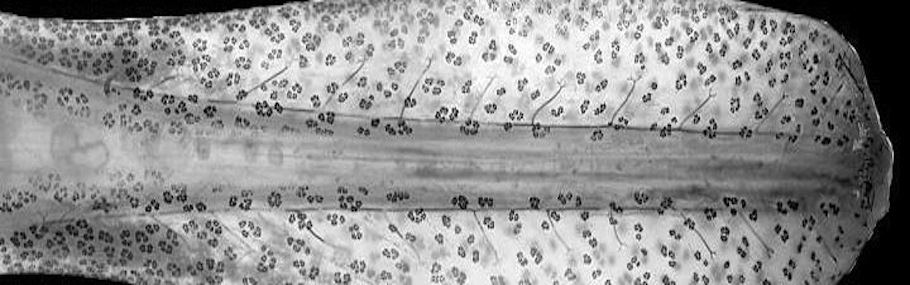
The Center, which has been funded by grants from the Office of Naval Research, the National Institutes of Health, DARPA, and the National Science Foundation, has branched out into many areas of complex dynamics in biological systems, ranging from the complex neuroanatomy of the paddlefish, to synchronization in the crayfish mechanoreceptor-photoreceptor system, to the role of noise in human sensory perception, to the complex behavior of swarming zooplankton.

Joining the Center as faculty in 2004, Sonya Bahar added the spatiotemporal imaging of neural systems to the Center’s roster of projects. Her group is imaging the changes in neural synchronization that accompany seizure activity in the neocortex. Other new collaborations include the application of nonlinear dynamics based synchronization analysis methods to various clinical brain imaging methods such as functional magnetic resonance imaging (fMRI, in collaboration with researchers at Washington University in Saint Louis) and magnetoencephalography (MEG, in collaboration with clinicians at Saint Louis University Hospital).