| Systems Analysis Web Sites
General Systems Analysis Links
 Systems and Systems Thinking Systems and Systems Thinking
- Definition of a System
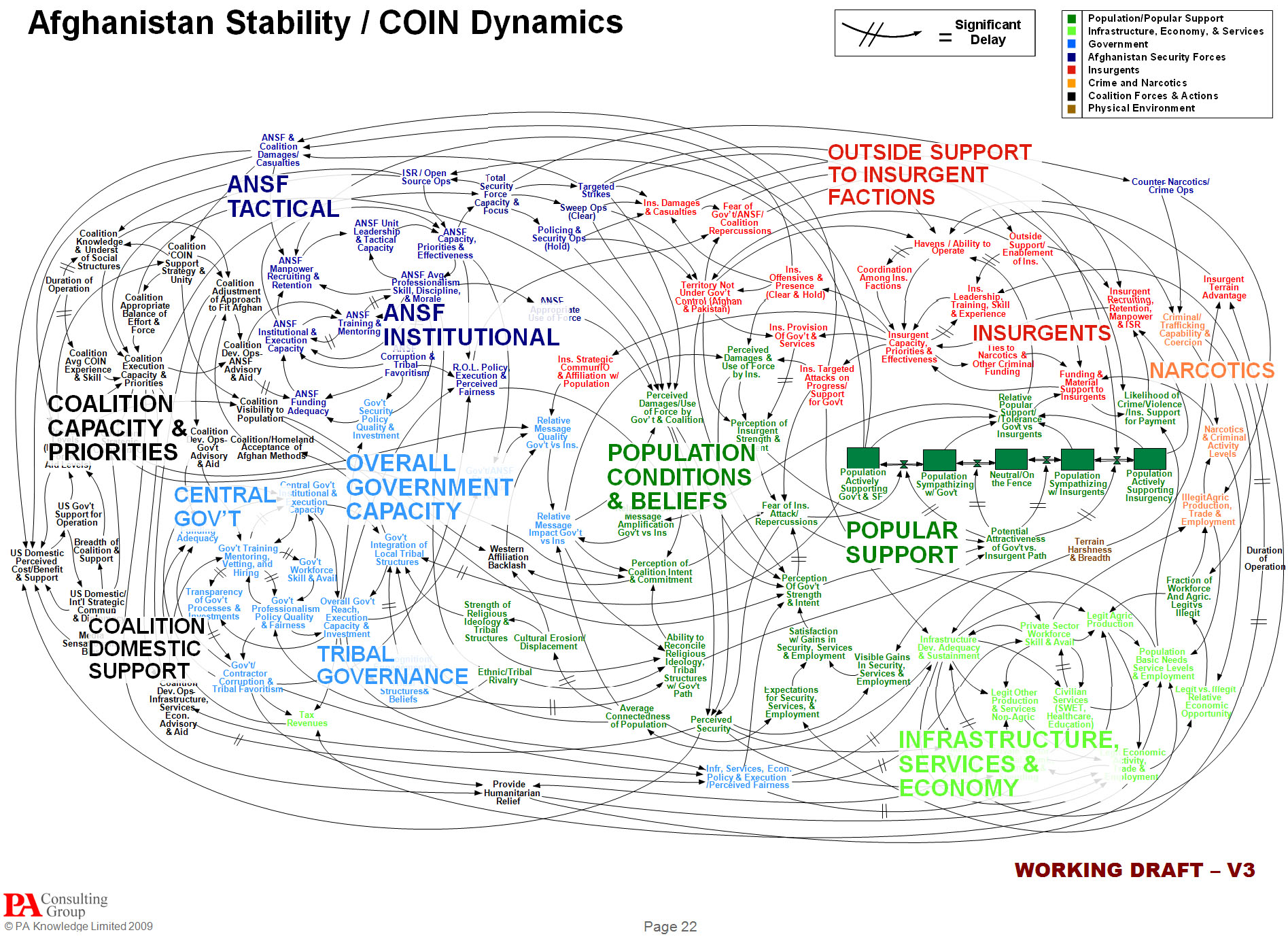
- A system definition courtesy of the Pentagon. This is the actual image used by Gen. Stanley A. McChrystal, the leader of American and NATO forces in Afghanistan, to portray the complexity of American military strategy.
- Horizonwatching: A Smarter Planet --- aka a system!
- Systems and Systems Thinking
- Dr. Ackoff talk about his views of thinking, check out his YouTube video, Exploring Systems Thinking. See Part 2 and Part 3.
- Systems Thinking.
- Don Norman: The three ways that good design makes you happy
- More on Systems Thinking
- Enabling a Better Tomorrow: A Systemic Perspective
- What is systems thinking?
- Russell Ackoff
- Systems Literacy Videos
 Benefits of Systems Analysis Benefits of Systems Analysis
Product Design by Business Week
Systems Theory at work: Using a Complex Systems Approach to Study Educational Policy
Horizonwatching: A Smarter Planet --- aka a system!
MetaPlanning
Victorian Data Processing
Modern Systems Analyst
Don Norman's website.
International Institute for Applied Systems Analysis
CACM
Web-based Information Systems
Hospital begins process by re-examining patient experience
Places to Intervene in a System
Systems Analysis for Beginners
To Combat Terrorism, a Systems Approach is Vital -- read the article.
Systems Analysis: A Tool to Understand and Predict Terrorist Activities
Systems Thinking at Wikipedia
Systems Thinking from MIT
VIDEO: Warriors of the Net
An Example Systems Analysis
The previous edition of your textbook had a chapter entitled "Succeeding as a Systems Analyst." It is available here with permission of the publisher.
An example consultant's analysis report: Strider and Cline evaluate UM's implementation of PeopleSoft.
Systems Thinking in the Workplace - An Action Research Approach
Humor in Systems Analysis
What are the benefits of modern systems analysis? Find out here
Creativity and Systems Analysis
- More on creative thinking: Bill Donius: Unlocking Your Brain's Hidden App
- The Future of Design is Human-Centered
- An interview with Tim Brown, CEO of IDE-O
- More on creativity and play
- Stanford Design Thinking Process
- Sustainability -- Part 1
- Sustainability -- Part 2
- Sustainability -- Part 3
- IDE-O comes to St. Louis
- IDE-O's Website
- Coolest Staircases
- How to be Creative
- The One Thing You Need to Generate Great Ideas
- Defining Creativity and Innovation
- Science of Brainstorming
- Life lessons from an ad man
Product Design by BusinessWeek
More about design from IDEO: Paul Bennett finds design in the details.
Even more about the work at IDEO
Why Design Education Must Change.
Why writing software is not like engineering
unintended consequences in systems analysis
The Standish Reports
- Standish Group Report: Chaos
- Resolution of Projects
- Resolution of Projects, 1994-2004
- Cost Overruns
- Cost Overruns, 1994-2004
- Top Ten Reasons for Success
- Glass, Robert L. The Standish Report: Does It Really Describe a Software Crisis?, Communications of the ACM, 49(8), August, 2006, pp. 15-16.
- Jørgensen, Magne and Kjetil Moløkken, How Large Are Software Cost Overruns? A Review of the 1994 CHAOS Report, Information and Software Technology, 48(4), April 2006.
- Standish view of Best Practices for SAD
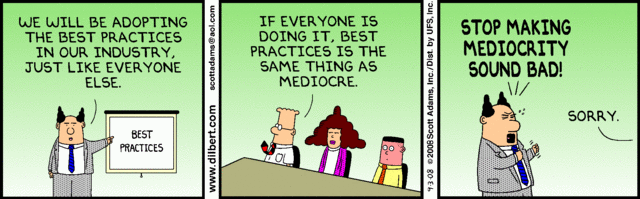
- A humorous view of best practices. (View pdf Version)
Software Project Failure Costs Billions.. Better Estimation & Planning Can Help
The Art And Science Of IT Architecture Design, by J. Dowling
- To assure flexibility and lasting value, information system designs and product selection must be guided by an architectural plan for infrastructure and applications systems. The Art of architecture design is in extracting business requirements; the Science is translating them into technology solutions.
To read the entire article, click here.
From ACM TechNews, November 21, 2003.
"Computing Power Tries to Keep Up With Information Flood"
USA Today (11/19/03) P. 3B; Maney, Kevin
- The University of California-Berkeley report, "How Much Information 2003," estimates that five exabytes of data--equivalent to all words spoken by human beings--was created last year, and reckons that the volume of information worldwide is expanding at a yearly rate of 30 percent. This information flood has been hastened by the Internet, writes Kevin Maney. He explains that data growth has been fiercely competing with Moore's Law--the tenet that computing power doubles every 18 months--but warns that Moore's Law is in danger of falling behind, which could lead to a situation in which massive amounts of information cannot be exploited because computing technology has hit a wall. "The good news is that in 18 months [a computer] will be twice as fast," says IBM Research scientist Bill Pulleyblank. "The bad news is that in 18 months, it will only be twice as fast." IBM and other companies are working to transcend Moore's Law with the development of machines such as IBM's Blue Gene/L, a supercomputer that promises to be 30 times more powerful than the world's fastest existing computer once it is up and running next year. At its current stage, Blue Gene is about the size of a dishwasher and is ranked as the 73rd fastest computer in the world. Maney writes that by the time a consumer version of Blue Gene is introduced, the amount of information generated annually could conceivably surpass 15 exabytes.
Click Here to View Full Article
From ACM's TechNews, March 31, 2006.
Business Skills in Demand for IT Workers
Network World (03/29/06) Dubie, Denise
- IT employers will be placing more emphasis on business-related skills in the years to come, according to a new survey of 100 companies by members of the Society of Information Management (SIM). Kate Kaiser, a charter member of the Wisconsin chapter of SIM and an associate professor at Marquette University, says there has been a need for IT professionals to pick up business skills for some time, but employers now want them to have business and industry knowledge much earlier in their careers. "Computer science is very technical by design, but two of the more popular areas in demand are systems analysis and systems design, both of which are customer-facing positions that require user interaction and communications skills," says Kaiser. Companies cited business-related capabilities as five of the 10 skills they need to retain. They also said there are not enough project managers with skills in project planning, leadership, and risk management, adding that entry-level employers often lack communication skills. The report says employment numbers for the IT industry, including in-house, independent contractors, and third-party provider full-time equivalents, will remain largely the same from 2005 through 2008. And outsourcing will have little impact on employees in the United States. The ACM Globalization and Offshoring of Software Report is available at www.acm.org/globalizationreport/
From ACM's TechNews, January 23, 2006.
"'Play' Model of Information System Design Makes Teammates of Users and Designers"
Penn State Live (01/11/06)
- System designers are focusing too much on the "killer application," and neglecting the different needs of users, according to researchers at Penn State. At the 26th International Conference on Information Systems in Las Vegas, Frederico Fonseca, assistant professor in the School of Information Sciences and Technology (IST), and James Martin, a professor emeritus of the Penn State psychology department, presented their argument for having designers and users act as teammates during the development process. In their paper, "Play as the Way Out of the Newspeak-Tower of Babel Dilemma in Data Modeling," they suggest that a back-and-forth dialogue between designers and users will ultimately allow for the development of IT systems that meet the various needs of its users. "For example, departments in banks interpret the term 'loan date' differently," says Fonseca. "One department views it as the date when the loan was applied for, another when the loan was approved and yet another when the money was released." They refer to communication of designers and users as 'play,' enterprise-wide solutions as 'newspeak,' and multiple systems as the 'Tower of Babel problem.' Fonseca and Martin say the failure to design systems that address the perspective of every user is the problem, and not the user.
Click Here to View Full Article
From ACM's TechNews, January 9, 2006.
"Skills That Will Matter"
InformationWeek (01/02/06) No. 1070, P. 53; McGee, Marianne Kolbasuk
- A new report from the Society for Information Management is another indication of how important business and industry knowledge, and communications and negotiating skills, have become for IT workers. Of the 100 IT managers who identified the most important talents to keep in-house through 2008, more than 77 percent of respondents cited project planning, budgeting, and scheduling; followed by 75 percent who listed functional-area process knowledge; and 71 percent who noted company-specific knowledge. Three technical skills topped 60 percent in systems analysis at 70 percent, systems design at 67 percent, and IT architecture and standards at 61 percent. And 55 percent of IT execs mentioned security skills. "The higher you go in the IT organization, the more you need to know about business," says Stephen Pickett, new SIM president and CIO of transportation company Penske, as firms rely more on off-the-shelf software and outsource IT. Pickett describes IT as an umbrella that allows someone with IT skills to see more of a company. More employers are starting to demand business-technology professionals who have "customer-facing, client-facing" skills and understanding, the survey also reveals.
Click Here to View Full Article
Systems Analysis Fables
404 Error
The Advice
Aesop's Fables
The Astronomer
The Axe
Bear and the Shield
The Bee and the Beetle
The Beloved King
The Big House
Birbal's Hodgepodge
The Birdhouse
The Blind Boy
Blind Imitation
Bob and John
Bunge Cord
Buying a Car
Cafe
Charlie The Elf Analyst
Cheetah and the Snail
The Chevrotain
The Chick's Coat
Confucius and the Thieves of Rice
The Curse
The Contest
Dancing Monkeys
Daniel and the King
The Wise Dog
Dream House
The Elephant
The Elves' Mistake
The Farmer and the Businessman
A Foolish Man Buys Shoes
The Fox and the Grapes
The Frog
The General's Horse
George's Flight -- or Plight
Great Warrior
Happy Fish
The Hidden Nuts
Home Sweet Home
Horseplay
The Houses
The Industious Mouse
Trying To Get Home
Joey's Airplane
Kenny
Kingdom of Beal
The King's Companion
The King and the Castle
Mr. Kringle's Ornaments
Let's Talk Over Lunch
The Lion's Party
Look Before You Leap
Magnarp the Giant
The Medicine Man
Mord
Mother Hen
The Mouse and the Crow
Mouse Co. and the Owl Deterrence System
Ms. Kitty
The New Cell Phone
The People of Lothimos
The Ph.D. and the Donkey
The Peacock and the Crane
The Poor Spider and the Rich Snake
The Poor Couple
The Portuguese Explorers
The Prince's Party
Pure Maple Syrup
The Rabbit and the Turtle
Santa
The Robin's Family and the Bird's Nest
A Suitable Partner
The Seven Little Lambs
Seven Sons
The Shoe Story
The Shoemaking Machine
The Soldier
Six Blind Men and the Elephant
Stone Soup
The Sultan
The Summer Bug and the Grasshopper
The Old Man Who Wanted to Quit Smoking
The Table Legs
Take Me Out To the Ballpark
The Tale of Many Zebras
The Timbla
The Travelers
Three Monks
Three Robots
The Warrior and the Island
Two Deer
The Two Sons
The Water Fountains
The Water Shortage
Weeville
Whale Tales
What's in a Name?
Wonderlands
The Wrong Direction
Your Wish is My Command
Previous Term Papers
Agile
Agile Developments Influence on System Analysis
Agile Methodologies
Agile Methodology and System Analysis
Agile Methodology - Scrum
The Alignment of Business and IT: Integrating Opposing Forces
Analysis
Analysis and Enterprise Resource Planning
Analysis of Critical Success Factors in Enterprise Resource Planning (ERP)
Analysis of Software Testing Techniques
Automated Tools
Breaking the Rules: A Closer Look into the Business Rules Management Systems
Business Analysis User Requirements
Capability Maturity Model With Information Systems Development
Capturing The Value Of Flexibility In Information Technology Project Using Real Option Valuation
Challenges of Requirements Elicitation
Can Your Customer’s Requirements Be Too Agile?
CMMI and ISO and CMMI/ISO Impact
CMMI and ISO: Success Rate
Comparison of Diagramming Tools
Comparison of Project Management Software
Coping with Emerging IT Risks
Creative Thinking Method Analysis
Conflict Resolution in Project Management
Data Modeling In Information System Analysis
Data Modeling for System Analysis
Data Modeling for System Analysis
Data Modeling in Systems Analysis
Data Modeling in System Analysis
Data Modeling.html">Data Modeling 2
Data Modeling
Deep Dive Systems Analysis and Systems Thinkers
Decision Making in Information Technology Acquisition: A System Analysis Approach
Defining User Requirements During the Analysis Phase: A Look at Use Cases
e-CRM
Effective Ways to Improve Internal and External Communication in System Development
ERP Adoption
Enterprise Resource Planning: Factors Affecting Success and Failure
An Exploration of Scope Creep
Extreme Programming
Extreme Programming
Factors Influencing Project Success
Feasibility Study for Information System Projects
A History Of Structured Systems Analysis & Design Methodologies
How do agile methods impact systems analysis
How To Prevent Project Failure
Integrating Security into Agile Methodologies
The Importance of Business Understanding in Requirements Structuring
Importance of Interview and Survey Questions in Systems Analysis
The Importance of Requirements Definition in IT Systems Development
The Importance of Scrum Methog (An Agile Methodology) in Systems Development
Incorporation Of Joint Application Design (JAD) In Systems Requirement Determination
Intranet Usability
An Investigation of Use Cases and Their Role in Systems Development
IT Enterprise Architecture
Joint Applications Design
Joint Application Development (JAD)
A Laboratory Example
Managing User Expectations
Negotiating Contracts
New Fashions in Prototyping
Object-Oriented Analysis
Object Oriented Analysis and Design: What is it? How Does it Work? Why is it used?
Object-Oriented Analysis Methodology
Project Failure A Review of the Literature
The Project Success and Failure
Preventing Project Failure in Information Systems
A Primer to Communicating as a Systems Analyst in Today’s World
Project Management in Enterprise Resource Planning (ERP) Implementation
Project Success And Failure...
Protyping: Small versus Large Projects
R. Buckminster Fuller and Systems Theory
Risk Management
Systems Thinking in the Workplace - An Action Research Approach
Requirements Determination and Requirements Structuring
Requirement Gathering And Management In Globally Dispersed Teams
Requirement Analysis for Portfolio of IT Decisions in A/E Firms
Risk Identification in IS projects ?the sooner the better
Role of Use Cases in System Analysis and Development
Scope Creep
Selecting Information Technology Projects
Soft Systems Methodology (SSM) in Information System Analysis
Scope Creep
Requirement Gathering Methods
Requirements Management
Reviewing Requirements Determination in Information Systems Projects
Risk Analysis The Most Important Risk Management Stage
SDLC and Agile Methodology
Service Oriented Architecture
Soft Systems Methodology
System Requirements
Success Factors in Higher Education Administrative Systems Implementation...
Systems Analysis in Web Application Development
Systems Development And Organizational Politics
Systems Requirements
The Effective Methodology for System Requirement Analysis
Understanding The Aspects Of The Customer And Resolving Differences...
Usability Testing
Use Cases
Using the System's Security Audit Process and Ethical Hacking to Protect Systems Vulnerabilities in Applications Such As Lotus Notes and SAP
Various Approaches for Systems Analysis and Design
Virtual Project Management
Waste Elimination in Software Development
Web Applications: Vulnerabilities and Security
Web-based Information Systems
Writing Effective Use Cases
Brainstorming and Creativity
Science of Brainstorming
Brainstorming Pitfalls and Best Practices from ACM's Interactions, September-October, 2006.
Step up to the world's coolest staircases
4 tricks for unlocking your imagination so you can innovate
How to be Creative
Conceptual Design
Tim Brown - From Design to Design Thinking
Stanford Design Thinking Process
David Kelley: How to build your creative confidence
An example of IDE-O's Work
Read more about creativity from the New York Times
29 Ways to Stay Creative
How to be Creative
The IDEO Philosophy (also available as a pdf file).
VIDEO: Improv Group Provides Creative Outlet for Graduate Students
VIDEO: South Park Elementary
VIDEO: Brainstorming @ Google
Product Design by BusinessWeek -- see especially articles on creativity
The approach to design thinking, and more about Design Thinking
IDEO
The Future of Design is Human-Centered
The Eureka Hunt: Where in our brains do insights come from?" by Jonah Lehrer)
An interview with Tim Brown, CEO of IDE-O
Stanford Design Thinking Process
Sustainability -- Part 1
Sustainability -- Part 2
Sustainability -- Part 3
Paul Bennett finds design in the details.
IDE-O comes to St. Louis
IDEO
Tracing the Spark of Creative Problem-Solving
IDE-O's Website
Where good ideas come from
Stuart Brown says play is more than fun
The Secrets of Success
From Ian I. Mitroff and Harold A. Linstone, The Unbounded Mind: Breaking the Chains of Traditional Business Thinking, New York: Oxford University Press, 1993.
- Almost without exception, all who write about the new, global information age acknowledge that we are literally drowning in an overload and overabundance of information. Never before has humankind had access to so much, so quickly, and from every part of the globe. We have more data and information on every conceivable subject, yet less understanding at the same time. Data and information do not automatically lead to greater insight; they may now travel at the speed of light, but understanding and wisdom do not.
- There is also common agreement that "data," "information," and "knowledge" are not the same, even though they are often -- wrongly so -- used interchangeably. Their differences are often as unclear to the experts as to the lay person.
- One aspect above all else is especially disturbing. It is the strong, taken-for-granted assumption that agreement between the monumental and voluminous databases that both government and businesses are constantly producing will eventually result, and further that agreement itself is fundamentally desirable. -- p.20
- In the end, the most general conclusion is "seek agreement or consensus but do not trust them fully." Agreement and consensus are important in reaching conclusions and in achieving the necessary support to carry out complex, important policies. However, as with all things human, they cannot be followed blindly. Nor are they the ultimate consideration for deciding all important questions. -- p. 37
- Finally, we can state some rules of thumb ....
- ·Seek the obvious, but do everything in your power to challenge and even ridicule it.
- ·Question all constraints. The most limiting constraints in building a model or a representation of a problem are usually imposed not by the problem itself but by the mind set of the problem solver.
- ·Challenge as many assumptions about the problem and the model as possible. Remember that what seems self-evident to the problem formulator is not always evident to others.
- ·Question the scope or the definition of a problem or model. Frequently what is omitted from the statement of a problem or model is more important than what is included.
- ·Question whether a problem is to be "solved," "resolved," or "dissolved." There are important differences between "solving," "resolving," or "dissolving" a problem. They are not necessarily the same. To "solve" a problem means to produce an exact or optimal solution to it. To "resolve" a problem means to seek a solution that is "good enough." On the other hand, to "dissolve a problem is to realize that there may be some other problem that is more important to focus one's attention on. The old or initial problem may still exist but may not be as important in the broader scope of things.
- ·Finally question the logic itself. Being logical and being right are not always the same. The more logical a solution to a complex problem sounds, the more strongly it deserves to be challenged. -- p. 47-48
Business Needs
The Alignment of Business and IT: Integrating Opposing Forces
IT is from Venus, non-IT is from Mars
Breaking the Rules: A Closer Look into the Business Rules Management Systems
DARE to innovate
Decision Making in Information Technology Acquisition: A System Analysis Approach
The Importance of Business Understanding in Requirements Structuring
Places to Intervene in a System
Product Design by BusinessWeek
Risk Identification in IS projects ?the sooner the better
The Importance of Requirements Definition in IT Systems Development
e-CRM
To learn more about interacting with clients, read the article Know Thy Client
We must always look for the unintended consequences in systems analysis.
A Fable: Confucius and the Thieves of Rice
Communication
A Primer to Communicating as a Systems Analyst in Today’s World
To learn more about interacting with clients, read the article Know Thy Client
Challenges of Requirements Elicitation
Effective Ways to Improve Internal and External Communication in System Development
Importance of Interview and Survey Questions in Systems Analysis
Systems Development And Organizational Politics
A Fable: Santa
VIDEO: The PolyKey
VIDEO: Rockwell Automation Jargon-Speak
Documenting the System and Requirements
Comparison of Diagramming Tools
Process Modeling
Process Modeling
Introduction to Data Flow Diagram (DFD)
Give us back our verbs!
VIDEO: Drawing a Context Diagram
VIDEO: Tools of Analysis (part 6 of 8) - Process & Data (DFD / Data Flow Diagram)
Data Flow Diagram (DFD) Example (Context and Level 0 Diagrams)
Data Flow Diagram (DFD) Example (Level 4 Explosion)
An example
VIDEO: Connect your Data to the Diagram
Introduction
High Level Examples
Explosions
Data Dictionary
More samples
What is MetaData?
Data Modeling
Introduction to Entity Relationship Diagrams
An example of Entity Relationship Diagrams
VIDEO: Use Cases
Overview
Use Case Notation (view as a pdf)
An Example
VIDEO: Creating Use Case Diagrams in Visio 2007
Entities and Attributes
ER Primer
ER Discussion
Domain Analysis
Data Modeling In Information System Analysis
Data Modeling in Systems Analysis
Data Modeling in System Analysis
Data Modeling for System Analysis
Object Modeling
Overview
Use Case Notation
An Example
Use Case Diagrams Examples
Role of Use Cases in System Analysis and Development
VIDEO: Creating UML Use Case Diagrams
VIDEO: Use Cases
Dictionaries and Repositories
Data Dictionary Example
More samples
CASE Tools
Automated Tools
CASE Tools and the Productivity Paradox
A Comparison of Diagramming Tools
CASE Tools
Arcadia Research Project (tools and techniques for software engineering)
VIDEO: Corporate Modeler
Specific Products
- ADOit
- Artiso Visual Case
- DB-Main
- IEF/Cool-Gen
- IEF Instructions
- An example of use of IEF-Composer is available for an ordering system
- iGraphx Flowcharter
- MetaCase/MetaEdit+
- Microsoft Visio
- Omnigraffle
- Open Source CASE Tools
- Rational Rose
- SmartDraw
- SmartDraw ERD
- Tigris: Open Source Software Engineering Tools
- Visible Analyst
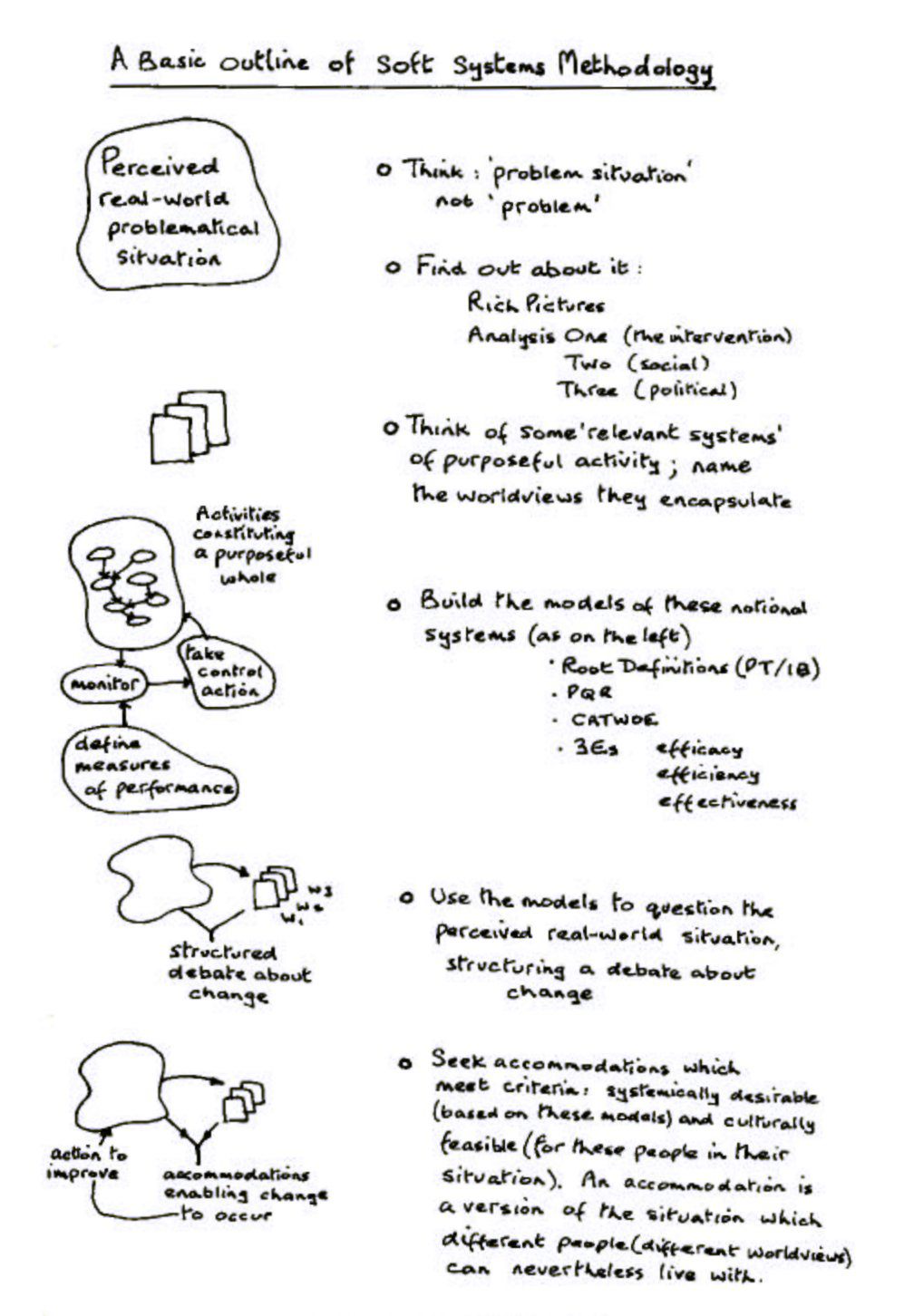
Soft Systems Methodology
Getting to the right idea
From the Accidental Successful CIO: What CIOs Can Learn From The Failure Of A British IT Project and Hello IT Manager: You’re In Politics Now!.
The Coming Culture Shift for IT/Web Analysts and CIOs
Six 'Soft Skills' Every Analyst Needs to Know
A video
Conceptual Design
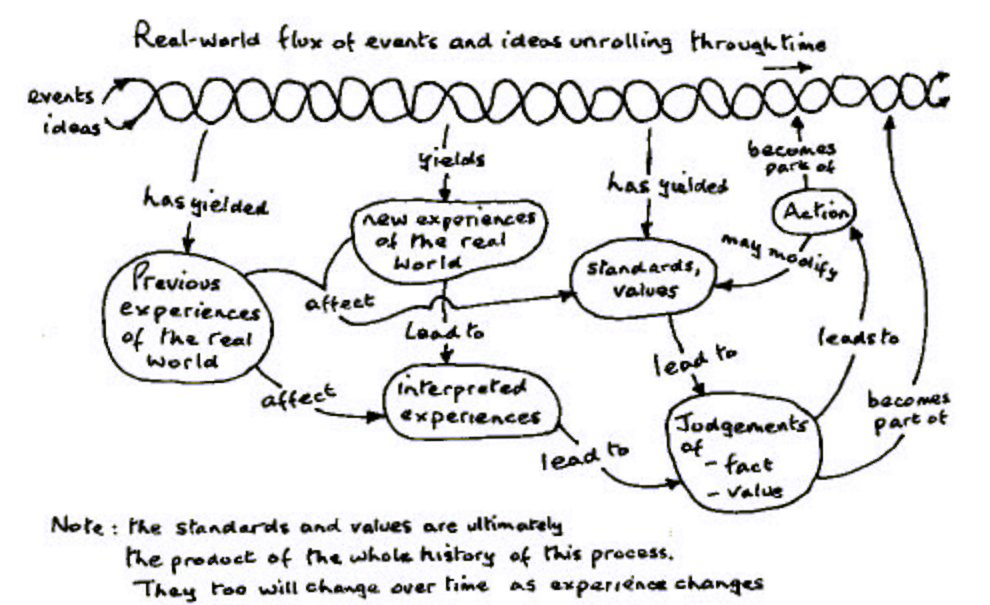
An Outline
- Flux
- Learning
- Modeling
Systems analysis defined: View this video. Seriously, view this video to talk about soft systems methodologies.
Enterprise Wide Solutions
A Fable: The Bee and the Beetle
ERP and analysis
IT Enterprise Architecture
Analysis and Enterprise Resource Planning
Software That Can Make a Grown Company Cry
Enterprise Resource Planning: Factors Affecting Success and Failure
Success Factors in Higher Education Administrative Systems Implementation: A Review of the Literature
Project Management in Enterprise Resource Planning (ERP) Implementation
ERP Adoption
Analysis of Critical Success Factors in Enterprise Resource Planning (ERP)
VIDEO: ARIS for SAP - ARIS Solution for Process-Driven SAP
Estimation
Estimation
Estimation Process
Function Points and Metrics
- Function Point Explanation
- Longstreet Consulting -- Function Point Consulting
- Software Economics
- Benefits of Function Point Counting
- Productivity of Software Since 1970
- Function Point Articles
- Online Training Video regarding Function Points
- Function Point Manual
Ethics and Systems Analysis
ACM Code of Ethics and Professional Conduct
From Knowledge@Emory, August 14-28, 2002
- What's Behind the Breakdown in Ethics? The vast majority of Fortune 500 companies have codes of ethics, yet the spectacle of top executives being led away in handcuffs or shrinking under the bright lights of a Congressional hearing is becoming all too familiar. What's behind the lack of ethics in business today? Ethics professors and other Emory scholars explore the reasons for the current crisis.
Read article.
Feasibility Analysis
Another Kind of Project Failure
Estimation and Feasibility Analyses
Initiating Projects
A Fable: The Axe
A Fable: Donkey and the Wonderful Barn
A Fable: The Hidden Nuts
A Fable: Mord
A Fable: The Peacock and the Crane
A Fable: The Poor Couple
A Fable: The Poor Spider and the Rich Snake
A Fable: The Portuguese Explorers
Systems Development And Organizational Politics
Feasibility Study for Information System Projects
US firms put social values before big profits
Random Thoughts on Project Management
Overview of Issues
Feasibility
To learn more about interacting with clients, read the article Know Thy Client
Political Considerations in Requirements Analysis
Managing Customer Expectations
VIDEO: Roman Fountains
VIDEO: Brydon vs. Not Brydon
Worth reading
- Guides & How to Manuals
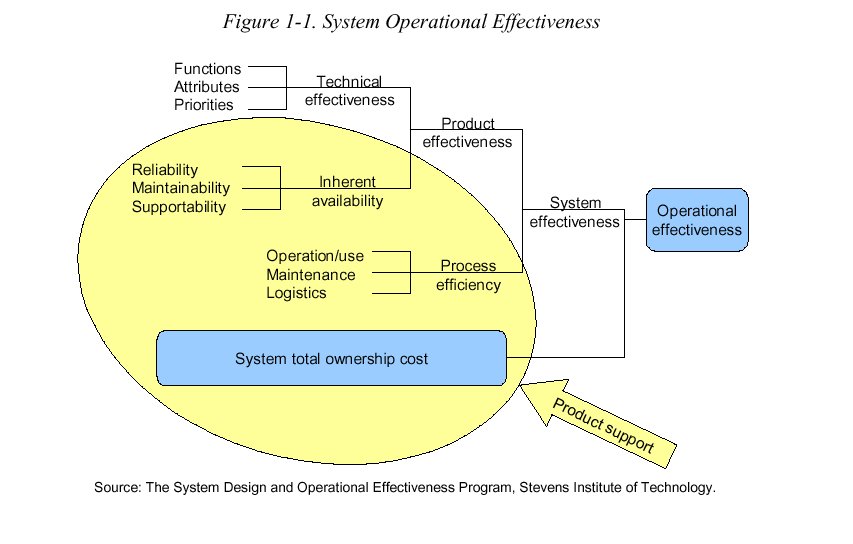
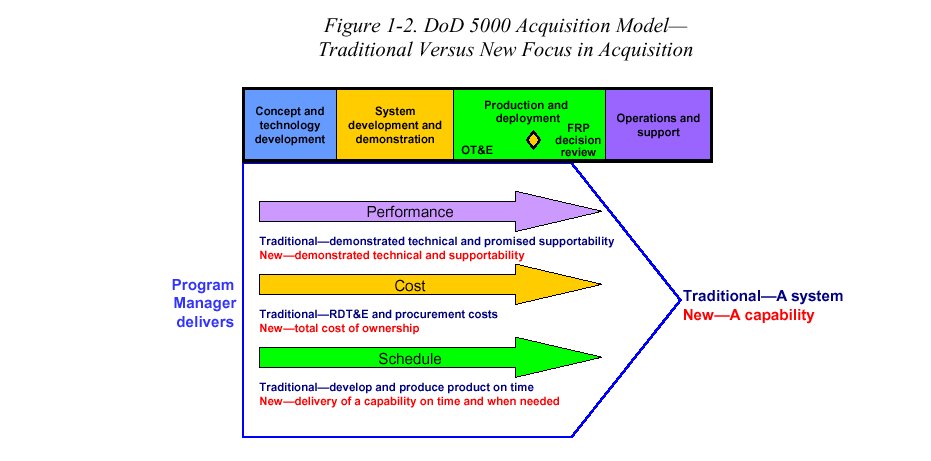
- Especially: A Program Manager's Guide to Buying Performance, which includes:
- System Operational Effectiveness
- Acquisition Focus
From ACM TechNews, August 14, 2002
- "Why Tech Falls Short of Expectations, "Optimize (07/02) No. 9, P. 20; Hartman, Amir: Prodded by Y2K concerns, the Internet boom, and an unstable economy, many companies have made excessive IT investments that have not generated sufficient returns or fulfilled corporate goals. Mainstay Partners conducted a four-year survey of 450 companies across a variety of industries, and discovered that IT-smart businesses that have achieved significant returns on investment (ROI) share three core IT strategies: Optimization of existing processes for incremental gains; the reengineering of core processes to handle efficiency and productivity fluctuations; and the creation of new processes and capacity for growth. The study also revealed many instances of bad IT investment management, including underestimation of spending, lack of a decision-making process and senior executive involvement, poorly defined business metrics, inadequate alignment of IT investments to corporate strategy, poor communication of IT strategy, and suboptimization due to poor governance. Mainstay outlines a number of business principles that companies could follow to better manage their IT investments. One principle is to forge a solid link between IT and business strategy by building a good business case for every major IT program, funneling IT funding directly from the business units' operating budgets, holding executives accountable for IT investments, and annually conducting "voice of the customer" evaluations. Other principles include promoting simple and flexible technology via a road map that balances the need for ease-of-use and next-generation capabilities; making IT a strategic adviser to the enterprise by IT-business collocation; optimizing IT's asset value by implementing value-based availability, holding quarterly operational reviews, not over committing to initiatives, and deploying strict metrics, among other things; and delivering near-term results every three months.
Click here to view full article
The productivity paradox is discussed at the following link -- The Solow Productivity Paradox:
What Do Computers Do to Productivity?
Earned Value Concepts
Information Technology Infrastructure Library
Humor and Systems Analysis
Gene Fool by Scott Adams, and 20th Century Technology
Random (Humorous) Thoughts on Information Systems Analysis
Standish view of Best Practices for SAD.
 View pdf Version
Methodologies
How giant websites design for you
Life Cycle Information
Software Development Life Cycle
Cost of Software
A Comparison of Methodologies
The Life Cycle
Application Lifecycle Management
Overview of Methodologies
Methodologies: Best Practices from the Standish Group
Joint Applications Design
A History Of Structured Systems Analysis & Design Methodologies
Incorporation Of Joint Application Design (JAD) In Systems Requirement Determination
Joint Application Development (JAD)
Soft Systems Methodology (SSM) in Information System Analysis
Requirements Analysis and Specification Briefing Study Guide
SDLC revisited.
Various Approaches for Systems Analysis and Design
Some information about Methodologies- Software Development Life Cycle
- Cost of Software
- A Comparison of Methodologies
VIDEO: Agile vs Waterfall
VIDEO: A. Giles and Walter
VIDEO: The Cost of Software
VIDEO: Agile vs. Waterfall: A Tale of Two Teams
From ACM TechNews, December 5, 2003.
"Open-Source Practices May Help Improve Software Engineering"
Newswise (12/03/03)
Open-source software development has many advantages over by-the-book corporate software development, according to university researchers. UC Irvine Institute for Software Research senior research scientist Walt Scacchi says open-source development projects hold a wealth of information about the software development process that would not be available if studying a traditional in-house system. Scacchi and colleagues from the University of Illinois and Santa Clara University analyzed hundreds of thousands of bug reports and other data available in transparent open-source development projects such as the Linux kernel. By mining this data, the researchers were able to find out what advantages bug reporting confers on software quality, for example, and how to apply those lessons to traditional in-house software development. The study targeted different areas of open-source software development: Network games and game mods; open-source scientific applications; Internet and Web infrastructure projects such as Linux, Apache, and Mozilla; and corporate-sponsored projects such as Sun Microsystems' NetBeans and IBM's Eclipse project. Among the benefits of open-source development are faster development times, continuing improvement, wide distribution of knowledge and skills, and the collective resources of those involved. Scacchi says open-source development may not be the best option for many projects, including niche software applications such as air defense radar software. Another aim of the study is to discover why some open-source projects have been so successful in garnering wide support while others falter and die off. The studies are supported by the National Science Foundation.
Click Here to View Full Article
From Good Experience newsletter, November 17, 2003.
The ROSE Framework
- The ROSE framework is a distillation of some of the more valuable
lessons I've learned in customer experience work over the past 10
years or so.
- I have presented ROSE at various events and organizations recently
and people have said they found this useful - so here are some of
the high points.
- ROSE is Results, Organization, Strategy, Experience.
- (I call it ROSE because it's more positive than SORE, and less racy
than EROS. Never promise a speech on EROS and then talk about
customer experience strategy the whole time.)
- RESULTS
- Customer experience work only matters to a business if it generates
*business results*. That's different from *usability results*, which
means improving "task success" or "time on task."
- Business results are metrics that the CEO can understand: revenue,
conversion rate, operating savings. You have to create a team and a
process to measure those results; the metrics-announcement e-mail
won't magically float into your inbox.
- Most importantly, you have to use the right method to create those
improvements in the first place. This is different from writing a
"usability report" that no one reads; I mean actually changing what
the user reads, clicks, touches. And the only way you'll create any
tangible change is with the next bullet.
- ORGANIZATION
- The only way changes ever get made to a customer experience is if
the organization buys into those changes.
- And the only way the decision-makers buy into those changes is if
they feel some ownership.
- Hint: no one feels ownership when a usability researcher plops a
report on the desk and makes academic pronouncements about the site.
- Involve the decision-makers in your process - the listening labs,
the strategy sessions, the wireframes - and they might just buy in.
- By the way, I've written about this in the past:
·http://www.goodexperience.com/blog/archives/000022.php
·http://www.goodexperience.com/blog/archives/000024.php
- STRATEGY
- Fry the biggest fish you can. This means, try to solve the most
important problems in the user experience. These are almost always
strategic, not tactical.
- For years, usability professionals have concerned themselves with
tactical details in the user experience (where to put the navbar,
exactly how many items it should hold, etc.) and have missed the
reality of customer experience: it's *strategic*.
- Here's a common example: If the user can't figure out what the site
does, or what its primary feature is, don't do *anything* else on
the site until you fulfill the user's key unmet need. Don't rewrite
the site map, don't run tactical usability tests, and for heaven's
sake, don't spout off about "branding" and run a new
multi-million-dollar ad campaign. (Yes, I've seen it happen.)
- Instead, fix the strategic problem. Make the experience better. (See
next bullet.)
- EXPERIENCE
- Remember that this entire process is about the *experience* that a
user has on the site, or in the store, or with the product.
- It's not primarily about "branding" or "market penetration" or
"information architecture" or even "usability." Those things may be
important, but the *primary* concern is, did the user have a good
experience?
- It's a holistic question that joins many parts of the organization,
has strategic implications, and can generate huge results. But you
have to ask the right question: is it a good experience?
Agile Methods
Is Agile Old School?
Agile Methods
Challenges of Migrating to Agile Methodologies
Agile Developments Influence on System Analysis
An Investigation of Use Cases and Their Role in Systems Development
From ACM's Tech News, March 15, 2006.
Agile Programming Has Fallen Short, Conference Told
InfoWorld (03/13/06) Krill, Paul
- In a presentation at the SD West 2006 Conference, Construx Software Builders' Steve McConnell argued that agile software development has not yet lived up to its promise, having been focused more on processes and tools than on people and interactions. "It seems to me that the promise of agile development has fallen short at least so far," said McConnell. In his presentation, McConnell offered his lists of best and worst ideas. McConnell claimed that agile development has been framed on the belief that developers can anticipate every possible requirement before building an architecture, an idea that made his "worst" list. Among McConnell's list of best ideas are the imperative of incremental software development, that fixing glitches decreases costs, and that software estimation abilities can be improved over time. McConnell also lauded the notion that full reuse is the most powerful form of reuse, and that intellectual flow guides software projects. Making McConnell's worst list are the ideas that the only software models are fully iterated or completely non-iterated, defect cost increase dynamics do not affect agile development projects, and that there is such a thing as a one-size-fits-all development approach.
From ACM TechNews, July 22, 2002
"Taking Programming to the Extreme,"
Technology Review Online (07/19/02); Sherman, Erik
- So that they can churn out quality software in a market clamoring for fast rollouts of new products and features, software companies are increasingly adopting development tactics that emphasize collaborative engineering. "Agile development" emphasizes teamwork, flexibility, and end-user cooperation. One form of agile development is extreme programming, in which two programmers work together--one writes the software code while the other checks for mistakes and finds possibilities for improvement; continuous testing is also a key element of the process. Peer programming involves development partners taking turns writing code and describing logic functions, and supports constant review by regularly switching partners. Testing is also undergoing a change: For example, pharmaceutical software developer Phase Forward has instituted a strategy in which programmers and quality assurance personnel continuously interact to find and fix bugs during application development; the traditional testing approach involves programming, followed by separate quality testing. Customer feedback is another form of quality control, one that Cognizant Technology Solutions follows. Rather than setting formal specifications followed by code writing, Cognizant project starts with prototypes that are adjusted by an "industrialization" cycle, in which future users make suggestions during the development process. However, consumers themselves may set the limits of software quality by determining what is acceptable.
http://www.technologyreview.com/news/401612/taking-programming-to-the-extreme/
Compatible partners in agile programming
Agile Methodology and System Analysis
Extreme Programming
See also Object-Oriented Methodologies
Object-Oriented Methods
DSM Forum
Rational Methodology
OOATutorial
OOA Bibliography
OSA: Object-oriented Systems Analysis
Project Management
Project Management Overview
Project Management Overview
An Updated overview on Project Management
Overview of Project Management by Piesbergen
Project Management Issues
VIDEO: Application Lifecycle Management
VIDEO: Project Management: Complete Idiot's Guide
Effective Ways to Improve Internal and External Communication in System Development
VIDEO: Project Tools & Techniques Articles
VIDEO: 537 Ways to Screw Up a Project
The Role of Project Manager for IS Project Success
Humor in Project Management
Scope Creep
A Fable: Horseplay
Waste Elimination in Software Development
Project Management Professional
Fables
- A Fable: The Shoemaking Machine
- A Fable: The General's Horse
- A Fable: Blind Imitation
- A Fable: Scoop Creep
- A Fable: The Prince's Party
Project Management Institute
Threats to Project Management
- Comparison of Project Management Software
- Conflict Resolution in Project Management
- IT Metrics for Success
- Project Success And Failure: What Is Success, What Is Failure, And How Can You Improve Your Odds For Success?
- Risk Management
- Scope Creep
- Virtual Project Management
Prototyping
Introduction of Prototyping
An analogy: Prototyping Star Wars Figures as an example of how different kinds of prototypes are used to answer different kinds of questions
Design Prototyping Technologies (DPT)
The Effects of Practical Business Constraints on User Interface Design
IDEO Make-a-thon
New Fashions in Prototyping
Variations in interpretation of specifications (requires Power point: you must "run show" and turn on speakers to appreciate)
VIDEO: Transformation Lab - Prototyping the Future
VIDEO: Paper Prototyping
VIDEO: Low Fidelity Prototyping
VIDEO: Microsoft CIW Prototype Demo - UXE
VIDEO: Suspended Roller Coaster Prototype
VIDEO: Rare Book Store
VIDEO: Microsoft CIW Prototype Demo - UXE
Why You Should Talk Less and Do More
Humor in Prototyping
Fables
- A Fable: Joey's Airplane
- A Fable: The Chick's Coat
Examples
- An example of how prototyping can be used
to elicit user feedback: this example is replicated
here for you to consider as a way of doing prototyping, and does not function
- The Analysis and Prototyping of
Effective Graphical User Interfaces
Prototyping Tools
- Card Sorting
- Web Page Test
Paper Prototyping
- The Paper Prototyping Website
- What is Paper Prototyping?
- Paper Prototyping: Getting User Data Before You Code
- How do we decide if we should use paper?
- Five Paper Prototyping Tips
- Checklist: Working Interface or Paper Prototype
- Paper Prototyping Methods
- Pros and Cons of Paper Prototyping
- Using Paper Prototypes to Manage Risk
- Examples
- More References
Questionnaires and Interviews
Sometimes interviews don't go the way we want them to go. Check out this video
Recruiting Tools Recruiting Tools
Traditional Methods of Defining Rerquirements
Why Interview?
Introduction to Interviews
Interview Content
Be careful about jargon!
VIDEO: IT Systems Analyst - Plan the Interview
VIDEO: IT Systems Analyst - Conduct Interview
Business Analysts Need Creative Questioning for Better Requirements: What Are Your Best Questions?
Interview Hints
How to Improve It? Ask Those Who Use It
Interview Content
Be careful about jargon!
Challenges of Requirements Elicitation
The Importance of Business Understanding in Requirements Structuring
Importance of Interview and Survey Questions in Systems Analysis
The Cognitive Interview
Guidelines for determining Specifications
Humor in Questionnaires
Humor in Jargon Use
Fables
- A Fable: The King's Companion
- A Fable: Kingdom of Beal
- Missing the point
- Example 1
- Example 2
- A Fable: The Fairy and the Pig
Interviewing Tools
- Card Sorting
- Web Page Test
Quality
Testing
Search for Zero Defect Software
Web Applications: Vulnerabilities and Security
From ACM's TechNews, March 15, 2004
"Watts Humphrey on Software Quality"
Computerworld (03/08/04); Anthes, Gary H.
- The Personal Software Process (PSP) and the Team Software Process (TSP) are designed to show individual developers and their teams how to apply the principles of the Software Engineering Institute's Capability Maturity Model (CMM) in their work, according to Watts S. Humphrey in an interview with Computerworld magazine. Humphrey, a researcher at Carnegie Mellon University in Pittsburgh, wrote the first version of CMM for software in 1987, and developed PSP and TSP. He suggests that PSP and TSP were needed because the CMM framework only told engineers what to do. The best approach to PSP and TSP is to have a small group in a department use them for a couple of projects. Once the group understands how it works, it will be easier to gain more support from the organization and gain momentum for CMM. PSP and TSP offer productivity improvements between 70 percent to 80 percent, as well as 100-to-1 quality improvements in shipped code. Humphrey says the new Capability Maturity Model Integration (CMMI) product suite is more of a business solution that supports the overall organization, but he does not recommend moving up the old CMM ladder then switching to CMMI at Level 5. And he advises IT managers to focus more on making improvements in an orderly manner than on trying to get to Level 3 or Level 4, to gain the support of senior management, and to reward line managers with bonuses but also hold them accountable.
From ACM's TechNews, April 16, 2004
"Can Software Kill You?"
TechNewsWorld (04/13/04); Germain, Jack M.
- Faulty software is becoming a larger concern now that computers are involved in nearly every aspect of people's lives. Bad code can even lead to deaths in some cases, such as at the National Cancer Institute in Panama, where 21 patients died in 2000 due to radiotherapy overdose, caused by improper programming. Software glitches have been behind major vehicle recalls in North America, some affecting critical safety functions such as brake warning lights. Yet according to the National Institute of Standards and Technology, software developers spend about zero percent of their development budget on code-checking and correction. While no software can be made perfect, a more responsible attitude can improve software quality, according to Cigital Labs CEO Jeffrey Payne. In fact, the Institute of Electrical and Electronics Engineers reported that simple peer review would eliminate 60 percent of all software bugs. Many software developers are wary of the cost of building better software upfront and instead rely on patching, says Christopher Nolan of application testing and monitoring firm Empirix. He says software that is used for applications other than originally intended also leads to failure. Quality assurance processes offer a way to drastically improve software quality, says Nolan. Companies should first conduct risk analysis and apply resources more effectively. Software testers are also important, and need to be able to think up extraordinary cases in which software might fail. Agitar CTO Alberto Savoia says computers can be used to improve software quality using testing applications. With the increase of available computing power, computers today can scan individual software modules before the entire code is run to ferret out bad code, he says.
Click Here to View Full Article
From ACM's TechNews, March 22, 2004
"Why Software Quality Matters"
Baseline (03/04) Vol. 1, No. 28, P. 32; Gage, Deborah; McCormick, John; Thayer, Berta Ramona
- Software errors that led to the deaths of Panamanian cancer patients from overexposure to radiation--and criminal prosecution against the technicians who used the software--illustrates the vital need to anticipate and remove glitches before they become a problem with potentially fatal consequences. Other deadly incidents attributed to buggy software include the 2000 crash of an Marine Corps Osprey tilt-rotor aircraft that left no survivors; the shooting down of friendly aircraft by the Patriot Missile System in Operation Iraqi Freedom; and at least three fatalities resulting from last summer's East Coast power outage. Among the reasons given for bad software is a flawed programming model, poorly thought-out designs, lax testing procedures, and the unpredictability of program interaction. The FDA distributes "guidance" documents suggesting that software manufacturers comply with generally-accepted software development specifications, keep tabs on design specs, and formally review and test the code they create--but without making any specific recommendations. The Panama incident is causing some industry experts to consider the possibility that more stringent regulation of software development is necessary. Observers note that not only are software development regulatory agencies few in number, but existing agencies such as the FDA do not go far enough to ensure quality software. For instance, the FDA approves products under either premarket approval or premarket notification. The former mechanism applies to dramatically unique technologies that are subjected to rigorous testing, while the latter applies to products that fit into existing device categories, and do not require FDA or corporate trials to be approved; the Multidata Systems International software responsible for the radiation overdoses in Panama was certified under the premarket notification process. SCC director William Guttman estimates that there could be 20 to 30 bugs for every 1,000 lines of code generated by corporate programmers or commercial software manufacturers.
Click Here to View Full Article
From ACM TechNews, February 23, 2004.
"Unplugged: Charles Simonyi Creates Software Intentionally"
Tech Update (02/15/04); Farber, Dan
- Intentional Software founder Charles Simonyi attributes most software problems to a gap between design intent and the actual coding, and cross training subject matter experts and programmers will not solve these problems. His solution is to move programming further upstream while preserving the design intent. In such a scenario, subject matter experts would present their ideas to programmers via PowerPoint, for instance, and the programmers would write a generator program in C# that reads the presentation and writes the program. The computer-aided design (CAD)-like program that the generator can read and process its input from will be provided by Intentional Software. Simonyi explains that writing generators will excuse programmers from the burden of redoing the same transformations each time the problem statement is modified or changed by the stakeholders, thus allowing the result of changes to be deployed in seconds instead of weeks and at vastly less expense--and free of deployment bugs, as well. The generators can be built and adjusted by coders in the same way that automated equipment can be adjusted by engineers and mechanics. Simonyi adds that though intentional programming does not reduce domain bugs, it facilitates rapid turnaround for fixes. The Intentional Software founder says, "With intentional software, there will be no limitation on the nature of the domain notation, and the implementation will be expressed in terms of a generator, which can be simply re-run if the design or implementation, or both, change." Simonyi notes that his company should roll out design tools and a generator interface next year.
Click Here to View Full Article
From ACM TechNews, December 12, 2003.
"Why Software Quality Stinks"
CIO (12/01/03) Vol. 17, No. 5, P. 28; Surmacz, Jon
- The poor quality of software can only be improved by the deployment of an effective software quality assurance (SQA) program, yet 38 percent of developers polled by the Cutter Consortium across more than 150 software development organizations report that their companies lack such programs, while 31 percent say they have no SQA personnel at all. Seventeen percent claim no software quality problems, while 36 percent say they do not address quality until the very end of the development cycle. Another 36 percent attest that their companies boast a SQA team that is closely involved in most (if not all) software development projects, 29 percent report the presence of integrated SQA team members in each project, and 25 percent remark that most or all projects are the responsibility of an SQA manager. Fifty-three percent of respondents indicate that their senior management believes the company's software quality is reasonable but should be improved; 30 percent say management considers the software to be of consistently high quality; 11 percent of developers note that senior management never discusses software issues with them, and 6 percent report that management is very dissatisfied with software quality. A five-step procedure for setting up an effective software quality team can be extrapolated from the survey's findings: First, getting senior management on the side of the SQA manager is critical. Second, a quality organization must be established with a manager "who has spent a few years in the trenches and has gotten products out the door," according to the Cutter Consortium's E.M. Bennatan. The three remaining steps include training developers as well as the quality assurance group, obtaining customer or user group feedback, and collating metrics to track software quality improvements.
From ACM News, October 6, 2003
"Buggy Software Taking Toll"
Orlando Sentinel (10/05/03); Cobbs, Chris
- Software is increasingly pervasive in modern products, as are the glitches that inevitably show up in growing pools of code. Unlike relatively lithe programs that operated computers years ago, many of today's software programs have millions of lines of code; enhanced programming tools have enabled this productivity, but the test and debug tools used to check these products have remained mostly unchanged, according to Florida Institute of Technology computer science professor Cem Kaner. SRI International principal scientist Peter Neumann predicts the software bugs that inhabit these programs will have more impact on people's everyday lives in the future--a message Neumann has brought before Congress five times as an expert witness. Besides inconvenience, software bugs cost the U.S. economy at least $59.5 billion each year, according to a study by the National Institute of Standards and Technology. Neumann says one underlying reason software is so error-prone is because the marketplace rewards speed-to-market and functionality more than reliability, and he notes that software engineering is a still-developing art compared to other engineering disciplines such as building architecture and civil engineering. Defects in software programs are also embedded in numerous details, and their presence is not as obvious as a missing strut in a bridge, for example. Carnegie Mellon University associate professor Philip Koopman says the average high-end European sedan made today uses around 70 computer chips and is programmed with 500,000 lines of code, with an average error rate of one defect per 1,000 lines of code. In a car, some of these defects could have life-threatening consequences, while recent catastrophes caused by software errors include the crash of the Mars Polar Lander in 1999, where programmers mixed metric and standard measurements.
"Rethinking Software Testing"
Software Development Times (10/01/03) No. 87, P. 29; Rubinstein, David
- Buggy software, products that fail to function as they are supposed to, and lost profits are the result of developers not testing their software until very late in the development process, and rushing through testing in order to get products out quickly. Many development proponents strongly agree that the development cycle, software production costs, and time-to-market can be significantly reduced when flaws are detected earlier. According to vendors and industry experts, the chief strategy is to move up testing to an earlier point in the development cycle, writing and testing code simultaneously being one example. Delaware North's Internet and Information Systems has chosen a different route by keeping software development and quality assurance testing separate, employing virtualization software to replicate the development environment for testers and cut hardware and software costs, not to mention reduce DLL conflicts and versioning difficulties. AutomatedQA's Robert Leahy reports that more developers need to conduct unit testing, and Peter Varhol of Compuware comments that developer/tester convergence requires new tools, while developers must become familiar with conducting static source-code analysis or unit tests before moving on to the next coding step. QACenter product manager Mark Eshelby believes that companies facing a tight product deadline can lower the odds of failures by identifying the highest areas of risk and testing them when the crunch comes, but says that automated tests are still an important component. He adds that 11th-hour code revisions can be made without dramatically affecting the test environment via the design of object-oriented test scripts and data-driven test automation.
Click Here to View Full Article
From ACM News, September 19, 2003
"Testing Information Systems During Development Will Prevent Problems"
EurekAlert (09/16/03)
- Penn State researcher Dr. Sandeep Purao has taken a systematic approach to applying the more than 350 existing metrics to object-oriented systems. Purao, associate professor of information sciences and technology, and co-researcher Vijay Vaishnavi, professor of MIS at Georgia State University, grouped the metrics that apply to any IT development project using the object-oriented approach and found gaps and overlaps in the stages of project requirements; design specifications; implementation; and operation. "No one had proposed a systematic approach to deciding when to apply specific metrics whether at an early stage, throughout the development or at the end," says Purao. Developers should be able to evaluate projects at various stages, rather than having to wait until the project is completed to conduct a test. Knowing which metrics to apply at different stages of software development can lead to fewer problems. For example, a software problem has emerged in the new $16 million computer system of the school district in Baltimore, Md., forcing the school system to pay about $500,000 a month to address the software issue. Purao and Vaishnavi believe their research will help reduce the IT snafus that lead to overruns in cost and delays in the implementation of systems.
Click Here to View Full Article
Requirements Analysis
A Fable: The King's Companion
A Fable: Kingdom of Beal
How giant websites design for you
A Fable: Joey's Airplane
A Fable: The Chick's Coat
A Fable: The Table
A Fable: The New Cell Phone
Can Your Customer’s Requirements Be Too Agile?
How to Tell When the Requirements Are Done
Information Audit
Managing Requirements: practical information on managing requirements
Capturing The Value Of Flexibility In Information Technology Project Using Real Option Valuation
Requirement Gathering And Management In Globally Dispersed Teams
Requirements Determination and Requirements Structuring
Requirements Analysis and Specification Briefing Study Guide
The Importance of Requirements Definition in IT Systems Development
Using the System's Security Audit Process and Ethical Hacking to Protect Systems Vulnerabilities in Applications Such As Lotus Notes and SAP
VIDEO: Ultimate Gaming System Requirements
From ACM TechNews, August 5, 2002
- "Are Vendors Doing Enough to Improve Software?" Optimize (07/02) P. 15; Parker, Bob; Guttman, William: Bob Parker of AMR Research and William Guttman of Carnegie Mellon University's Sustainable Computing Consortium (SCC) offer differing opinions about whether enterprise software vendors are making enough of an effort to improve the quality of their products. Parker attributes many problems in software quality to external factors, such as over customization of applications, conflicting standards from multiple standards bodies and infrastructure vendors, and project complexity. He also thinks that the perpetual-license model enterprise software markets rely on is flawed, and must be modified with higher initial prices, larger annual fees, and renewable licenses. Guttman, on the other hand, says the fault lies with a software industry that freely admits that its system of rushing new products to market first and delivering patches second is unworkable. "We need to make software as reliable as water and electricity, but we know there's no quick fix," he notes. Guttman asserts that the SCC was formed as a platform where the creation of secure, sustainable, reliable, and high-quality computing can be discussed. Its goals include the development of solid sustainability measurement techniques and tools; the organization of empirical models for studying public policies and how they affect sustainable computing; and the creation of reliability metrics. "The goal is to quantify those best practices and make them more widely available, changing the model from 'release and patch' to 'develop, test, fix, and release,'" Guttman says.
Click here to view full article
From ACM TechNews, August 7, 2002
- "Why Software Is So Bad," Technology Review (08/02) Vol. 105, No. 6, P. 32; Mann, Charles C.:
Engineers posit that software quality is declining because it suffers from a profound lack of design. The increasing size and complexity of programs have significantly reduced the effectiveness of the "code and fix" method, in which programmers write code and use compilers to detect errors, which they then correct. And although component-based programs made up of modular elements are considered to be very useful, critics say their usefulness is canceled by the numerous features wired into software because of marketing pressures. Former Microsoft CTO Nathan Myhrvold adds that constant customer demand for new software and new features is contributing to the reliability shortfall. Software vendors have also turned defective software into a profit center by accompanying it with poorly developed help files that give users no choice but to seek expensive customer support. Some software companies, such as Microsoft, believe they can reverse the decline in quality by dramatically reforming their engineering processes and implementing higher standards of reliability measurement, but there are coders who think that product liability lawsuits will be even more effective in spurring developers to improve their software. "It's either going to be a big product reliability suit, or the government will come in and regulate the industry," forecasts Cigital Labs chief scientist Jeffrey Voas. Critics contend that commercial software developers must stop making quality a secondary priority, which they say is a practice deeply ingrained in corporate culture.
http://www.technologyreview.com/featuredstory/401594/why-software-is-so-bad/
The Art And Science Of IT Architecture Design,
by J. Dowling
- To assure flexibility and lasting value, information system designs and product selection must be guided by an architectural plan for infrastructure and applications systems. The Art of architecture design is in extracting business requirements; the Science is translating them into technology solutions.
To read the entire article, click here.
Views of Specifications
- Requirements Gathering
- Systems Requirements
- Evaluating Systems Requirements
- Origins of Specifications
You might want to look at my annotated version of an article about Labadie, MO that originally appeared inPost Dispatch.
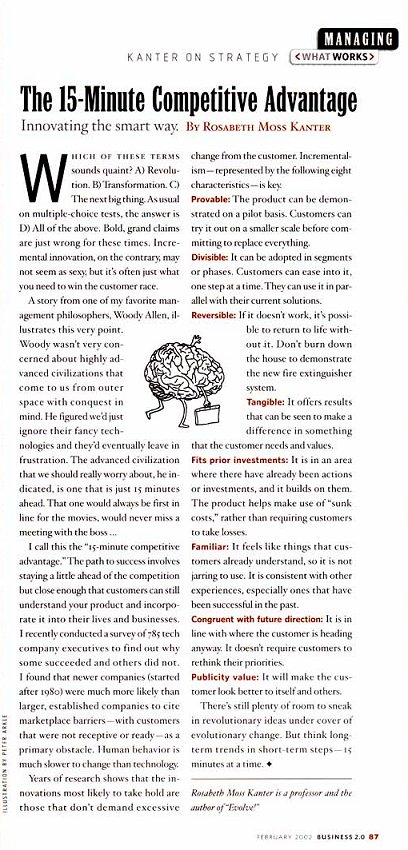
Hints for successful innovation: The 15-minute Competitive Advantage
The Analysis and Prototyping of Effective Graphical User Interfaces
From Good Experience (by Mark Hurst), 04 Feb 02
|
As a sidenote, USA Today recently commented on the state of product design. The three common flaws, it says, are "Consumers are ignored... product design teams are flawed... [and] technology runs amok."
Companies really can make a difference -- in customers' lives and on the bottom line -- by focusing on a good customer experience. I recommend that companies pay positive attention to *all three* of those areas:
- - Listen to customers.
- - Build the right customer experience team.
- - Understand the benefits and limitations of your technology.
USA Today article: http://usatoday30.usatoday.com/life/cyber/tech/review/2001/12/31/devil-design.htm.
|
Top Ten Mistakes in Web Design
Standards for Methodologies: SEI-CMM and ISO
Mr. Craft's Presentation
A discussion of CMM and ISO
A Presentation about ISO-CMM
Another Presentation about ISO-CMMI
An overview of ISO-CMM
Another Overview of SEI CMMI
Corporations
From the SEI-CMM Institute
- SEI Documents
Published Appraisal Results for CMM Evaluation
- CMM Integration
- Insights on Program Success
- Process Maturity Profile
Other Views on CMM, CMMI and ISO
- The Capability Maturity Model and ISO 9000 Standards: Similarities and Differences
- The Immaturity of CMM
- Capability Maturity Model With Information Systems Development
- CMMI and ISO: Success Rate
Teams and Team Formation
Launching a Cooperative Learning Team
Bio-inspired tips to create better teams>/a>
Characteristics of Successful Teams
The Guerrilla Guide to Interviewing (version 3.0)
Skills Associated with the SDLC
Importance of Group Members

User Expectations
A Fable: Kenny
A Fable: The King's Companion
A Business Perspective of Analysis
The Value of Information Technology (best viewed with Internet Explorer); Power point version
A view of how clients view specifications
10 Business Lessons I Learned from Playing Dungeons & Dragons
From ACM's TechNews, April 19, 2004
"Testing 101: AWOL on the College Campus"
Software Development Times (04/15/04) No. 100, P. 1; Correia, Edward J.
- Few college and university computer science curricula include testing for quality, which is a vital ingredient in software development, according to industry experts. Go Pro Management President Robin Goldsmith maintains that college curricula overemphasize people and project management, leaving quality assurance in the lurch: "There's a notion that a project manager should not be directing attention to hands-on skills associated with testing, requirement analysis and design because if they are busy doing that, they are not doing project management," he notes. "Requirements determine what needs to be done, and testing determines if it's being done right." Gartner research director Theresa Lanowitz adds that software quality testing and career goals deserve equal consideration, while both she and Goldsmith agree that the scope of computer science curricula should be expanded to more fully include testing. "Colleges should have parallel tracks on how to put quality code to use by testing against requirements," asserts Lanowitz. A common argument against including software testing in curricula is that testing does not constitute a real career, according to Boston University's Azer Bestavros; Lynn Robert Carter of Carnegie Mellon University's Institute for Software Research International adds that software QA testers usually earn less money and are more likely to have their jobs outsourced. Florida Institute of Computer Science professor James Whittaker strongly believes that companies must place more value in quality if they are to have successful-selling products. He concludes that quality will be the chief point of discernment for applications once those applications and development tools become equal in terms of time-to-market and feature sets.
Click Here to View Full Article
From ACM's TechNews, March 31, 2004
"Researchers Question I.T. Subcultural Values"
NewsFactor Network (03/29/04); Martin, Mike
- Over three-quarters of IT projects are doomed to failure not because of complexity, usability, and new technology's unpredictability, as many people assume, but because an IT occupational subculture often clashes with users and managers, according to Jeffrey Stanton of Syracuse University. "Occupational subcultures are groups of individuals who, based upon their occupation, develop their own language, values and behaviors that distinguish them from other groups within an organization," Stanton observes. His conclusion that subcultural conflicts were responsible for failed IT projects is based on 18 months of research with Kathryn Stam encompassing 12 New York organizations that were implementing major tech projects, and over 100 interviews. The technical jargon IT staffers use acts as a barrier that blocks outsiders' access to knowledge, while another source of frustration is IT personnel's tendency to explain things too rapidly. "A tech problem often seems routine to the IT worker, but--as one user said--it doesn't help 'when they come in and go zoom, zoom, zoom, zip, zip, zip with a mouse and they've totally lost me, so I never learn anything,'" notes Stanton. IT workers, on the other hand, often harbor feelings that their contributions are under appreciated by management and end users. Clif Boutelle of the Society for Industrial and Organizational Psychology attests that outsiders respect IT workers who are helpful, responsive to problems, and are "good teachers," although Stam reports that many IT personnel she and Stanton interviewed expressed a reluctance to nursemaid non-IT personnel. Stanton says his research emphasizes the need for organizations to close subcultural gaps, but cautions that assigning blame is more likely to exacerbate the situation. A more effective solution is acknowledging and understanding subcultures within an organization.
Visio
Visio Demos
- Microsoft Overview
- Demo from Microsoft
- Visio Self Training
- Linking Data to Diagrams
- How To Use MS Visio
- Visio: Using the Status Bar
- Using Autoconnect
- Applying a Theme
- Connect your Data to the Diagram
- Add and Customize Data Graphics
- Applying a Theme
- Visio Demos
What is Information?
Measures of the value of information
alternate syllabus (an example of data, not information)
Information Comparison
Building Blocks of IS
Information Flow
What is Systems Analysis?
Systems Thinking from Wikipedia
Trials and Tribulations of a Business Systems Analyst
What Does A Systems Analyst Really Do?
What is Systems Analysis
Systems Development Life Cycle
Process v. Data Orientation
Different Types of Systems
Stage Deliverables
Deliverables
More about Deliverables
Six 'Soft Skills' Every Analyst Needs to Know
Agile Methods
Soft Systems Methods
Benefits of Systems Analysis
unintended consequences in systems analysis
What are the benefits of modern systems analysis? Find out here.
Systems Analysis Want Ads
Systems Development Life Cycle
Overview of the Products of the SDLC phases
Systems Analysis Deliverables
Process-Oriented vs. Data-Oriented Analysis
Different Types of Systems
Stage Deliverables
Deliverables
More about Deliverables
Agile Methods
A Systemic Perspective from the Systemic Perspective Series.
- Evolution of Systems Thinking
- Systemic Perspective
- Habits of a Systems Thinker
- Systems Thinking
- System Boundaries
- System Perspective Intent
- Health Care as an Example
Systems Development for Different IS Types
Systems Theory
What is a System?
A system definition courtesy of the Pentagon. This is the actual image used by Gen. Stanley A. McChrystal, the leader of American and NATO forces in Afghanistan, to portray the complexity of American military strategy. View system definition of Afghanistan Stability/COIN Dynamics.
Dr. Ackoff talk about his views of thinking, check out his YouTube video, Exploring Systems Thinking.
Systems Development Methodology
Principia Cybernetica: What is Systems Analysis?
unintended consequences in systems analysis
The Philosophy of Systems Analysis: Extreme Programming (XP)
To Combat Terrorism, a Systems Approach is Vital --- read the article
Systems failure begins with poor systems analysis. Read about the Denver Airport.
VIDEO: A Day in the Life - Computer Systems Analyst
Think about the skills associated with systems analysis. One of the items in the list is "systems thinking." We will look at the definition of a System and think about what Systems Thinking means.
For more information about the tasks necessary for Systems Analysis, visit some of the sites on the Analysis Links page. In particular, visit the What Does A Systems Analyst Really Do? and the Systems Analysis Want Ads pages, and the Systems Development Life Cycle page.
This is an actual e-mail that I received, which I provide to you because it provides some good insights.
|
Professor Sauter,
I stumbled onto your page (ref above) following another link. It took me back too many years to my days as a student just starting out in information theory and analysis. I hope you don't mind a few gratuitous comments.
First of all, it is good to see some systems theory being used in the classroom. It seems that all the focus these days in on the technology even in systems analysis curriculum.
One additional approach to systems theory is control, what information from the output of the process is needed for feedback into the process in order to maintain control? and what internal process state information is needed with in the process for control. The distinction I am trying to communicate very poorly here are the concepts of quality control, ie measuring the output of the process to tune it, and statistical process control, measuring the state of the process it self to assure that the output is going to be correct. The latter being a more robust approach. In manufacturing the process capability index is used as a measure of the robustness of the process. The same approach can be applied to administrative processes.
Deming's observations on specific causes and general causes of system faults is very relevant. approximately 15% of defects in a system come from specific causes, the balance (general causes), are intrinsic to the design of the system (process) itself. Management is responsible for correcting the general problems. The worker for correcting the specific problems. (Gee, not too much recall from reading such a big book!)
I would also like to draw your attention a book on information theory by Prof James C Emery of the university of Penn. (about 30 yrs old!) You might be able to find a copy in a college library somewhere. Two thoughts to take away 1. Value of information - To have value three conditions must exist a. Information must be new b. You must be able to act on the information c. You actions must be able to create value or influence the outcome in some way.
2. Role of buffers between subsystems - serve to decouple the subsystems but at a cost - the buffer inventory (Material or information inventory) Buffers can be eliminated or reduced by greater processing of information. ex. in manufacturing we have been able to move to more JIT concepts only by having a great deal more information processing going on instead of holding larger inventories with min max order rules. Another example is in integrated systems - shifts a company from subledgers that are 'closed' into the G/L at the end of the month to realtime accounting for each business transaction.
Good Luck with your courses, we have too many technologists (relatively
speaking) and too few business or information analysts graduating. The analogy - the cars are getting faster but we aren't training anyone to drive them well! Hope you are successful in adjusting this balance.
------------------------------------------
Tom Collins
Vice President, CIO
Cookson Electronics
Email: tcollins@ced.cookson.com
508 541-5850 - Office
508 541-5878 - Fax
|
|