Peoples has a pretty wide lens with which to view the Bridge Program’s impact, but the program actually began 17 years before she got involved.
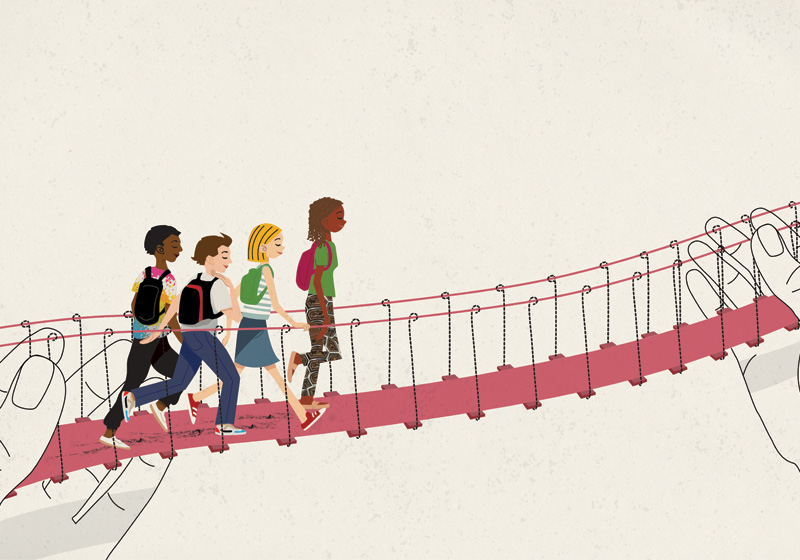
It started in 1986 as the vision of late UMSL Chancellor Marguerite Ross Barnett, who aimed to enlarge the pool of students pursuing higher education. She wanted to reach back into area classrooms and neighborhoods, meet students where they were and provide them with an intentional, structured program that would equip them with the skills and qualifications needed for college success.
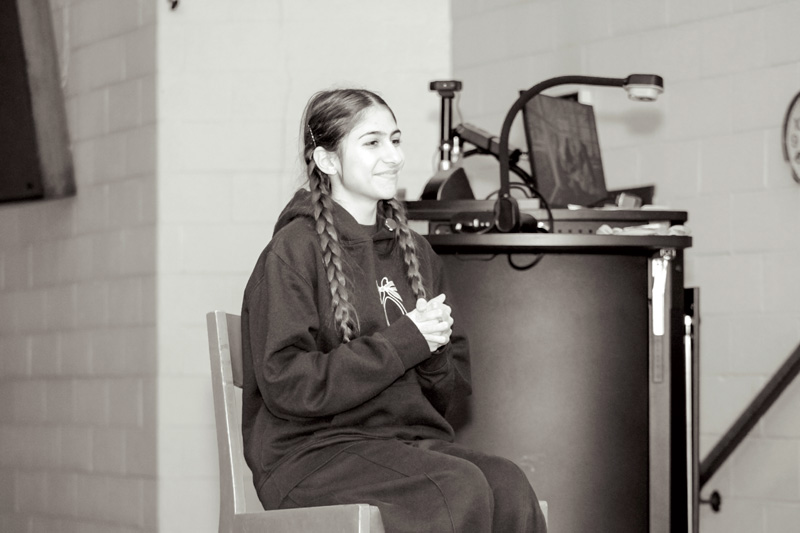
The Bridge Program began as a partnership between UMSL and two high schools in the St. Louis Public School District: Beaumont and Vashon. Within a few years, it expanded to also serve students from Normandy, University City and Wellston.
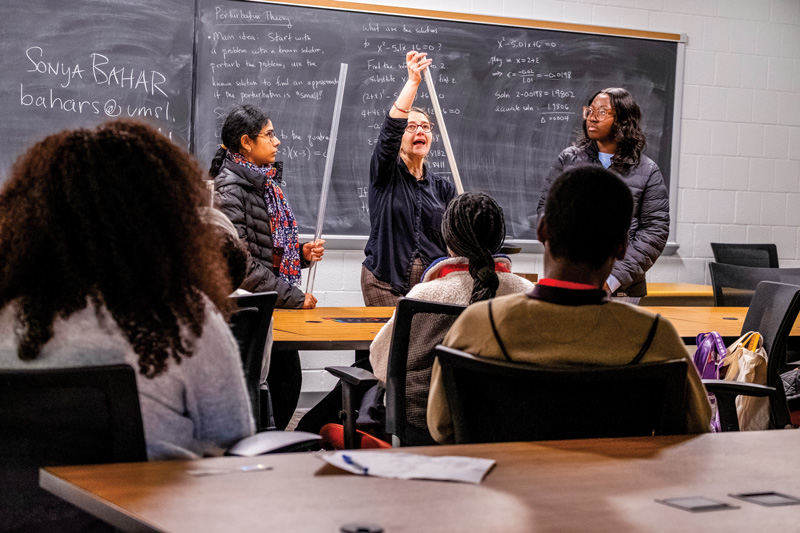
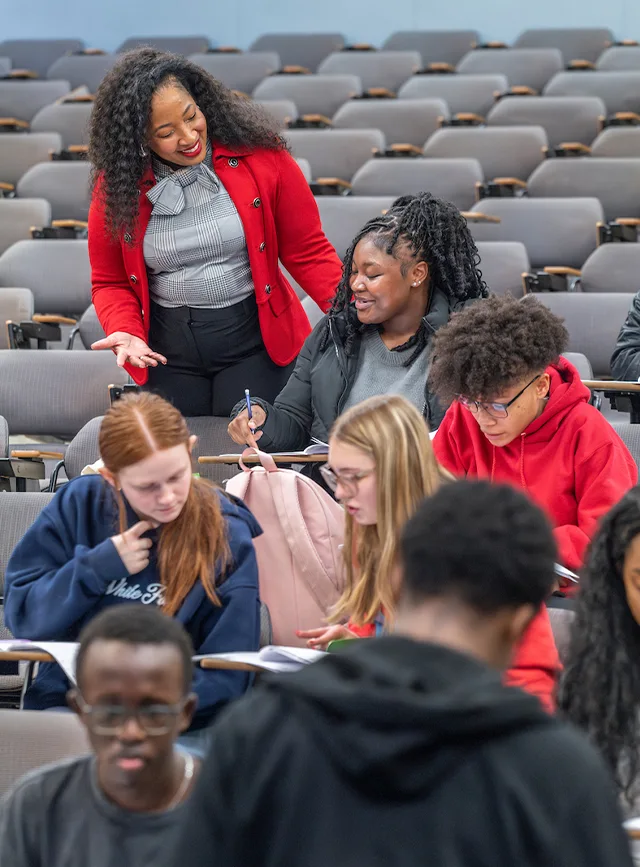
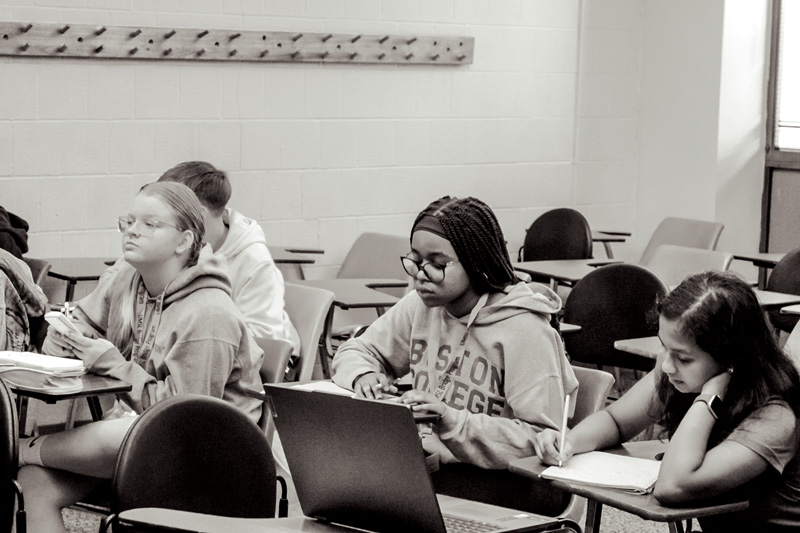
Today, the Bridge Program’s Saturday Academy serves about 400 students from high schools, both public and private, throughout the region each year. Each Saturday is structured with approximately hour-long sessions devoted to math, science, writing and dialogue strategies, career and personal development and college preparation.
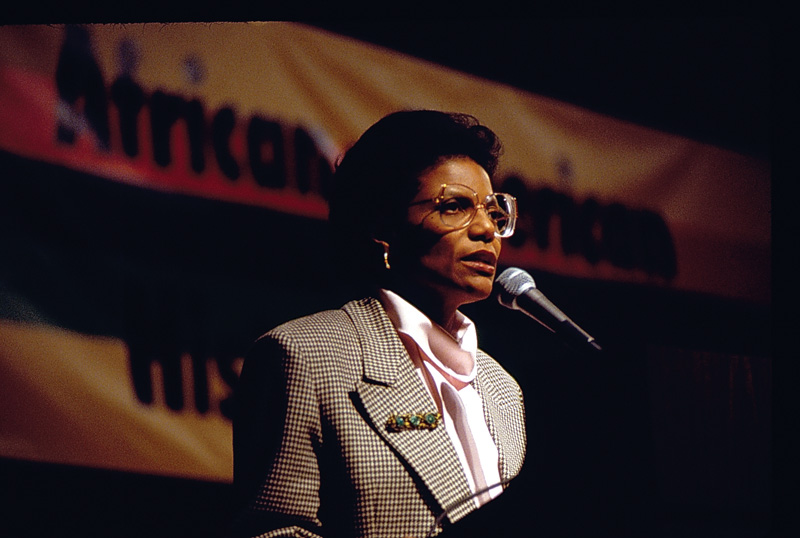
Freshmen and sophomores engage in workshops, in which they learn tools to identify careers that interest them and begin creating focused plans to pursue them. Workshops for juniors and seniors are designed to help them navigate the college admissions process, understand financial aid and learn how to research scholarship opportunities.
There’s also a once-monthly Parent Academy that provides parents strategies to help support their children as they prepare for, apply to and choose their college.
While the Saturday Academy remains a centerpiece of the Bridge Program, it also organizes after-school programming at seven area high schools and has developed a Summer Academy that offers fun and interactive learning opportunities for about 500 students, some starting in middle school, to help them get a jump on their futures.
Amber Mitchell still remembers Bridge being a small program with about 50 students when she joined during her senior year at Beaumont in 2003.
“I actually used it as a way to learn more about schools in the St. Louis area because I’m not originally from here,” says Mitchell, now a guidance counselor at Hazelwood East High School.
Bridge always had a heavy emphasis on math and science, providing extra instruction to position students to pursue degrees in STEM. But Mitchell remembers courses focused on financial aid and navigating the college admissions process being just as impactful.
“I had no idea what I was getting myself into, but it really just opened my mind to what was available,” Mitchell says. “Even though both my parents went to college, they didn’t really help me. My mother was deceased, and my father just really didn’t know a lot about college because it was different than when he went. The Bridge Program is really what allowed me to do my college exploration.”
One of the things Mitchell discovered was that one of the colleges she’d been considering was not accredited, cheapening the value of a degree. She amended her college plans and wound up enrolling at UMSL, receiving a Margaret Bush Wilson Scholarship, as she pursued a degree in psychology. Mitchell first joined the Bridge Program as a student volunteer before moving on to roles as a paid employee and graduate assistant, and she’s never fully left. After earning master’s degrees in secondary school counseling and adult higher education from UMSL’s College of Education, she became an instructor and now leads college prep classes at the Saturday Academy.
The work aligns with Mitchell’s chosen profession. She has spent nearly two decades as a school counselor, including stints in the Jennings, Ritenour and Hazelwood School Districts, and has steered numerous students toward Bridge because she’s watched how it continues to benefit students with college preparation workshops, seminars focused on personal and professional development, opportunities for networking and mentoring, and counseling services.
“My students have become stronger writers because of the intensive writing classes that they’re in,” Mitchell says. “Then the college prep program builds on itself year after year, so that a student who has been in the program for four years, I see they are more prepared than students who have not participated in a program like this.”
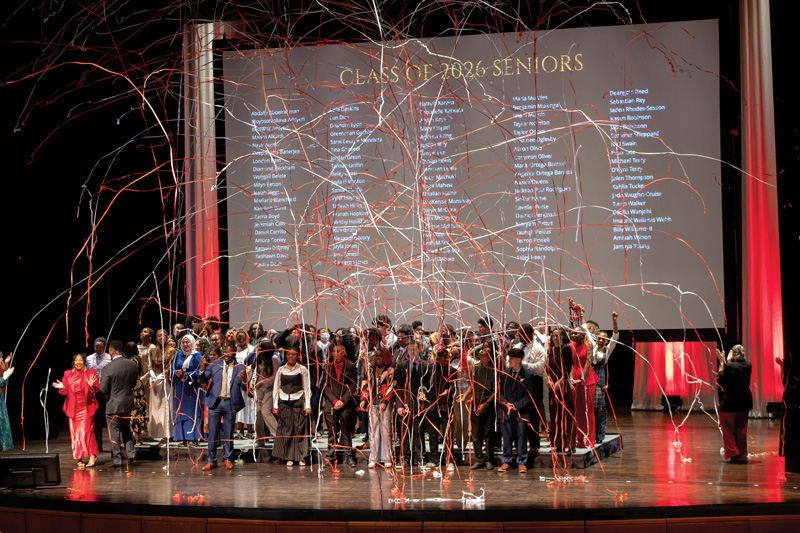
Since 2003, 100% of Bridge Program graduates have gone on to college or other postsecondary educational opportunities.
Geoffrey Soyiantet serves as the founder, president and executive director of Vitendo 4 Africa, a nonprofit that helps connect members of the immigrant community in St. Louis to services that can help them thrive.
“We try to find resources and programs in St. Louis that help youth in terms of their college readiness, job readiness, but also personal development,” Soyiantet says. “Considering many of the immigrants and parents don’t understand the education system in America the way maybe other people will, they can miss out on a lot of that.”
It was about seven or eight years ago that he learned about the Bridge Program and started steering some of his clients to it.
But Soyiantet has gained a new and greater appreciation for the program over the past five years because his daughters, Anne and Abigail Sankale, have both participated in it.
Anne spent four years in the program before graduating last year from Fort Zumwalt East High School. A student council president who also participated in the Youth Leadership St. Louis Program, she received enough scholarships to cover the full cost of tuition at The Ohio State University, where she is now studying political science with plans to attend law school.
Her father believes strongly that all the early mornings in the Saturday Academy helped prepare her for that success. Soyiantet and his wife were also regular attendees of the once-a-month Parent Academy, which proved nearly as valuable. They learned from discussion leaders and other parents about some of the pitfalls of the college admissions process, how to strengthen relationships with their daughters and how and when to push them.
“If you don’t have that relationship with the kids, then there’s no way they’re going to take your advice,” Soyiantet says. “When the kids are seeing their parents coming in early in the morning, that helps create the support system for them. They see, ‘If parents are also taking time for me, then I need to work hard to make sure that I’m able to give them something good out of it.’”
Abigail Sankale got an even earlier start in the Bridge Program than her older sister. She attended the Middle School Summer Academy as a sixth grader, and she credits the experience for helping her discover her love of science.
Sankale has taken part in the Summer Academy every year since and attended the Saturday Academy the past two years. It’s given her a great foundation for college planning, but it’s also helped her begin looking beyond college to potential careers.
“We had a career fair, and I learned about so many other jobs that exist in the health care field, like PA, CRNA,” says Sankale, who aspires to become an anesthesiologist. “I didn’t know there were so many different jobs. It kind of helped me understand what kind of job I want to get.”
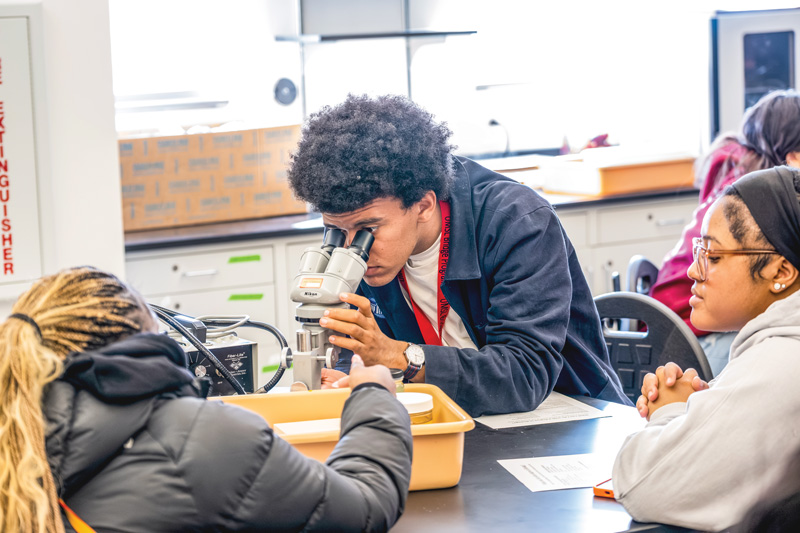
Like Sankale, Ahmed Brooks started attending Bridge’s Middle School Summer Academy as a sixth grader. He’s now a junior at Belleville West High School in Illinois and already thinking about a potential career as a business analyst, a profession he learned about through the Summer Academy.
“You get exposed to a lot of careers,” Brooks says. “Even if you don’t want to do those, you still get as much experience as a person who does. It’s an even playing field. If you do want to do this, you have enough education to do what you want to do.”
The Bridge Program has evolved in recent years with Peoples and her team placing a greater emphasis on career exposure and development as part of what they call Bridge Forward.
“While we remain deeply rooted in the core values that have made the Bridge Program successful for the past 40 years, Bridge Forward represents the next chapter of that vision,” Peoples says. “It’s where we more intentionally connect college preparation with workforce pathways. We want our students to discover careers that align with their strengths and interests, something they can truly be passionate about. Something that motivates them to get out of bed each day with purpose. Ultimately, we want them to pursue work that is not only meaningful to them, but work that has the power to transform the lives of others.
“Since 1986, the Bridge Program has been planting seeds of possibility in the lives of students. Watching those seeds grow into confident leaders and changemakers is what keeps us doing this work every day.”