ENGLISH 395 1939:
F. GRADY WINTER 2003
455 LUCAS SSB 342
516-5592 / fgrady@umsl.edu MW 12:30-1:45
MW 11:00-12:00, W 2:00-3:30, & by appointment [SEC. 002; #17200]
In 1990 the U.S. Post
Office issued commemorative stamps honoring four classic American films: Gone
with the Wind, The Wizard of Oz, Stagecoach, and Beau
Geste. It was hardly a coincidence that all four films had originally been
released in 1939, for that year has widely been regarded as "Hollywood's
greatest year," during which the major film studios finally shook off the
effects of the Great depression, reaching new heights in 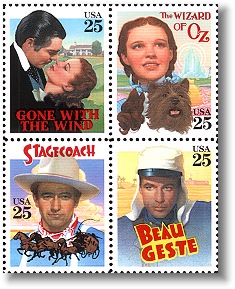 employment and drawing
in 40 to 50 million patrons a week to see what most students of American film
consider to be some of the best movies ever made in Hollywood.
employment and drawing
in 40 to 50 million patrons a week to see what most students of American film
consider to be some of the best movies ever made in Hollywood.
Of course, some of this is
just standard entertainment industry hoopla, at six decades' distance--
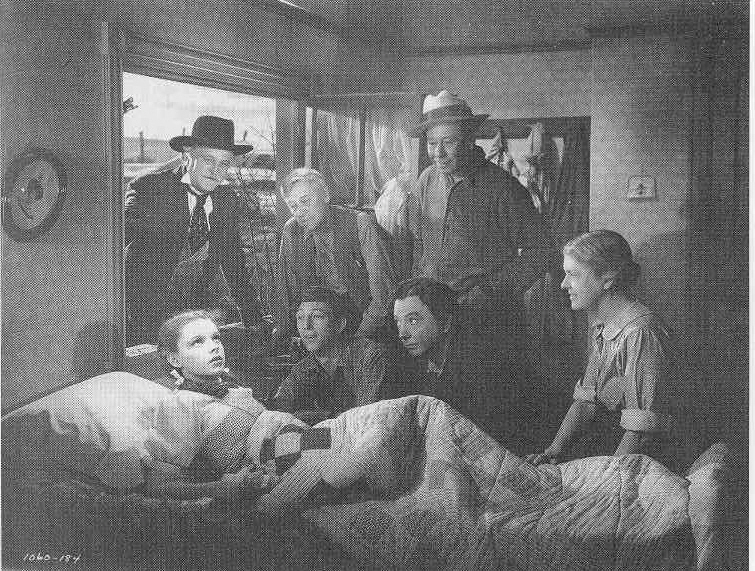
In this course we'll try to see what the hoopla was all about by studying several films from that great year. Along the way we'll also learn something about the entertainment industry and the studio system, 1930s American cultural history, film language and technology, film stars and genres, and film theory and criticism. We'll be "taking Hollywood seriously," as one of your textbooks puts it, as a site of artistic, cultural, social, economic, and imaginary importance, both then and now.
Required texts:
• Edward Buscombe, Stagecoach. British Film Institute, 1992
• Tino Balio, Grand Design:
• Richard Maltby and Ian Craven, Hollywood Cinema: An Introduction (Blackwell, 1995). (hence HC)
• Salman Rushdie, The Wizard of Oz. British Film Institute, 1992
Course requirements/expectations:
Your final grade will be based on two 4-5 page essays (20% each), midterm (15%) and final (20%) exams, two film reviews (5% each), and class participation (including some written responses to discussion questions) and attendance (15%).
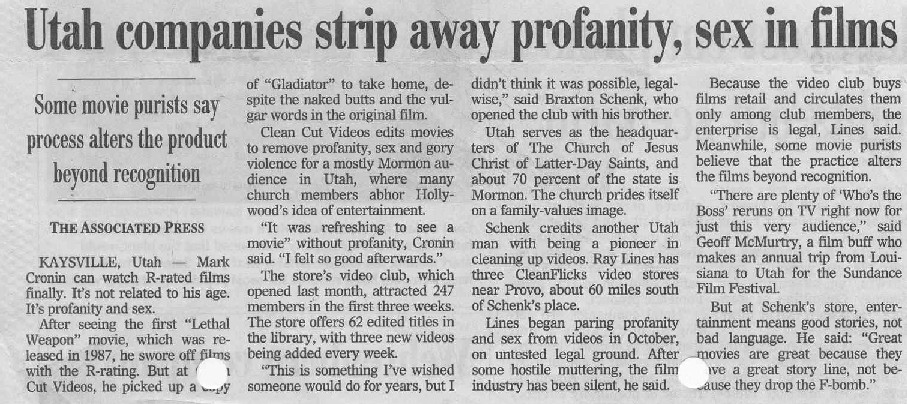
Perfect attendance is expected, and four or more absences will have an adverse effect on your grade. It is particularly important that you be present on screening days, since the films are the primary texts in the class and they need to be seen uninterrupted and in the proper format. Be aware that all of the films are longer than our scheduled 75 minutes; you should be prepared to stay for an extra 30-60 minutes on screening days.
Film reviews should be no longer than one single-spaced page (300-500 words). The films should be chosen from a supplementary list of contemporary titles I will supply. I will also post each review on the mygateway web site for everyone's reference (which means that I'd like to receive them electronically if possible).
Note that while you must submit two essays, there are three essay due dates specified on the syllabus (and that they are all Fridays rather than class meeting days). This arrangement is designed to give you some flexibility in arranging your semester's workload. I will distribute some suggested topics about ten days in advance of each due date, though you will not be limited to those topics. Plagiarism on papers, electronic or the old-fashioned kind, will mean an instant F for the assignment, my undying disapprobation, and possible disciplinary action by the university; please refer to the English department's plagiarism handout for further details, and please please please ask me if you have any questions.
Tentative Syllabus:
M JAN 13 Introduction; coming attractions
W JAN 15 Some film technique and vocabulary
"Editing," HC 201-17;
"Introduction: Taking
W JAN 22 Studio production
"Introduction," GD 1-12
"Feeding the Maw of Exhibition," GD 73-108
"Technological Change and Classical Film Style," GD 109-42
"Surviving the Great Depression," GD 13-36 (recommended)
M JAN 27 Dodge City (1939; 105m); Destry Rides Again (1939; 94m)
W JAN 29 Genre I: what we know about the Western
"Entertainment," HC 18-52
M FEB 3 Stagecoach (1939; 96m); Jesse James (1939; 105m)
W FEB 5 Genre II; Ford and the idea of the auteur
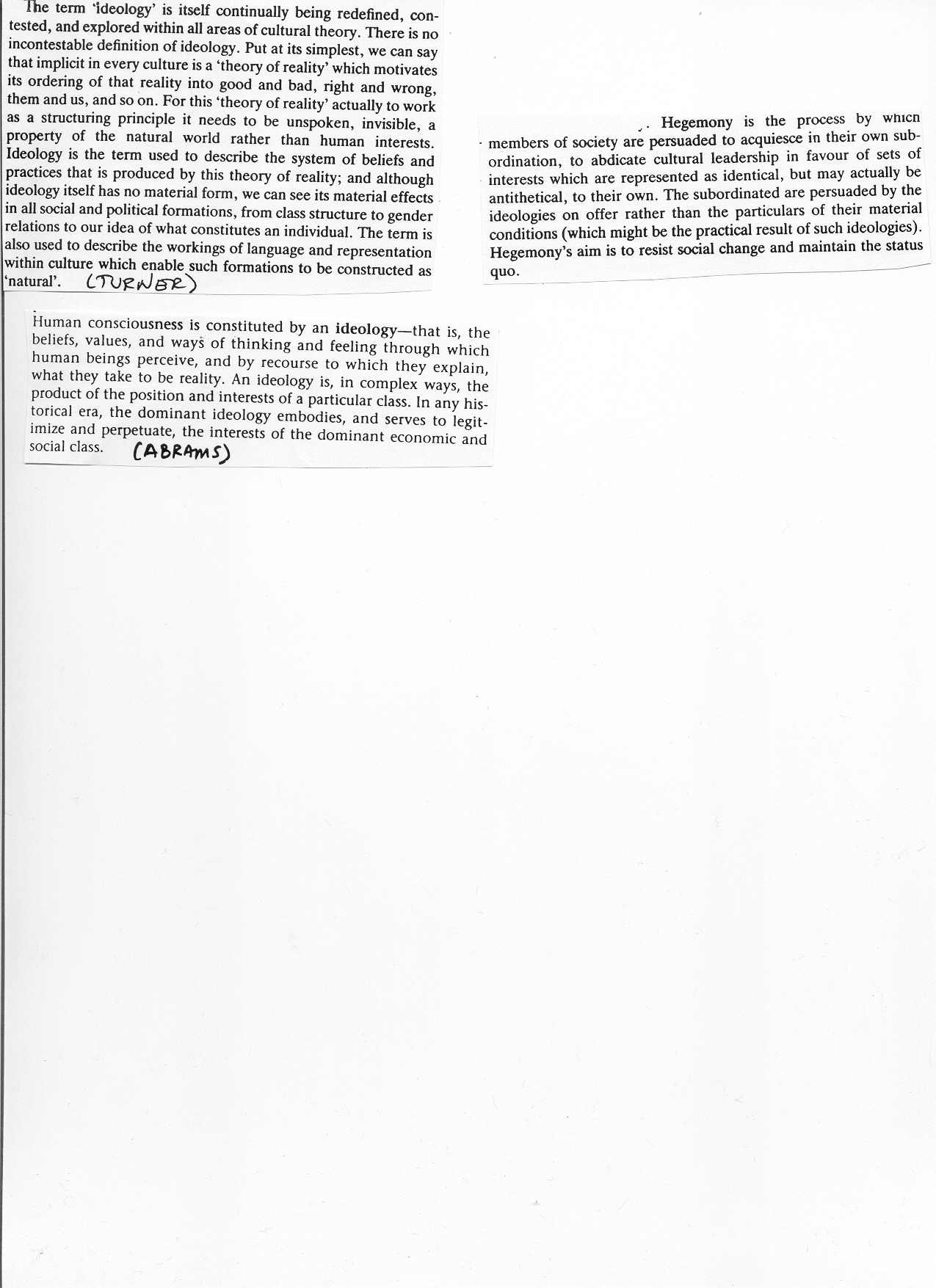
Robin Wood, "Ideology, Genre, Auteur" (online/reserve)
M FEB 10 Ninotchka (1939; 110m)
W FEB 12 Movie stars
"Comedy," GD 256-80
"The Star System," HC 88-101
"Performance," HC 234-85, esp. 252-76
M FEB 17 Dark Victory (1939; 106m)
W FEB 19 Genre III: the "woman's picture"
"Gender and Genre," HC 132-8
M FEB 24 Only Angels Have Wings (1939; 122m) First Essay Due Date
W FEB 26 The Production Code
"Ambiguity…" and "Clarity and Ambiguity," HC 339-51
"Criticism in Practice: Only Angels Have Wings," HC 447-57
M MAR 3 The Wizard of Oz (1939; 155m)
W MAR 5 MGM and the spectacular
"Narrative," HC 323-39, 351-55
M MAR 10 Gone With the Wind (1939; 232m)
W MAR 12 Genre IV: the prestige picture
"Time," HC 286-318
M MAR 17 GWTW continued:
W MAR 19 Midterm
MAR 24-26 SPRING BREAK
M MAR 31 Murder Over New York (1940; 65m); Love Finds Andy Hardy (1938; 92m)
W APR 2 Genre V: the B picture
F APR 3 Second Essay Due Date
M APR 7 Mr. Smith Goes to Washington (1939; 130m)
W APR 9 Hollywood and politics
M APR 14 Young Mr. Lincoln (1939; 100m)
W APR 16 Film theory and studio production
Cahiers du Cinema," xerox
M APR 21 The Grapes of Wrath (1940; 129m)
W APR 23 Genre VI: the social problem film
"Controversy with Class," HC 382-90
M APR 28 The Maltese Falcon (1941; 101m)
W APR 30 Film noir

F MAY 9 Third essay due date
W MAY 14 Final Exam 12:30-2:30
SPECIAL CONSIDERATIONS
Students with disabilities of any sort who believe
that they may need special accommodations in this class are encouraged to
contact the Disability Access Services Office in 144 Millennium Student Center
at 516-6554 as soon as possible to ensure that such accommodations are arranged
in a timely fashion.