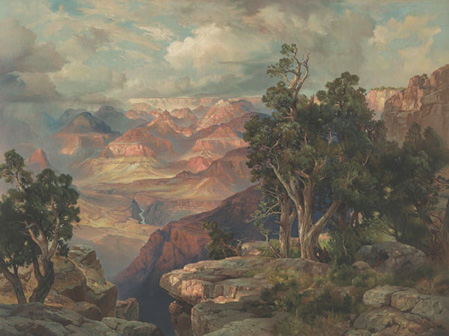
1912, chromolithograph
Collection of the St. Louis Mercantile Library at the University of Missouri - St. Louis
Moran’s American travels began in 1860, and the subject matter of the western landscape dominated the rest of his career. Moran traveled extensively between 1871 and 1892, often with government survey and geological teams, and the works he created influenced the formation of the nation’s national parks. Although his paintings provided visual evidence of the beauty and grandeur of the American West, Moran did not consider them documentary. In his words:
"I place no value upon literal transcripts from Nature. My general
scope is not realistic; all my tendencies are toward idealization....Topography
in art is valueless."
Expand Your Horizons Artists like Thomas Moran influenced the formation of our nation's national parks. Click here to learn more about the national parks movement.
Some explorers left
written descriptions of their exciting journeys. Click here
to read a selection from John Wesley Powell's exploration of the Colorado
River.
 |