The Sketch as an Artistic Tool 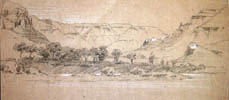
As landscapes became more popular, the sketch became an important tool for rendering the actual landscape in more accurate detail. It was cumbersome to bring a canvas and oils out into the countryside but bringing along a sketch book and working in watercolors and oils, the artist was able to work out the onsite details of the land. As well, the sketch allowed for spontaneity and freshness which could then be incorporated into the finished oil painting. The idea behind the sketch, capturing the specificity of nature, was deemed admirable but the sketch was rarely seen as able to stand on its own merit. This plein air tradition, which was followed by the earliest American landscape painters, was greatly influenced by the utility of these sketches.
In the 1850s the sketch increased in use and popularity but it was still not considered appropriate for public exhibition. The art audience of the time much preferred a finished look over that of a vague suggestion. Sketching was also considered an upper class accomplishment in that only the rich might have the time to sketch a scene; however, only a true artist could render a finished painting.
Much of the success enjoyed by plein air artists was due in part to the freshness and spontaneity of their work. In this way, the sketch itself grew in importance and many later artists such as Albert Bierstadt painted sketches with future exhibition in mind. The 1880s saw a great surge in the art market as collectors were clamoring to acquire paintings that exhibited the characteristics of the outdoor sketch.
Art historians in the twentieth century became obsessed with the sketch as indicative of the trend towards modern art as they were less polished, fresher and more abstracted. Today, the sketch stands on its own as a work of art and is exhibited extensively as part and parcel of an artist’s oeuvre.