(See: Drugs in American Society, 5th, 6th, 7th, 8th, and 9th editions, Erich Goode, McGraw-Hill, 1999/2005/2008/2012/2014. Chapters 6/7/1, and Mosher and Akins, Drugs and Drug Policy: The Control of Consciousness Alteration, Sage Publications, 2007. Statistics are gathered from the various surveys discussed, especially: Substance Abuse and Mental Health Services Administration, Results from the 2013 National Survey on Drug Use and Health: Summary of National Findings, NSDUH Series H-48, HHS Publication No. (SMA) 14-4863. Rockville, MD: Substance Abuse and Mental Health Services Administration, 2014.)
World Drug Report ArchiveWorld Drug Report: 2012 (Transnational Institute Response to the 2008 report) 2016 World Drug Report (local copy)
Legal Instrumental UseBesides accepted medical use, instrumental use of other legal drugs: Nicotine==> Stay awake while studying.OTC (Over-The Counter)
Prescription
|
| Americans 12 and up | 1991 | 2001 |
2002 | 2012 | 2016 |
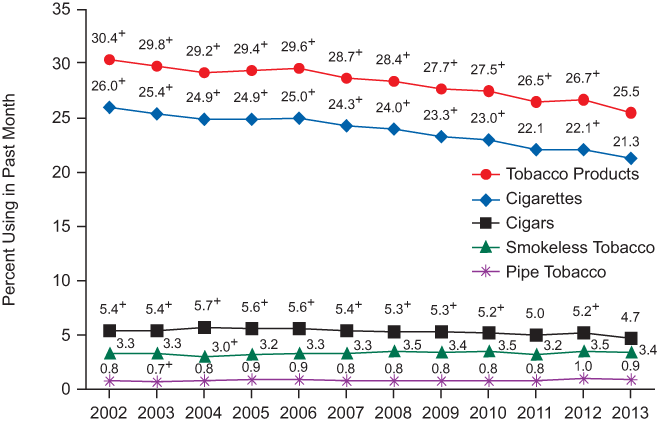
| Cigarettes | 26.0% | 22.1% | 19.1% | ||
| Smoke tobacco (past month) | 27% | 29.5% |
30.4% | 26.7% | 23.5% |
| Smokeless tobacco | 3.4% | 3.2% |
3.3% | 3.5% | 3.3% |
| Cigars | (6.9% 1998) | 5.4%
|
5.4% | 5.2% | 4.6% |
Past Month Tobacco Use among Persons Aged 12 or Older: 2002-2013 (Latest NSDUH)
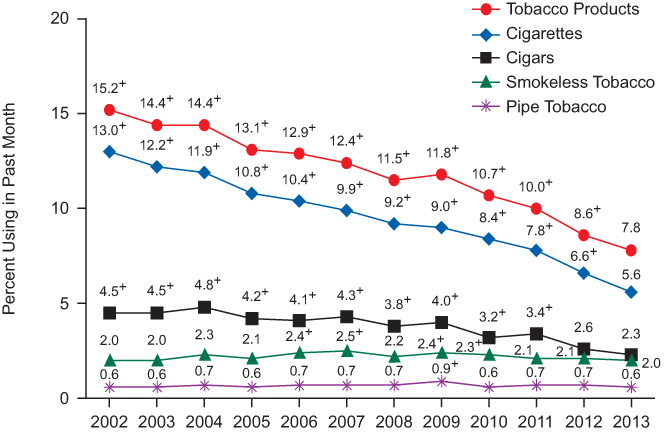
Past Month Tobacco Use among Youths Aged 12 to 17: 2002-2013 (Latest NSDUH)
Current MTF Data (MTF: Cigarettes: Trends in 30-Day Use, Risk, Disapproval, and Availability in Grades 8, 10, and 12
Current National Survey on Drug Use & Health
Alcohol:
Historical Data:
Recent Alcohol Industry Statistics
Contemporary Trends:
Where people drink the most booze and do the most drugs. Washington Post Wonkblog, 5/23/2016.
| Americans 12 and up | 1991 | 2001 |
2002 | 2010 | 2013 | 2016 |
| Ever tried ETOH | 85% | 81.7% |
83% | 82.5% | 82.3% | 80.2% |
| Used ETOH past month | 52%/21% teens | 48.3%/teen use stable |
51% | 51.8% | 52.2% | 50.7% |
| Binge Drinkers | -- | 20.5% (15.7% 1998) |
22.9% | 23.1% | 23% | 24.2% |
| Heavy Drinkers (binge 5x/month) | -- | 5.7% (5.9% 1998) |
6.7% | 6.7% | 6.3% | 6.0% |
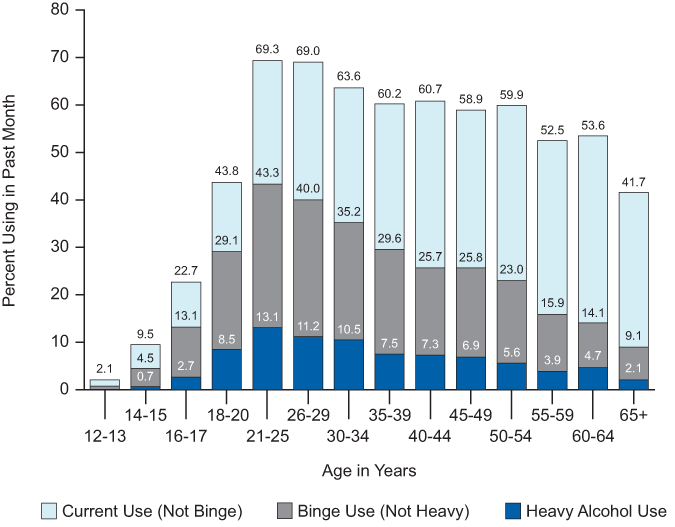
Current, Binge, and Heavy Alcohol Use among Persons Aged 12 or Older, by Age: 2013 (Latest NSDUH)
Newsbrief:
UN Reports Drug Use on the Rise Worldwide
http://www.stopthedrugwar.org/chronicle/243/worldofdrugs.shtml
"The United Nations Drug Control Programme has released its annual report, showing an increase in global drug consumption. According to the report, 185 million people now use illicit drugs. 147 million of these are cannabis (marijuana) users, but the increase of global consumption is primarily due to increased use of ecstasy and amphetamines.
Worldwide, cannabis use is most popular among individuals ages 18 to 20, and other drugs are most popular among those aged 18 to 25. Almost half of all 10th graders in the United States have used drugs, the report says, though the rate has fallen somewhat since last year. No other country in the world was reported to have a rate nearly that high, despite the massive US drug war effort."
2005 World Drug Report (from the executive summary):
"Some 200 million people, or 5% of the world’s population age 15-64, have used drugs at least once in the last 12 months. This is 15 million people higher than last year’s estimate but remains significantly lower than the number of persons using licit psychoactive substances (about 30% of the general adult population use tobacco and about half use alcohol). The number of cannabis users worldwide is now close to 160 million people or 4% of the population age 15-64. Estimates of the number of ATS users - 26 million people using amphetamines and 8 million using ecstasy - are slightly lower than those of last year ’s World Drug Report (WDR), reflecting declines of methamphetamine use in South-East Asia (notably Thailand) and of ecstasy use in North America (notably in the USA). The number of opiate users is estimated to have risen slightly to around 16 million people (11 million of which abuse heroin), mainly reflecting increasing levels of opiate abuse in Asia. No significant changes were observed in most other parts of the world. The number of cocaine users – close to 14 million people – rose slightly.
Unsurprisingly, the main problem drugs at the global level continue to be the opiates (notably heroin) followed by cocaine. For most of Europe and Asia, opiates continued to be the main problem drug, accounting for 62% of all treatment demand in 2003. In South-America, drug related treatment demand continued to be mainly linked to the abuse of cocaine (59% of all treatment demand). In Africa, the bulk of all treatment demand – as in the past – is linked to cannabis (64%)."
NIDA supported Institute for Social Research, "Monitoring the Future survey of High School Students and Young Adults (since 1975)
SAMHSA supported "National Survey on Drug Use & Health " (NSDUH) (Formerly called the National Household Survey) (since early 1970's)
DAWN Report (since mid 1970's) (see below)(lost funding in 2011)
ADAM: Arrestee Drug Abuse Monitoring Program. ADAM II since 2007 (Reports). 2014 Funding for ADAM II cut.
Pulse Check: January 2004 (local copy) St. Louis 2004 (local copy) January 2002 Report (local copy) seems to have lost funding. 2004 was last year available)
Complete listing of federal data sources
Other sources
SAMSHA National Survey on Drug Use & Health
Cocaine, Hallucinogens, and non-medical use of pain relievers "tie" for the #2 spot in lifetime use.
Cocaine
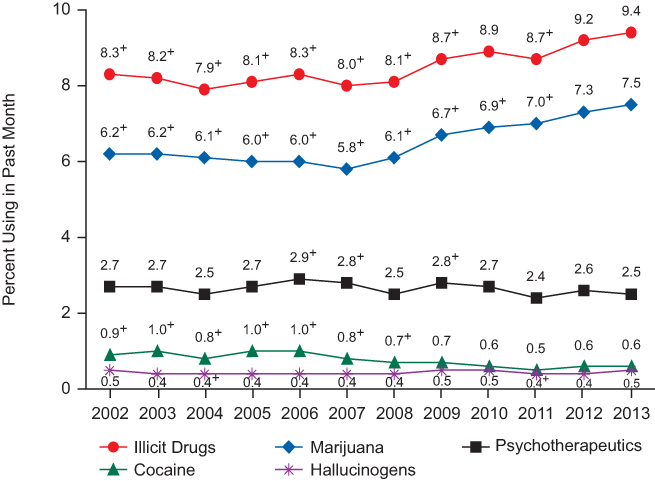
Past Month Use of Selected Illicit Drugs among Persons Aged 12 or Older: 2002-2013 (Latest NSDUH)
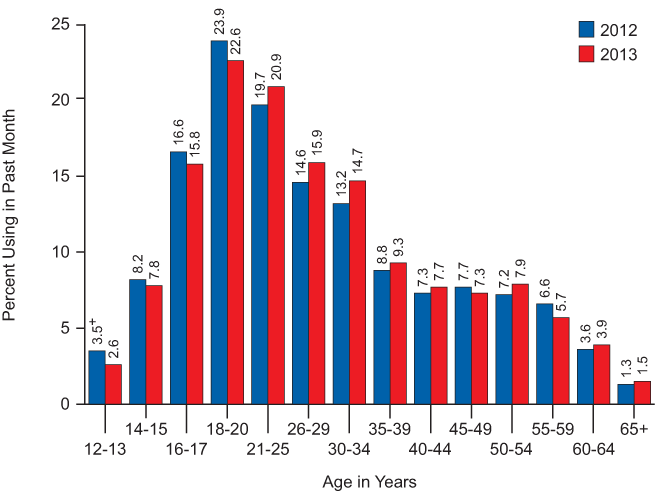
Past Month Illicit Drug Use among Persons Aged 12 or Older, by Age: 2012-2013 (Latest NSDUH)
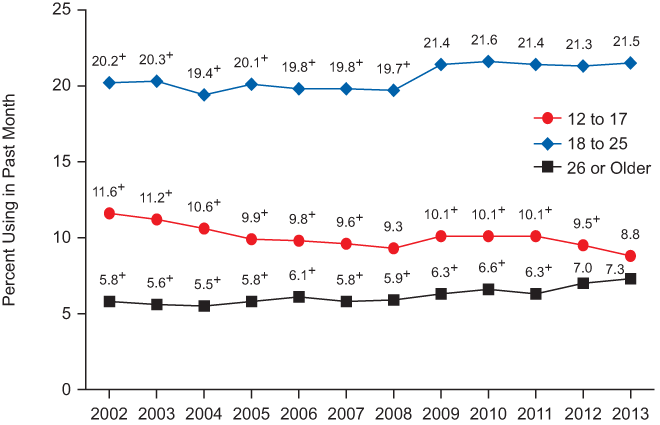
Past Month Illicit Drug Use among Persons Aged 12 or Older, by Age: 2002-2013 (Latest NSDUH)
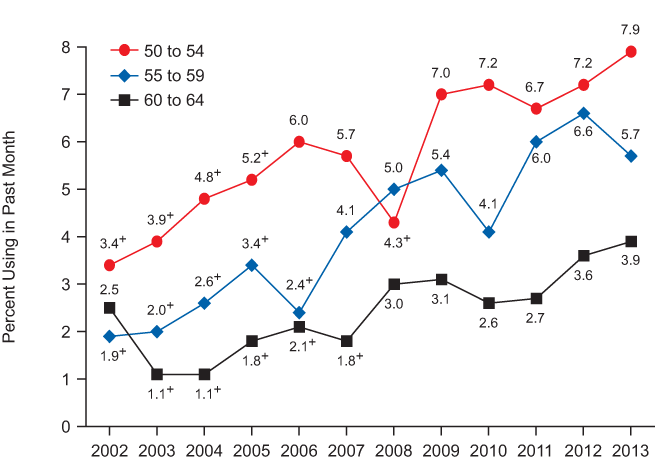
Past Month Illicit Drug Use among Adults Aged 50 to 64: 2002-2013 (Latest NSDUH)
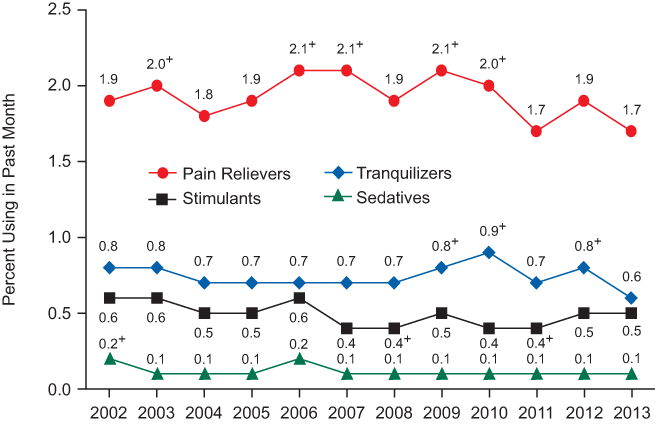
Past Month Nonmedical Use of Types of Psychotherapeutic Drugs among Persons Aged 12 or Older: 2002-2013 (Latest NSDUH)
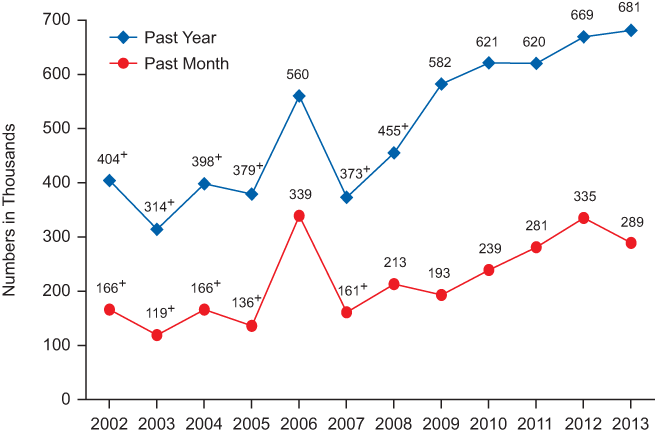
Past Month and Past Year Heroin Use among Persons Aged 12 or Older: 2002-2013 (Latest NSDUH)
Current MTF Data (MTF 2009 Overview)
Relative to other Illicit drugs, Marijuana Use is in a class by itself!
And, Alcohol, of course:
And, Tobacco (past month):
- LSD/Hallucinogens (2.7% loyalty rate)
- Cocaine (4% loyalty rate)
- Methamphetamine (4% loyalty rate)
- Heroin (5% loyalty rate)
Higher rate of "user loyalty" for high school students has to do with their age and the recency of initial use: We tend to see that as a population ages, many "mature out" of their drug use.
Overall Trends (MTF)
- No surveys pre- 1970
- "Retrospective estimates" indicate Marijuana, Cocaine and Hallucinogens were the most popular drugs.
- 1960 estimate: 6% had ever used marijuana (18-25 year olds)
- Use rose gradually throughout the 1960's
- 1967: 15% had tried marijuana
- 1967-1972: Dramatic increase, by 1972 (1st household survey) 48% had tried marijuana
- Same pattern holds for other drugs (at correspondingly lower levels)
- "Summer of Love"-- 1967/68 largely a localized phenomenon
- Peak of use: 1979-1982(some disagreement here based on sampling differences of surveys and specific drug in question.
- 1980-early 1990's: Steady and dramatic decline for just about all drugs (some exceptions and irregularities)
- Even Alcohol and Nicotine use was down (contrary to belief that their use would increase as illicit use declined)
- At worse use of Alcohol has been stable, but with decline in many age groups
- Illicit use: Way down until 1990/91 (except for stability of "lifetime use")
- Exception: Interesting Stability of LSD Use, also increases
- 1998-2002: RISE IN REPORTED USE, growth in regular, frequent use of cocaine (peaks in 1999), perceived rise in binge drinking among young adults (40-45% of college population)
- 1997-1998: Stabilizing? Downward trend beginning? Or, Lull before the storm?
- 1998-2001: Modest increases in many drug categories
- 2001-2002: Slight decreases in most use--especially alchol and tobacco. Even ecstasy use is down slightly from peak in 2001 (9.2% seniors/lifetime). Also, modest increases in stimulant use (cocaine and methamphetamine). Also, slight increases in heroin use--yet these findings could be insignificant year-to-year variations.
- 2002-2006: Stabilization and or significant decrease in use--especially cigarettes.
- 2008: Tobacco use stabilizing
- 2010: Illicit use up, concern over prescription pain relievers, tobacco use dropping.
- 2012: Tobacco use down, especially among the young. 2011-2012 declines in illicit use, especially among the young (Latest NSDUH)(Latest MTF)
- 2014-2016: Slight downward trend continues (except for marijuana), more significant for alcohol and tobacco.
Attitudes toward Drug Use
Four General Areas of Concern
- Considered Harmful
- Disapproval of Use
- Availability
- Support for Criminalization (not specifically measured in recent years)
- See Current MTF
Between 1979 and 1990 the rate of disapproval on all three of these items DOUBLED for Marijuana and Cocaine, and increased or remained stable for other drugs. Since 1992, disapproval rankings dropped then rose slightly for cannabis, leveled off 2005-2008 and have dropped since 2009 through to 2016. Disapproval of cocaine use has been rather stable throughout the past decade.
Long-term Patterns through 2012
Generally, Throughout the period 1979-1990:
- Opposition towards "Hard" drugs remained strong
- Opposition towards legal drugs remained weak, with a growing awareness of their risks.
- Opposition to Marijuana grew dramatically
As of 1990 most High School Seniors disapproved of illicit drug use, view it as harmful and feel the use of such substances should be criminalized.
BUT, most still felt that experimentation is OK and relatively safe
1991-1996: Strong reversal taking place
Generational Forgetting (1991-1996)?
- No experience
- No subculture to inform
- Problems of use vague: not only are the use of drugs such as marijuana increasing; but LSD, Inhalants, and heroin use are remaining stable, perhaps even increasing (sampling problems)
1996 Analysis: Link to Control/Social Bonding Theory
This Millenium--Ups and downs--overall consistency in use, concerns about marijuana and alcohol use--low (for 2016 only 50% of 12th graders view using marijuana occasionally as problematic--compares to 1980). See Current MTF.
DAWN Reports (2011 DAWN)
- Drug Abuse Warning Network
- Charting medical problems associated with drugs
- Emergency room episodes (ER) (drug-related reactions, including OD's) (As reported by PATIENT)
- Medical Examiner Reports (ME) (If drugs are thought by examiner to have been a factor in the patients death)
- Alcohol only included when in combination with other, illegal drugs for adults 21 years of age and older.
- Pre 1990, survey of 27 metro areas, now complex nation wide sample
- Influences and distortions:
- changing purity: # of users constant, but OD's increase
- variations in availability: dosage and frequency of use
- drug mixing and adulterants (is all that matters known to or reported by patient?)
- Route of administration
- no reporting of Chronic complications, only Acute
- one person, multiple admissions
- problem of drugs as an indirect cause of death- not included
- Some drugs show up, esp. In suicides, not because the are dangerous or unsafe, but because they are available
- Aging user population: older, chronic users, tend to die more, have more problems (the Graying of the Flower Children)
- Illegality and unstandardized doses: more problems
Laboratory Analysis of DAWN Reports:
- Only 20% of cases were the drugs reported actually ingested
- 10% significant differences
- 70% incomplete listing
- Lots of multiple drug use
Abuse potential==> Number of problems/number of total users. Dawn is risky, but drugs that show up frequently and consistently==> probably a problem.
SO:
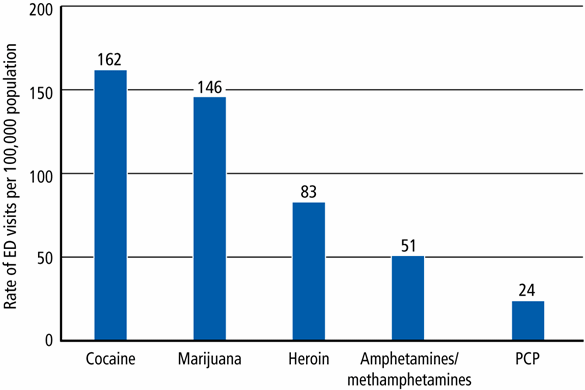
Rates of ED visits per 100,000 population involving illicit drugs, 2011
- Cocaine is a big problem: 40% ER; 40% ME
- 1995 27% of all admissions were related to cocaine (little change in 1996 report)
- Alcohol, although only reported with other drugs: 24.6% ER; 33% ME.
- Heroin/narcotics: continuing to increase. 20.6% ER; 60% ME. This is significant since less than 1% of population has ever used vs. 10% for cocaine.
- For heroin increase in mid 1990s, and by 2004-2014 continual yearly increases, spiking 2010-2014. (see: 2016 National Heroin Threat Assessment Summary)
URL: http://www.umsl.edu/~keelr/180/trends.html
Owner: Robert O. Keel rok@umsl.edu
References and Credits for this Page of Notes
Last Updated: Thursday, March 1, 2018 11:43 AM