Information Systems
College of Business Administration
University of Missouri - St. Louis

IS 5800 -- Management Information Systems
Current Page

  • The Class Projects:
    Winterize It
    Emerald Jewelry
    PWFV Electronics
    Bella Cosmetics
  • I couldn't resist posting this .....
    comic strip

  • The final exam.

  • The group assignment is now available online. In addition, the grading rules that I will use for the group project are now available online.

  • Open-Source Spying, By Clive Thompson, from the New York Times, December 3, 2006.
    The nation´s intelligence agencies are giving their cold-war-era computer systems a makeover. But will blogs and wikis really help spies uncover terrorist plots? Read the article.
  • Some tools
    Spybot
    AdAware
    Norton Tools
    SpamBayes
  • From EduPage, November 27, 2006
    Dodging The Censors
    BBC, 27 November 2006

    Researchers at the Citizen Lab at the University of Toronto have developed software that they hope will allow Internet users in nations that practice censorship to have full access to the Web. Available as of December 1, the software, called psiphon, operates using social networking principles. Users in countries without censorship will download the application, which allows their computers to function as proxies. Users in countries with government censors can then access the Internet through the psiphon software, sidestepping Internet filters. The software merely indicates that a user is connected to another machine, without divulging details about that machine or what Web pages are visited. Ronald Deibert, director of the Citizen Lab, said psiphon is an effort to counterbalance what he called the militarization of Internet censorship, restoring free access to online resources. Officials from the Citizen Lab cautioned, however, that use of psiphon could constitute a criminal offense in some countries and advised potential users to understand the risks. http://news.bbc.co.uk/1/hi/technology/6187486.stm
  • From the ACM's TechNews, November 27, 2006

    Experts Worry as Poll Problems Resist Overhaul
    New York Times (11/26/06) P. 1; Urbina, Ian; Drew, Christopher

    Despite spending over $4 billion on new voting equipment, America is yet to solve its elections problems. During the 2006 mid-term election, tens of thousands of voters, in 25 states, experienced serious hindrances at the polls ranging from long lines, to shortages of replacement paper ballots, to voting and registration machine malfunctions. Problems reported in Florida affected over 60,000 votes; in Colorado up to 20,000 voters went home before voting due to repeated crashes of the voter registration systems; and in Arkansas, officials in one county conducted three different counts, each of which varied by more than 30,000 votes. Electionline.org director Doug Chapin says, "If the success of an election is to be measured according to whether each voter's voice is hear, then we would have to conclude that this past election was not a success." Many officials feel that a greater number of technicians available to immediately address problems that arise would significantly help future elections, as would assuring that polling places have enough voting machines and adequately trained workers. "These types of low-tech problems threaten to disenfranchise just as many people, if not more, but they tend to get less attention," says Century Foundation election expert Tova Wang. "We still have a long way to go toward fixing the biggest problems with our election system." However, some point out that any system takes a long time to work the kinks out of, so such difficulties come with the territory when implementing such wide-ranging changes. Click Here to View Full Article

    Offshoring: Risk to U.S. Innovation?
    EE Times (11/22/06) Leopold, George

    While offshoring is picking up speed, the effect it has on the U.S. engineering community is a subject of debate. The U.S. is still the world leader in many areas, such as chip design, but changing global economic conditions, including rising costs, lower overseas wages, and competitive pressures, could put this prominence in jeopardy. What difference the location of manufacturing makes is not agreed upon, but as MIT President Emeritus Charles Vest says, "Globalization is the new reality." About 60,000 plants were built in China by foreign companies between 2002 and 2003, according to the National Academy of Engineering, a time when 40,000 U.S. IT jobs were lost, according to an estimate by a presidential advisory council. With the growing value of speedy innovation, only those companies able to maneuver the best will survive, says Vest. As far as America's position of world leader, with the best universities and R&D infrastructure, Vest explains, "The enemy I fear most is complacency." While offshoring has led to the growth of U.S. companies that in some cases has created more jobs for U.S. workers in the short run, there is no consensus as to the longevity of the trend, partially because of the fact that this growth is also being experienced by Chinese and Indian markets. Many hope that costs facing companies that offshore jobs, such as reduced productivity, and extra controls on intellectual property, will offset any long-term benefits. In order to maintain its position at the front of technological innovation, the U.S. must continue to improve its universities, promote investment in innovation, and retain as many foreign graduates from U.S. schools as possible. Click Here to View Full Article

    'Perfect Storm' Could Stifle IT
    Financial Times Digital Business (11/22/06) P. 8; Bradbury, Danny

    The technology industry continues to have a difficult time convincing up-and-coming students to enroll in technology programs at the university level. Experts in Canada say there has been a 50 percent to 70 percent decline in students pursuing IT studies, and reports from the United Kingdom show applications for computer science and software engineering degrees are down by 50 percent and 60 percent, respectively. The industry is facing a climate in which young people have negative perceptions of IT, there will be fewer 14-18 year-olds in the years to come, and in which more design and specification skills are needed. Also, science teachers at the secondary level are not always specialists in the subject matter. In the United States, IT observers say the fragmented educational system has not done a good enough job to provide gadget-loving youngsters with tech fundamentals such as knowledge of file structure and the workings of email. Students are often more comfortable with the emerging devices produced by the unpredictable world of technology, which some teachers do not understand and advise against as a career. Click Here to View Full Article - Web Link to Publication Homepage

    Mastering the Three Worlds of Information Technology
    Harvard Business Review (11/06) McAfee, Andrew

    An excess of available technologies and the often poor performance of corporate IT projects are fueling reluctance among business leaders to get involved in IT, but Harvard Business School professor Andrew McAfee writes that their participation is essential, and splits executives' IT management responsibilities into three roles: They must help choose technologies, cultivate their adoption, and guarantee their utilization. He notes, "Different types of IT result in different kinds of organizational change when they are implemented, so executives must tailor their roles to the technologies they're using. What's critical, though, is that executives stop looking at IT projects as technology installations and start looking at them as periods of organizational change that they have a responsibility to manage." Executives often lack an expansive model for IT's corporate benefits, its organizational impact, and what they must do to ensure the success of IT projects; McAfee says placing IT in a historical context can help build such a model, and it is suggested by research that a quartet of organizational complements--workers with improved skills, higher levels of teamwork, redesigned processes, and new decision rights--can squeeze better performance from process general purpose technologies (GPTs). The author says his research demonstrates that IT does not boast the same relationships with these complements that other process GPTs have, and he points to the classification of IT into three categories: Function IT (IT that helps execute discreet tasks), Network IT (IT that effects interactions without parameter specification), and Enterprise IT (IT that particularizes business processes). McAfee reasons that this categorization can help managers comprehend which technologies they must invest in as well as what must be done to generate the most returns. To select the right technology, executives must clearly understand the company's business needs; the next step is to facilitate adoption by helping produce the complements that will get the most value out of IT; and the third responsibility for business leaders is to exploit the technologies to the fullest. Each IT category has unique requirements and practices for fulfilling these three roles, concludes McAfee. Click Here to View Full Article

    Tangled Web
    Government Technology (11/06) Vol. 19, No. 11, P. 16; Vander Veen, Chad

    It is the position of Net neutrality proponents that the Internet needs federal regulation to survive as a free and open resource and avoid its degeneration into a biased, tiered medium dominated by telco and cable companies. One of the central challenges of the debate is that there is no single, universally acknowledged definition for Net neutrality. The contention of the telco and cable companies is that there must be a "fast lane" for bandwidth-intensive Internet applications of the future, and supporting the necessary network investments to realize such accommodations requires them to charge higher fees to content providers; Net neutrality activists counter that such a scheme would establish a two-tiered Internet that condemns average consumers to the "slow lane," while the lack of federal regulation would give the Web's controllers license to reduce or impede access to Web sites they object to. "If we allow what has, in a way, been public to become fully privatized...governments, citizens and consumers may find there are increased costs and other obstacles related to accessing government information, electoral information, and it has impact in local economies as well," posits the Center for Digital Democracy's Jeff Chester, who adds that a free and open Internet is essential to ensuring the good quality of democracy in the United States. Among the arguments that Net neutrality opponents are making against federal regulation is its basis on mostly speculative conclusions, while AT&T's Claudia Jones contends that there will be less investment on network infrastructure if regulation goes forward. "If you allow companies to manage their network, manage the content, and build intelligence into the network so that it operates more efficiently...then consumers will have a better experience," she says. The Senate Communications Act of 2006 mandates that providers maintain a consistent level of access in keeping with what the subscriber is paying for, but the bill does not include regulation for ISP business models, which Net neutrality advocates want. NetCompetition.org Chairman Scott Cleland argues that there is no such thing as Net neutrality, insisting that "there are vast disparities of usage; on price, speed; between technologies; on how these industries are regulated or have been regulated in the past; between how applications work and need to work; and lastly in the way different players align and negotiate with other businesses." Click Here to View Full Article

    War Games Go Virtual
    Chronicle of Higher Education (11/24/06) Vol. 53, No. 14, P. A36; Carlson, Scott

    The U.S. Army primarily supports the University of Southern California's Institute for Creative Technologies (ICT), a think tank where experts in simulation, language-recognition, and animation technology collaborate with people from the entertainment industry to deliver realistic virtual reality applications for military training. Innovations are making virtual environments increasingly immersive, incorporating such elements as shadows, military strategy, and simulated firearms that use pneumatics to deliver the kick and bang of actual weaponry. Army director for research and laboratory management John Parmentola explains that virtual war games are envisioned by the military as a less expensive alternative to live war games, in terms of financial cost, the potential for injury, and environmental impact. ICT program manager at the Army's Simulation & Training Technology Center Jeff Wilkinson notes that training via simulation can be standardized, and that soldiers' progress can be recorded and tracked so that instructors can more easily point out errors or illustrate concepts to trainees. "ICT's strength is not so much in making a better battle simulation, but in taking more social types of interactions, which are crucial in any campaign, and training soldiers on that," says Stanford University communication professor Jeremy Bailenson. "There may be some who are doing natural-language processing better than [the institute], and there may be some doing graphics better than them, but there is not an institution in the world that has put together all of the small pieces of social interaction in a psychologically meaningful way like they have." ICT director of technology William Swartout thinks the military simulation research will yield the enablement of new types of experiences that can be applied beneficially to education as well as entertainment, such as computer games. Click Here to View Full Article - Web Link to Publication Homepage
  • From the ACM's TechNews, November 22, 2006

    Programs Written in Old Code Pose Business Problem
    Financial Times Digital Business (11/22/06) P. 6; MacKenzie, Kate

    While legacy languages such as COBOL are still in relatively heavy use by many companies, the number of programmers able to work with them is dwindling. Between 12 and 15 percent of new development, mostly back-end financial systems, is being written in these languages, says Gartner's Jim Duggan, and a Computerworld survey showed that 58 percent of respondents using Cobol are developing new applications in it. Gartner estimates that 50 percent of programmers who are skilled with mainframes, on which legacy programs are run, will be eligible to claim their pension by 2007, and to make matters worse, these older employees also expect higher salaries. Many schools no longer teach legacy languages, favoring "object-oriented" languages. Many companies are turning to internal training of recent graduates, while some have even worked with nearby schools to develop legacy language education curriculums. Some are choosing to keep applications in legacy languages but run them using SOAs that are easier to maintain; "clone" products provide the additional option of reproducing legacy versions of software from mainframes onto modern systems. The fact that these languages have hung around shows the longevity of the mainframe, which many thought was coming to an end in the 1990s; mainframe giant IBM has established a new educational programs to promote and simplify mainframe administration. Click Here to View Full Article - Web Link to Publication Homepage

    Electronic Voting Trend May Be Short-Circuiting
    Sarasota Herald-Tribune (FL) (11/19/06) Hull, Victor

    An audit of the congressional election in Sarasota County, Fla., is at the center of a push to require electronic voting machines to produce paper records, or to even ditch electronic voting altogether. Support is rising in Congress for legislation requiring a paper trail, and a bill has even been filed that would require a hand count for the presidential election. Twenty-seven states have already passed a paper-trail mandate, some also requiring audits of the electronic voting process. The Sarasota election was mentioned by Democrats in Congress and is seen by many citizens as a clear indictment of e-voting, since there is really no way of figuring out what went wrong, as e-voting expert Avi Rubin of Johns Hopkins University points out. Votersunite.org executive director John Gideon feels that an examination of the Sarasota problem will serve as "a death knell" for the technology. Verifiedvoting.org's David Dill believes optical-scan voting would have prevented the Sarasota problem, while others would only feel comfortable with hand-counted paper ballots; but both of these systems have been found to have their share of flaws as well. Officials such as Charlotte County, Fla., elections supervisor Mac Horton, whose district uses the same machines as Sarasota County, are reluctant to abandon the costly system. "I've been very well pleased," says Horton. If it's left up to me, I'd stay right where I'm at." For information about ACM's e-voting activities, visit http://www.acm.org/usacm Click Here to View Full Article

    Image Labeling for Blind Helps Machines 'Think'
    Washington Post (11/21/06) P. A2; Goldfarb, Zachary A.

    An online game has been designed to make image labeling fun and make surfing the Internet easier for the blind. The type of Internet program used by the blind reads Web pages aloud, but since images cannot be identified by the program and thus have no way of being spoken, many pages are prohibitive. The solution to this is image labeling, which would give these programs a way to describe images verbally. Carnegie Mellon University computer science professor Luis von Ahn developed the ESP game for just this purpose: random visitors to ESPgame.org are paired up and challenged to provide identical labels for the image they see; some people have spent as much as 40 hours a week on the site. Programs such as the ESP Game are known as human computation, where a computer asks a human a question and the human does the answering. Teaching a computer using human computation is a lot like the way children learn to identify things, but as von Ahn says, "Nobody bothers to teach a computer." CMU's Manuel Blum, who advised von Ahn's dissertation, explains, "What he's doing is mining the ability of humans." Von Ahn aims to develop computer intelligence that resembles that of humans and could perform language translation that accounts for the subtleties of foreign languages, for example, or make fast illness diagnoses in hospitals. Von Ahn says his goal is "To be able to use all of this data and to have computers be able to do pretty much everything we can do." Click Here to View Full Article

    Phishing Toolbars: All as Hopeless as One Another
    Techworld (11/20/06) Dunn, John E.

    Anti-phishing Web browser toolbars are not very effective, concludes a new study conducted by Carnegie Mellon University researchers and supported by the National Science Foundation and the U.S. Army Research Office. The study, "Finding Phish: An Evaluation of Anti-Phishing Toolbars," looked at 10 browser toolbars to determine their anti-phishing abilities and concluded that even the most capable toolbars (Earthlink, Google, Cloudmark, MS Internet Explorer 7, and Netcraft) identified only 85 percent of malicious Web sites, while the rest of the toolbars (eBay, Geotrust's TrustWatch, Stanford University's Spoofguard, and McAfee's Site Advisor) scored below the 50 percent mark. "Overall, we found that the anti-phishing toolbars that were examined in this study left a lot to be desired," said the authors of the study. "Many of the toolbars tested were vulnerable to some simple exploits as well." A good deal of those tested delivered a significant amount of false positives, which the researchers viewed as equally harmful because of the lack of trust this could breed in users. The researchers concluded that all filters must be used with care, and that the filter itself, not the browser it is used with, determines the level of security; the ability of the heuristics applied to detect fraudulent sites, and the usability of the software design for the user are the most important aspects of security. Click Here to View Full Article

    Sending Touch, Smell Over Net
    Nikkei Weekly (11/13/06) Vol. 44, No. 2260, P. 16; Matsuda, Shogo

    Researchers have set their eyes on the sense of touch, smell, and taste as they attempt to usher in a world of total perceptual communications. Sensual interaction over the Internet is primarily limited to seeing and hearing, but researchers across Japan are working to allow more sensory feedback for users of communications technology. For example, a tactile mechanism would enable surgical robots to transmit tactile sensations to a remote surgeon who performs a procedure while controlling surgical instruments on a video monitor. A pair of forceps, a scissor-like device developed by researchers at Keio University, is designed to allow the surgeon to "feel" the tissue and organs she is touching. "This promises a huge jump in the safety of robotic surgery," says professor Kohei Onishi of Keio. Meanwhile, the Tsuji Academy cooking-school chain has developed a device that can produce artificial smells like beef stew and curry using a process that is similar to the way in which printer ink is released from a cartridge. And Intelligent Sensor Technology is already bringing to market a taste sensing system that uses technology developed by Kyushu University's Kiyoshi Toko. Click Here to View Full Article - Web Link to Publication Homepage
  • From the Chicago Tribune, Teachers' IDs mailed by mistake.

  • From the New York Times, 'Yours Truly,' The E-Variations

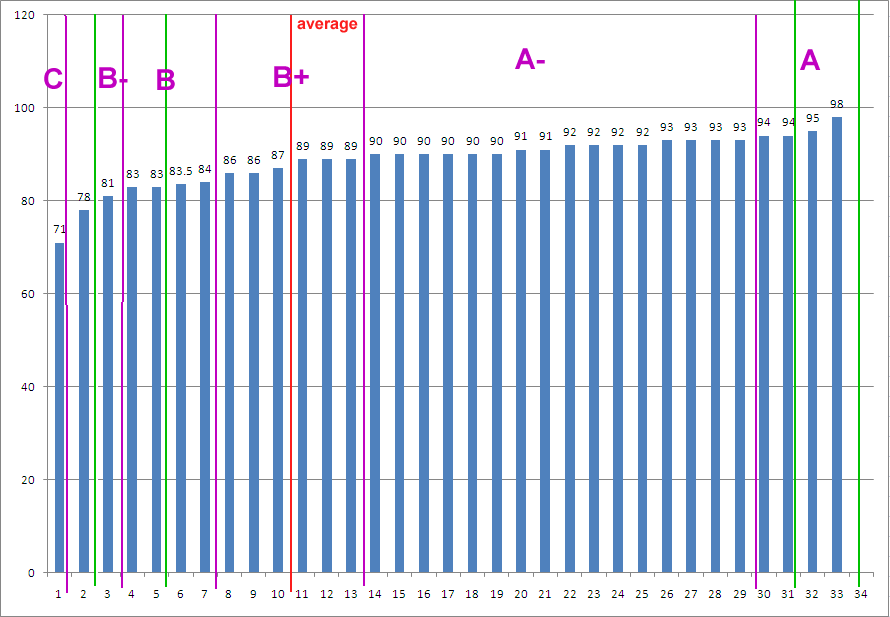
  • The grade distribution for the midterm is now available.

  • Some information about email
    General Information About eMail
    Points for Effective Computer Mediated Communication
    eMail Etiquette
    more eMail Etiquette
    Email etiquette rules for effective email replies
    Points for Effective Computer Mediated Communication
  • Privacy Concerns

  • Links to Information about Viruses and Trojan Horses

  • Dr. Jim Tom will speak with you on Wednesday about ERP. A copy of Dr. Tom's slides is available.
    Dr. Jim Tom is currently CIO and Associate Vice Chancellor for Information Technology at the University of Missouri - St. Louis. His responsibilities include research computing, technology in teaching and learning, voice/data networks, administrative systems and data center operations. In the past, he has been a consultant in strategic technology planning, helping enterprises to understand and utilize the strategic value that technology can bring to business. Jim has also held executive positions in the public and private sector in Canada and the U.S., including CTO of a medical school and VP of Research and Engineering for a digital imaging firm. A consistent theme in his career is the use and promotion of appropriate technologies to enable a 21st century enterprise. Jim holds a doctorate in Engineering-Economic Systems from Stanford University.

  • Dr. Rottman's slides are now available.

  • From the ACM's TechNews, November 6, 2006

    E-Voting, As It Advances, Faces Big Risks
    Baseline (11/03/06) Hertzberg, Robert

    The Defense Department's Interim Voting Assistance System is the latest electronic voting initiative to come under fire from critics who are concerned about voting security risks. Former ACM President Barbara Simons criticized IVAS in a paper in late October, questioning whether the complex program was hastily put together from June 15 through Sept. 1. Simons is also concerned about the Pentagon's decision not to implement encrypted email for the system. Having overseas military personnel send their votes via unencrypted email could make soldiers victims of identity thieves or hackers and foreign governments who want to tamper with the vote count. "I'm personally offended that people who are fighting and dying for our country are being told they have to give up their right to vote in secret," she says. Meanwhile, Simons says the security measures implemented by e-voting system manufacturers such as Diebold Election Systems will not be enough to safeguard elections because the companies are only addressing problems they know about. She says, "You can fix the problems you know about. But somebody's going to attack you at your weak point, on something you haven't thought about." Barbara Simons was co-chair of the USACM e-voting committee that produced the recent report: "Statewide Databases of Registered Voters;" http://www.acm.org/usacm/VRD. Click Here to View Full Article

    E-Voting: Dispatch From the Future
    Washington Post (11/05/06) P. B1; Dreschler, Wolfgang

    Estonia conducted the world's first nationwide online election on October 16, 2005, which came off without a hitch. Ever since claiming independence following the 1991 collapse of the Soviet Union, Estonia has been dedicated to integrating technology into society, including chip-based ID cards with digital signatures carried by citizens and more sophisticated e-banking system than the U.S. The rate of Internet use is 60 percent, compared with 70 percent in the U.S. Voters had the choice of voting over the Internet, or actually coming to the polls, and online voters were given the option of a paper ballot in order to confirm their vote. Only 2 percent of voters did so online, yet the Reform Party, whose members are considered the most tech-savvy, did better among online voters than traditional voters, while the less tech-savvy Center Party did better among traditional voters. The only problem encountered was the need for e-voters to buy an ID-card reader (about $15) and install it using software that many found difficult to use. Estonia is planning to use e-voting in its 2007 parliamentary elections. Although the option of voting over the Internet did not appear to boost voter turnout in Estonia's election, it's likely that the parties that attract more tech-savvy users will benefit, a fact that has implications as more and more countries inevitably move to e-voting in the future. Click Here to View Full Article
  • From the ACM's TechNews, October 18, 2006

    IU Study: More Internet Users May Be Taking 'Phishing' Bait Than Thought
    Indiana University (10/12/06)

    A new study from researchers at the University of Indiana indicates that as much as 14 percent of Americans may be getting duped into giving up private information in "phishing" scams. The figure is much higher than the 3 percent of adults a year cited in several surveys by Gartner Group. Researchers from IU's School of Informatics settled on 14 percent after simulating phishing attacks, in which they sent emails with a link to eBay customers that appeared to be legitimate. When recipients clicked on the link, they were sent to the eBay site, and the researchers were notified of the log-in. The researchers also launched a simulated spear phishing attack, in which personal information available online is used to create a more personal message for targets. "We think spear phishing attacks will become more prevalent as phishers are more able to harvest publicly available information to personalize each attack," says Jacob Ratkiewicz, a computer science doctoral student. Markus Jakobsson, associate director of the IU Center for Applied Cybersecurity Research, says, "Our goal was to determine the success rates of different types of phishing attacks, not only the types used today, but those that don't yet occur in the wild, too." "Designing Ethical Phishing Experiments: A Study of eBay Query Features" is the title of the study. Click Here to View Full Article
  • From the ACM's TechNews, October 23, 2006

    Researchers See Privacy Pitfalls in No-Swipe Credit Cards
    New York Times (10/23/06) P. C1; Schwartz, John

    A recent paper spells out potential security risks involved with the radio frequency identification (RFID) technology being implemented in a new generation of contactless credit cards. As part of a consortium of industry and academic researchers financed by the National Science Foundation (NSF), Tom Heydt-Benjamin, a computer science graduate student at the University of Massachusetts, and Kevin Fu, a computer science professor at the University of Massachusetts, attempted and were successful in retrieving unencrypted information, including the cardholder's name, stored on 20 different RFID credit cards using a device they constructed themselves for $150. American Express claims that its cards use 128-bit encryption, and J.P. Morgan Chase says that they "use the highest level of encryption allowed by the U.S. government." Visa's Brian Tripplet says, "This is an interesting exercise, but as a real threat to a consumer--that threat doesn't really exist." The companies claim that every RFID transaction is unique, making it impossible to just read information off a card and use this to make purchases. However, the researchers found some cards that used the same information for every transaction, and they were actually able to make a purchase online using information scanned off of a credit card. The credit card companies point to fraud detection and the blocking of suspicious purchases, to assure that customers will not be liable for fraudulent activity. The chips used in such cards are capable of airtight encryption, but enabling this function causes slower transactions and greater costs, and companies such as Exxon have come under fire for lax security measures. Aviel D. Rubin, professor of computer security at Johns Hopkins University, says, "There is a certain amount of privacy that consumers expect, and I believe that the credit card companies have crossed the line." Tens of millions of RFID cards have been issued to this point, and credit card companies are currently in the process of removing card holder names from the data transmitted by their RFID cards. Click Here to View Full Article

    Support Grows for Federal Paper Ballot Mandate
    County News (10/16/06) Vol. 38, No. 19, P. 7; McLaughlin, Alysoun

    Advocates of requiring electronic voting machines to leave a paper audit trail debated the issue with opponents during a Sept. 28, 2006, hearing before the House Administration Committee. Rep. Rush Holt (D-N.J.) has authored the Voter Confidence and Increased Accessibility Act, and more than half of the House is now believed to be in support of the legislation. In addition to requiring a permanent paper record of votes, H.R. 550 would have the paper serve as the official ballot of record in any recount or audit. During the hearing, Edward Felten, a professor of Computer Science and Public Affairs at Princeton University, showed how a hacker could use a computer virus to taint votes cast on a Diebold electronic voting machine. States have started to address the issue, with 25 already requiring a paper trail to verify votes, and 16 regarding the paper record as the official ballot in a recount. The Help America Vote Act requires counties to invest in electronic voting machines. Though the Federal Voting Systems Guidelines were issued last December, most observers agree that better technology standards and management practices are needed to dispel any doubts about the integrity of electronic voting. For more about ACM's e-voting activities, visit http://www.acm.org/usacm Click Here to View Full Article
  • From EduPage, November 6, 2006

    Beware The Wiki Virus
    Internet News, 3 November 2006

    In another sign of the evolution of computer threats, a posting on the German version of Wikipedia purporting to be a virus-removal tool was in fact a virus. The posting said that a new version of the Blaster virus was in circulation and that the link would help remove the new variant. Although the scam was discovered and taken down, observers noted that this incident follows the pattern of threats moving away from e-mail and into Web applications, relying on social engineering to trick users into downloading malicious code or providing confidential information. Gregg Mastoras of Sophos, which discovered the virus on Wikipedia, said the risk is not just for wikis but for a range of Web 2.0 applications, which tend to give broad control for content creation and exchange to users. Peter Firstbrook, research director for information security and privacy at Gartner, said that sites like Wikipedia and MySpace "will have to start intercepting uploads and start scanning them for malware." Doing so, he said, will be a considerable challenge because scanning software is generally poor at identifying unknown viruses. http://www.internetnews.com/security/article.php/3642011

    Case Expected To Clarify Online Accessibility Requirements
    New York Times, 6 November 2006 (registration req'd)

    A lawsuit filed against Target is expected to establish an important ruling concerning the level of access Web site operators are required to provide to users with disabilities. Specifically, the suit alleges that Target's Web site failed to make its site accessible to screen readers, which help visually impaired users read and navigate online. The Americans with Disabilities Act, which was enacted in 1990, sufficiently predates the Web that it provides little guidance on what access retailers are required to offer online. Jane Jarrow, president of Disability Access Information and Support, said that the online education sector is at particularly high risk for discovering that it has unmet legal obligations for users with disabilities. Many online programs rely heavily on chat rooms, a technology that does not accommodate screen readers well, leaving blind and visually impaired students at a significant disadvantage in their efforts to complete coursework online. A recently changed federal regulation allows online programs to qualify for federal financial aid, but institutions that seek to take advantage of this program must meet the terms of the Rehabilitation Act of 1973, which stipulates that Web sites must be accessible to all users to qualify for federal aid. http://www.nytimes.com/2006/11/06/technology/06ecom.html
  • A copy of Mr. Zimmerman's presentation is available. His topic is Information Security.

    Mark serves as Vice President, Information Technology, for St. Louis-based Schnuck Markets, Inc., a family owned and operated grocery retailer. He is responsible for all IT aspects of the company, including application development, network and database management, computer operations and technical infrastructure. Mark also serves as Information Security Officer for the company. Mark began his career with Schnucks in September of 1997 in the position of Manager, Systems Development.

    Having more than 20 years experience in the Information Technology career field, Mark began as a computer operator with the U.S. Air Force in 1982. He has served in a variety of roles throughout his career – computer operator, database administrator, application developer, systems analyst, consultant, project manager, and most recently in executive management.

    His education includes a bachelor of science in Business Administration (emphasis in MIS) from Southern Illinois University at Edwardsville and an executive MBA from Washington University in St. Louis. He is active in the St. Louis metro community, previously serving as a member of Goodwill’s a.d.e.p.t. Business Advisory Council. He is also an active member of the RGCA CIO Forum, serves on the United Way Technology Committee and is also a member of the Food Marketing Institute’s IT Committee.

  • The example from Monday's class is now available.

  • From the New York Times, October 26, 2006

    A New Campaign Tactic: Manipulating Google Data
    By Tom Zeller Jr.

    Several Republican candidates have also been targeted in a sophisticated “Google bombing” campaign intended to game the search engine's ranking algorithms. Read the article.
  • From EduPage, October 25, 2006

    Apple Regains Lost Ground On Campus
    Inside Higher Ed, 25 October 2006

    After losing a considerable amount of market share among college students in the 1990s, Apple has lately seen sales of its computers on campus rise to the number two spot behind Dell. Although Dell still controls more than half of the higher education market, Apple has ridden a wave of support to pass IBM, Gateway, HP, and other makers. Officials from Apple said that sales of portable Macs rose nearly 50 percent during this year's back-to-school season over the same period last year. According to Student Monitor, of the students considering buying a laptop within one year, 40 percent plan to buy Dell, while 21 percent said they will opt for a Mac, which is well ahead of HP and Sony at just 6 percent each. In part, observers said, the popularity of Macs results from the "cool" factor that was spawned by the iPod, which has become extremely popular among college students. Coolness only goes so far, however, after which performance is key. Dianne Lynch, dean of the Roy H. Park School of Communications at Ithaca College, said that when the school of communications was deciding which laptop to require incoming freshmen to purchase, it settled on the MacBook Pro because, aside from being cool, the machines came equipped with an "outstanding multimedia software package." http://www.insidehighered.com/news/2006/10/25/macs.

    Hackers Fleece Online Brokerages
    ZDNet, 25 October 2006

    Identity thieves continue to take a toll on online brokerages, racking up millions of dollars in losses to trading houses. Brokerages typically cover losses resulting from fraud, rather than forcing customers to pay. TD Ameritrade Holding issued a statement indicating that in the previous quarter, losses from fraud totaled $4 million. E*Trade Financial said it lost $18 million in the same period. Officials from the two companies downplayed the news. Joseph Moglia, chief executive of TD Ameritrade, called the $4 million in losses "not material at all," while executives from both firms said they have recently taken steps to limit losses resulting from identity theft. Mitchell Caplan, CEO of E*Trade, said the level of fraud has dropped "to almost zero as a result of the changes we're making." Still, the quarterly losses represent significant gains for online crooks. Gwenn Bezard, analyst with Aite Group, noted that E*Trade has previously implemented measures to bolster its defenses but that hackers still took the company for $18 million in a single quarter. http://news.zdnet.com/2100-1009_22-6129391.html
  • From the ACM's TechNews, October 25, 2006

    New Voting Systems, Rules May Spell Trouble
    Los Angeles Times (10/24/06) Alonso-Zaldivar, Ricardo

    The 2006 elections were supposed to be the payoff for six years of work on the nation's ability to vote electronically. As the November general elections approach, doubts concerning voting machine and databases have not been silenced. "The Nov. 7 election promises to bring more of what voters have come to expect since the 2000 elections: a divided body politic, an election system in flux, and the possibility--if not certainty--of problems at polls nationwide," said a report released today by the nonpartisan Election Reform Information Project, which was funded by the Pew Charitable Trust. The report says that "machine failures, database delays and foul-ups, inconsistent procedures, new rules and new equipment have some predicting chaos at the polls at worst and widespread polling place snafus at best." The Election Reform Information Group studied three key areas that governments have targeted to improve the election process: voter identification, voter databases, and electronic voting. The group's director, Doug Chapin, says, "Not all states with problems will have close elections, and not all states with close elections will have problems. It's where the two come together that you have the potential for the kind of back and forth we saw [in 2000]." A group of 10 experts wrote to Congress in September pleading with lawmakers to adopt quality control standards for e-voting. These measures include checking the e-voting total against a statistically valid random sample of paper ballots verified by voters at the polling place. "We see the election process in the United States at grave risk," wrote the informal group of quality control consultants. Deborah L. Markowitz, president of the National Association on Secretaries of State, says the changes being suggested are "not [to] dump the technology, they are saying fine-tune the technology." To read ACM's report on "Statewide Databaes of Registered Voters," visit http://www.acm.org/usacm/VRD Click Here to View Full Article

    Some VA Voting Machines Cut Off Names
    Washington Post (10/24/06) P. B4; Smith, Leef

    Hart InterCivic voting machines, used by three districts in Virginia, chop off the end of candidate's names, as well as their entire party affiliation, on the screen that shows a voter their selection for verification. Election officials blame the mistake on an increase in font size. Signs will be posted all over poll locations in these districts, alerting voters to the flaw in the computer system, and assuring them that their vote will be counted. The problem has existed since 2002 when the machines were purchased, but Jean Jensen, secretary of Virginia State Board of Election, has only been aware of the problem for a few days. She now pledges to fix the problem before the 2007 elections. "You better believe it," she says. "Even if I have to get on a plane to Houston and bring Hart InterCivic people here myself, it'll be corrected." Hart InterCivic has developed an upgrade for the firmware, but receiving state certification will be time consuming, says Jensen. The glitch affects some candidates more than others, based on name length, but James T. Hirsch, an independent running for the house, says, "that situation is unacceptable. There's enough voter confusion as it is." Tom Parkins, registrar for Alexandria, one of the districts affected, explains, "This is not the kind of problem that has either shaken our confidence in the system overall of that of the vote. There have been far worse problems around the country." For more information about ACM's e-voting activities, visit http// www.acm.org/usacm Click Here to View Full Article

    The Internet Is Sick...But We Can Make It Better
    Popular Science (10/06) Vol. 269, No. 4, P. 82; Tynan, Dan

    The Internet's vulnerability to cybercriminals requires an immune system, and Carnegie Mellon University's CyLab is working on various remedies that follow this paradigm. One solution seeks to address the widespread distribution of identical software bugs because software lacks diversity. The approach is based on biological systems' evolutionary response to disease, with the goal being to develop software that is adaptable to attack. CyLab even envisions the creation of software and operating systems that randomly alter their functions or scramble the order of their executed instructions. Another remedy being researched by CyLab seeks to shore up corporate information databases against distributed denial of service attacks through the use of survivable data storage systems. This can be seen as a interim measure until self-healing networks are developed. The ease of spoofing Internet Protocol addresses makes tracking down the source of malware often next to impossible, but Carnegie Mellon electrical and computer engineering professor Adrian Perrig says CyLab's Fast Internet Traceback (FIT) technology can follow each data packet as it travels throughout the Internet, "like leaving a trail of breadcrumbs." FIT's practicality depends on upgrading at least one-third of the Internet's approximately 100,000 routers, while proving a cybercriminal's culpability requires an unshakeable identity verification scheme, which raises serious privacy issues. Click Here to View Full Article
  • From the Chicago Tribune, October 19, 2006, Voting glitches feared on Nov. 7, by John McCormick: Read the article.

  • The example we did in class on Wednesday, October 25 is now available.

  • Some JavaScript examples.

  • The midterm is now available. It is due Monday, October 30.

  • I totally enjoyed looking at your webpages. Have fun learning from each other: view your classmates' webpages.

  • Voting glitches feared on Nov. 7, from the Chicago Tribune, October 20, 2006. Read the article.

  • Apple Says Some IPods Contained a Virus from the Chicago Tribune, October 18, 2006. Read the article.

  • From EduPage, October 18, 2006

    Wikipedia Cofounder Launches New Site
    ZDNet, 16 October 2006

    One of the founders of Wikipedia has announced a new online encyclopedia that he hopes will embody the foundation of Wikipedia while overcoming some of its shortcomings. Larry Sanger's new project, called Citizendium, will use a number of tactics to elicit credible, useful content from a community of volunteers while avoiding the kinds of intentional distortions that have been a problem for Wikipedia. On Citizendium, contributors must register with their real names, and a team of editors will enforce a set of community rules. Sanger said that Wikipedia is an "amazing" resource but believes that "an even better massive encyclopedia" can be produced by overlaying a system of "gentle controls" on how content is developed and edited. The creation of Citizendium will involve a "fork" of the existing Wikipedia content. All current content from Wikipedia will serve as the basis for Citizendium. From there, the two collections will evolve and diverge based on their different approaches. http://news.zdnet.com/2100-9588_22-6126469.html

    Study Shows Evidence Of Web Addiction
    BBC, 18 October 2006

    A study conducted by researchers at Stanford University indicates considerable and rising rates of Internet addiction among U.S. users. The study, which asked more than 2,500 people about their Web habits, found that almost 14 percent said it was difficult to be offline for more than a few days. Eight percent said they use the Internet as a means to escape the real world, and a similar portion admitted to hiding their Web habits from their partners. Researchers said these kinds of behaviors are not unlike those exhibited by people with problems such as alcoholism. According to the study, the profile of a typical user who has problems with Internet addiction is a single, college-educated, white male who spends more than 30 hours per week using the Internet for "non-essential" purposes. Elias Aboujaoude, one of the researchers in the study, said that it is important to remind ourselves that despite all the benefits of technology, "it creates real problems for a subset of people." Indeed, six percent of the respondents said their addiction had adversely affected their relationships with other people. http://news.bbc.co.uk/2/hi/technology/6062980.stm
  • The slides for the talk on Data Warehousing on Wednesday. The speaker is Mr. Joseph Federer of Express Scripts.

  • From the ACM's TechNews, October 13, 2006

    Election Integrity Organizations, Leaders Urge States to Plan for Emergency Paper Ballots, Procedures for November Election
    U.S Newswire (10/13/06)

    Letters were sent out on Friday to all 50 governors, secretaries of state, and directors of elections, asking that they provide emergency paper ballots for the upcoming general election and for these to count as regular, not provisional, ballots. Over 50 election integrity groups and individuals including Robert F. Kenney Jr., Sen. John Kerry, Rep. Rush Holt, Leon County, Florida election supervisor Ion Sancho, and computer scientist Doug Jones signed the letter. The call for paper ballots is a response to the primaries when many electronic voting machines, which will be used by 80 percent of voters in the upcoming election, malfunctioned and voters were given provisional ballots that may not have been counted or even sent home. Brad Friedman, investigative journalist and co-founder of velvetrevolution.us says, "No legally registered voter should ever be sent away from the polls without being able to cast their vote. With these new electronic voting machines failing across the country, it's just common sense to make sure there are back-up plans and procedures in place." Congress recently failed to pass a bill that would have reimbursed states for the cost of emergency paper ballots. Maryland Republican Gov. Robert Erlich has called for statewide paper ballots after the problems during the primaries. Click Here to View Full Article

    Safe Internet Requires Total Network Security, Prof. Says
    Wisconsin Technology Network (10/11/06) Plas, Joe Vanden

    As Internet security threats change from being recognition-driven to being profit-driven, entire networks must be secured. Those writing malicious code are becoming increasingly motivated and innovative. "It is very clear now that there are people who are making a lot of money by malicious activity, that organized crime is getting involved in malicious activity, and this represents a very, very serious development from the standpoint that it also means that the bad guys are getting much more organized and focused in their activities," says Paul Barford, assistant professor in the University of Wisconsin-Madison Department of Computer Sciences and the school's Advance Internet Laboratory. With hacking software becoming increasingly easier to use for less-than-professionals, businesses must change their approach to security. Simply using firewalls and security software is no longer enough, even with such products becoming more automated and easier to use. What is needed to combat the rising threat is a combination of security that is present at all levels, placing barrier after barrier in the way of potential hackers, says security architect Mark Hartmann. "It's security in depth. Every device has its own role to play in security, from a laptop, to the network, to your firewall, to your applications," Hartmann says. At the Advanced Internet Laboratory, Barford leads a research team working on various projects that could lead to an improved Internet that can defend itself against attacks. The group's DOMINO project is focused on intrusion detection and monitoring, while the Global Environment for Network Innovations (GENI) project is tracking malicious activity. Barford says that "right now we have a significant lack of deployment of security in networks, and as we move forward with deploying the latest technology in networks, the wholistic approach to security is something that's really going to solve a lot of problems." Click Here to View Full Article

    Warning Over 'Broken Up' Internet
    BBC News (10/11/06) Waters, Darren

    As the Internet grows globally, the possibility of separation into distinct networks looms. "If I look at the Internet in five years from now there are going to be very, very, very more Internet users in Asia than Europe or America," says Nitin Desai, chair of the UN Internet Governance Forum, an open body that technically has no membership, and thus no decision making power. "The types of uses for the Internet in India and China are very different from western countries--they are not commerce or media; they are essentially public service applications," Desai said, speaking at a conference this week in London arranged by .uk registry Nominet. The conference precedes the first-ever Internet Governance Forum, which takes place later this month in Athens. Concern arises from the fact that governments will need to be assured the system they use is "secure, safe, and reliable--that they cannot be suddenly thrown out of that system by some attack," Desai says. Additionally, many Chinese do not know the Latin alphabet, which is currently needed to access Web sites. Desai refers to the potential split-up as "Balkanization" of the Internet, made up of independent systems, such as a Chinese system using Chinese characters. Professor Howard Williams, who does work with the World Bank, points out that discussion of future Internet regulation is based upon the assumption of a single Internet. He asks, "Why would the technology we have at the moment be the ubiquitous technology across the world in the future?" In a related issue, the idea of Net neutrality "raises the prospect of a different sort of Web," Williams adds. Many have attacked the Senate's passing of a bill that allows Internet providers to give preferential treatment, including bandwidth and speed, claiming equal access is needed. Click Here to View Full Article

    Tackling Highjacking With Technology
    CNN.com (10/06/06) Rosenblatt, Dana

    A revolutionary in-flight security system called the Security of Aircraft in the Future European Environment (SAFEE) is being developed that could not only detect the presence of a terrorist threat, but safely land the plane in the case of an attempted hijacking. SAFEE uses sensors, cameras, microphones, and biometric devices to detect the presence of biological and chemical agents and monitor the behavior of passengers. The system even has an autopilot function that could lock the controls and take over flying the plane. Psychologists have found evidence that certain biometric "red flags" exist, including body language, visible stress, and even odors released, which can allow someone about to commit a terrorist act to be identified. "You cannot make a security system based only on technology, you have to focus on [the behavior of] people," says Omer Laviv of Athena GS3 Security Implementations. With regard to the recent hijacking of a Turkish airline by an unarmed man, which ended peacefully, "the SAFEE system would have alerted the crew to the issue before the hijacker was able to enter the cockpit," Laviv says. Although SAFEE is scheduled for completion between 2008 and 2010, developers must still win over passengers who are not happy with the prospect of being observed to such a degree. Currently, the system would include a memory bank, similar to a black box, that would erase all passenger information after the flight landed. Click Here to View Full Article
  • From the New York Times: Is Windows Near End of Its Run? Read the interview.

  • The examples we have considered in class are My Web Page and the revisions of October 11.

  • From the ACM's TechNews, October 11, 2006

    COBOL: Not Dead Yet
    Computerworld (10/04/06) Mitchell, Robert

    Although COBOL is widely considered an outdated programming language, its use is still widespread, according to a recent Computerworld survey. "Nobody wants COBOL, but realistically they can't get rid of it," says Gartner's Dale Vecchio. The survey found that 62 percent of 352 responding IT managers use COBOL, although 36 percent say they plan to gradually move away from it, while 25 percent say rewriting all the code is too expensive. COBOL has been around since 1960, but its procedural approach is not well suited to writing interactive programs and Web-based front ends. However, rewriting mainframe-based COBOL programs is a large and risky undertaking that most organizations are carrying out with great caution. "What are you getting for the expense?" says Mike Dooley, a software engineering manager. "You have to have a valid business reason to do that." Vecchio says the combination of transferring and rewriting COBOL applications, which require as much as five times as many lines of code as Java or C#, in a single step is a "recipe for disaster." New applications are being written in more recent languages, unless they require batch processing, for which COBOL is still utilized. The developers who originally worked on COBOL are mostly retired, leaving the transition to be done by those who are unfamiliar with the rules under which the code was written, a discovery often made once rewriting is underway. Instead, some have chosen to insulate themselves from the back-end through links to Web applications. "If we get into COBOL.Net, then the Visual Basic .Net application can call the same routines...without having to jump through hoops," says Dooley. After moving COBOL applications off of mainframes with as few changes as possible, many companies are taking the opportunities to reevaluate and restructure applications. Click Here to View Full Article
  • The Internet: Today and Tomorrow. It is best viewed using Internet Explorer.

  • To access your K:drive (and thus your public_html directory) from home:
    To get to your k: drive from home, point your browser (you must use Internet Explorer) to ftp://admiral.umsl.edu . You will get a message about anonymous access. Click OK and then go to the File menu and select "Login As". In the next screen type in your MyGateway ID and your password. If you have not changed your password, the default is YYDDNNNN where YY is the last two digits of the year you were born, DD is the day you were born and NNNN is the last four digits of your social security number. Then you can drag and drop your files easily.

  • Professor Carr speaks again: IT Still Doesn't Matter.

  • A list of special characters and their codes is available at W3Schools.

  • A list of color codes is at W3Schools.

  • From EduPage, October 6, 2006

    Draft Report From Nist Details RFID Risks
    Federal Computer Week, 3 October 2006

    A draft report from the National Institute for Standards and Technology (NIST) covers some of the security and privacy risks of using radio frequency identification (RFID) technology. Agencies must decide how much information to include on the RFID tags and how to protect it. If the tag is tied to a back-end database, for example, an intruder could use an RFID reader as a back door to the database unless it has been properly secured with access controls, password protection, and cryptography. According to the report, "When practitioners adhere to sound security engineering principles, RFID technology can help a wide range of organizations and individuals realize substantial productivity gains and efficiencies." The report's guidance is intended to help current and future RFID users understand the risks and the best-known safeguards. http://www.fcw.com/article96300-10-03-06-Web

  • An HTML primer.

  • The AICPA's top ten technology issues for 2006.

  • The World is Flat: view the interview.

  • Be prepared to discuss the article The Long Tail.

  • An interesting new product: naymz.com

  • From the ACM's TechNews, September 29, 2006

    ACM Security Experts Urge Paper Trails for Electronic Voting
    Ascribe Newswire (09/28/06)

    Ensuring that the U.S. election process is trustworthy is an important function of voter verified paper trails, stated former ACM President Barbara Simons at a congressional hearing reviewing security for electronic voting systems. Simons, founder of ACM's U.S. Public Policy Committee and co-chair of ACM's study of statewide registered voter databases, testified that all currently available e-voting systems carry risks, such as poor design, lack of thorough testing, limited audit capabilities, and inadequate software engineering. "Technology, if engineered and tested carefully, and if deployed with safeguards against failure, can reduce error rates, provide more accessibility, increase accountability, and strengthen our voting system," she noted, adding that the inclusion of a voter verified paper audit trail (VVPAT) or voter verified paper ballot (VVPB) will improve the security of voting systems and provide for routine audits. Princeton University computer science professor Edward Felten, a member of ACM's U.S. Public Policy Committee, urged that extra care must be taken in securing voting systems throughout the election process, and called for better certification for software updates to e-voting machines and increased employment of independent security experts. Simons and Felten concurred that the election and technical communities must collaborate to develop trustworthy computerized voting and electronic registration systems. Click Here to View Full Article

    Study Shows Internet to Be Resilient Against Terror Attacks
    Ohio State Research News (09/28/06)

    Ohio State professor Morton O'Kelly is co-author of a new study that concludes that a serious attack on Internet network hubs in the U.S. would not likely collapse the Internet, but may degrade its functioning. "There are so many interconnections within the network that it would be difficult to find enough targets, and the right targets, to do serious damage to Internet reliability nationwide," says O'Kelly. Detailed results have been published in the most recent issue of the Environment and Planning B journal. The study used computer modeling to simulate an attack on major Internet backbone facilities, and assumed not all facilities could be attacked at once. Seattle and Boston have the most diverse number of hubs supporting Internet traffic among cities, and therefore are most resilient, the study concludes. The study, conduced with Ohio State graduate student Hyun Kim and professor Changjoo Kim, was a follow-up to a 2003 study by O'Kelly that assumed that selected city network nodes would be completely knocked out by accidents or attacks. O'Kelly says that is not a likely scenario since peering agreements between carriers makes it very difficult to shut down an entire network node. O'Kelly says, "There is a rich web of connections in these Internet nodes, and a hit on a single city node or even several of them is not likely to wipe out Internet connectivity." Click Here to View Full Article

    A Pioneer of the Web Campaigns for Internet 'Neutrality'
    New York Times (09/27/06) P. E6; Markoff, John

    Earlier this year, Web inventor Tim Berners-Lee added his to the chorus of voices advocating Net neutrality--the notion that Internet service providers should not be permitted to give preferential treatment to certain packets of data. He shared his thoughts on the subject in a recent interview, claiming that in fact he had broached the subject (albeit not by that name) in a book he wrote several years ago. Berners-Lee describes the debate over Net neutrality as one of social consequence that transcends mere technical concerns. "I think people who talk about dismantling--threatening--Net neutrality don't appreciate how important it has been for us to have an independent market for productivity and for applications on the Internet," he said. Internet TV is one application that Berners-Lee cites as a burgeoning market dependent upon neutral delivery of data packets. By itself, packet inspection is not a threat to Net neutrality, Berners-Lee says, noting that routers today must be capable of greater functionality, so that they can inspect packets for threats such as denial-of-service attacks without skewing transmission speed. Myriad security threats notwithstanding, Berners-Lee claims that Internet users should be able to connect with a certain quality of service, without having to negotiate. Even if the United States were to lose its hegemony in the Internet space, Berners-Lee is confident that the Net neutrality charge would be taken up by other nations. Click Here to View Full Article
  • Susumu found Global 1,000 Business Blogging.

  • Nikki discusses email security in her September 28 blog entry.

  • An example of a privacy policy from Cafe Press.

  • From ACM's TechNews, September 27, 2006

    Vote Check-in Glitch Is Declared Fixed
    Baltimore Sun (09/26/06) P. 1A; Harris, Melissa; Green, Andrew A.

    Diebold Election Systems says a flaw in software customized for the state of Maryland was the source of the problem with check-in computers during primary elections earlier this month. The computer glitch caused delays for voters at precincts. Speaking at the state's election office on Monday, Tom Feehan, project manager in Maryland for Diebold, said it was "an oversight" that the company did not sufficiently test the software for its e-poll book. Diebold is scheduled to conduct a day-long test of the software for check-in computers next week. The machines also experienced two less-widespread problems during the primary election that Diebold has yet to fix. Feehan said a small number of poll books had communication problems, which would have enabled a voter to cast another ballot at a different poll book in a precinct. Diebold plans to provide a solution for this problem to the state before the end of the week. Moreover, Feehan said some of the voter access cards used to activate voting machines did not work. All of the fixes need to be installed on the state's 5,500 e-poll machines before the general election on November 7. State elections administrator Linda H. Lamone says that if Diebold can't prove that the machines are ready to go, she'll "pack them up and ship them back." Click Here to View Full Article

  • More about electronic voting from the New York Times.

  • Learn about Phishing Issues and Hacking

  • Website Design
         ·Web Design Guidelines      
    Design Basics      
    Visual Layout and Elements      
    Navigation      
    Text      
    Determine your Audience      
    Trust
         ·Research-Based Web Design and Usability Guidelines      
    Design Process and Evaluation      
    Optimizing the User Experience      
    The Homepage      
    Navigation      
    Web Content
  • What is EPIC?

  • A copy of Mr. Haspiel's slides is available. His topic is The Internet and the Digital Economy.
    Joe Haspiel is Vice President Product Development for Evolve24, a startup company providing business analytics on corporate and brand reputation. He drives strategic direction for Evolve24's suite of products and services. Mr. Haspiel has a 20 year career leading high technology efforts for major companies. For the last four years, he managed application development teams at Express Scripts, one of the three largest Pharmacy Benefits Management companies in the US. At Express Scripts, Haspiel managed departments supporting all company websites, call center applications, customer relations management applications, data warehouse and client reporting functions. Prior to joining Express Scripts, he was Chief Technology Officer for Acurian, a startup company providing clinical trial database services to large pharmaceutical companies. From 1995-2000, Haspiel was Vice President of Internet Development for MasterCard International. While at MasterCard, he launched MasterCard's web efforts and lead mult-company projects establishing e-commerce standards and services. From 1985-1995, Haspiel worked as Senior Associate for the Center for the Application of Information Technology (CAIT) at Washington University in St. Louis. While at CAIT, Haspiel was staff expert on Internet and Distributed Technologies. For 15 years he served as adjunct professor in the Information Management programs of the Engineering School of Washington University in St. Louis.

  • The Rise of Baidu (That's Chinese for Google) by David Barboza, New York Times, September 17. 2006: Baidu is doing what no other Internet company has been able to do: clobbering Google and Yahoo in its home market. Read the article.

  • Senator Stevens' discussion of the Internet and Net Neutrality.

  • Harddisk drives: Happy Birthday!

  • An interesting use of blogs found in the Chicago Tribune. Some of the sites noted are WaiterRant.Net and Fairtip.org. I wonder what implications this will have for restaurants.

  • More on Net Neutrality: To learn more view the "Save the Internet" blog and other similar blogs that it references. There is a discussion available about those who oppose net neutraility.

  • From Winny Sinthuchat's blog, I learned:
    I found interesting information that one of the web's first online diaries was "A Hypertext Journal" (1996) by artists Karen Guthrie and Nina Pope, who followed the route of 18 century travellers Boswell & Johnson's "Tour of the Western Isles" whilst reponding to ongoing requests and intractions with their remote online audience.

    and from Nat Tanchareon's blog I learned that the most popular blog in the world is at http://blog.sina.com.cn/m/xujinglei. It is a beautiful page worth visiting even if you cannot read it.

  • From the New York Times: "When Information Becomes TMI": Read the article.

  • The complete list of Wikipedia projects.

  • The Corporate Webpage Evaluation Sheet.

  • The Technology Assignments are now available for sharing.

  • An interesting consequence of strategic uses of technology.

  • Net Neutrality
    Wikipedia Definition
    Net Neutrality Act
    PHYSORG.COM explanation
  • Sarbanes-Oxley (SOX) Information
    Sarbanes-Oxley Act of 2002
    SOX explained
    Compliance/enforcement actions and other critical disclosure information
    SOX Forums
    AICPA's SOX Repository
  • Does IT Matter? references
    Carr's webpage
    Responses to Carr as summarized on Line56.com
    IT: How Do You Measure Up?
    a New York Times article
    USA Today article
    Aligning IT and Business Communities
    John Hagel's response
  • Cities Go Wireless: By offering wireless Internet to residents, cities across the United States are joining in the growing telecommunications battle over the future of the Internet.

  • Chinese Internet Censorship: from Online NewsHour.

  • Credibility In Question: Do you think it's ethical for a working reporter to keep a blog in which that person writes about his/her own political and personal views about news events?

  • In case you want to see the two primary blogs discussed in the video last week: There are several at Microsoft (check out results of a searchof Microsoft's site for blogs); I have linked to the Office. I have also linked to the Sun blog.

  • Other interesting blogs to follow
    Rough Type
    The Long Tail
    Lawrence Lessig's blog
    John Hagel's blog
  • Price of virtual living: Patience, privacy

  • RFID

  • While not a business application, CNN does discuss blogging in China as a political process.

  • Wired Magazine's Edit This Wired News Story: An article about wikis that is written as a wiki.

  • Web 2.0: Champions and Stinkers (Wired Magazine).

  • We will discuss the Internet today with
    Net Neutrality
    Blogging
          Blogging and Business
          Blogging and the Law
  • When you finish your technology assignment, email it to me so I can share them all with the class. Not everyone has selected a technology to investigate. Please see the technology choice page to verify your choice and to see what has already been selected.

  • We will start blogging this week. Look first at my class blog. Sign up for an account at Blogger. Select your template, identify your industry and email me with your URL. We will have a class page with links to all of the blogs.

  • Several readings have been added to your Readings Page.

  • From ACM's TechNews, August 21, 2006.

    An Evaluation of Information Quality Frameworks for the World Wide Web
    University of Southampton (ECS) (08/16/06) Parker, M.B.; Moleshe, V.; De la Harpe, R.

    The retrieval of relevant information from the Internet is beset by a lack of information quality standards for Web publishers, and University of Southampton and Cape Peninsula University of Technology researchers assess World Wide Web information quality frameworks to identify what components they have in common as well as elements they are missing. An evaluation of 13 frameworks unveils a series of common dimensions, including accessibility, accuracy, objectivity, relevancy, consistency, appropriateness, believability, representation, reputation, source, security, speed, ease of manipulation, value-added, timeliness, free-of-error, completeness, and understandability. The most frequently occurring dimensions in the frameworks are accessibility and timeliness. Accessibility focuses on technical accessibility and the issues of data representation and data volume. The problem of technical accessibility becomes apparent when security access and Web page permissions block accessibility, while the data-volume issue deals with the provision of applicable data that increases value to tasks in a timely way. Timeliness and thus accessibility problems could crop up when large volumes of data need to be updated to the Web site. The least frequently occurring quality dimensions are ease-of-manipulation and value-added, and the low occurrence of the value-added dimension dovetails with the lack of information quality in individual Web pages. The researchers conclude that a World Wide Web information quality framework should feature the accessibility, timeliness, accuracy, relevance, believability, completeness, objectivity, appropriateness, representation, source, and understandability dimensions, at minimum. Click Here to View Full Article
  • From ACM's TechNews, August 18, 2006.

    Domain Names Can Leave Net Users in Tangled Web, Study Finds
    NC State University News Services (08/15/06)

    Internet users have difficulty telling the difference between fake Web sites and legitimate Web sites based on the domain names used by the sites, concludes a new study by researchers at North Carolina State University. The authors of the report, professors Michael Wogalter and Chris Mayhorn, provided study participants with a list of 16 organizations and their corresponding Web sites and asked participants in the study to rate the Web sites according to how trustworthy and familiar they were. Half of the 16 listed organizations and Web sites were real, and half were fictitious. Participants ranked eight of the real sites as being more trustworthy than the fake sites, but they ranked three of the fake Web sites as being significantly more trustworthy than the actual Web sites. The participants were unable to tell the difference between fake and real for the other five sites. On average, participants said they would trust about half of the information that might be found at any of the 16 sites; the researchers interpreted this as healthy skepticism. The study found that older participants were more skeptical of Internet information than young participants. "This study shows that people are having difficulty discriminating between Web sites that have a familiar or credible sounding name," said Wogalter. Click Here to View Full Article
  •  

  • There have been a number of articles questioning electronic voting appearing lately. Some of them are:

          
  • From ACM's TechNews, August 21, 2006.

    Paper Trail Flawed in Ohio Election, Study Finds
    Computerworld (08/21/06) Songini, Marc

    A new study funded by the Board of Commissioners of Cuyahoga County, Ohio, has once again called into question the reliability of electronic voting machines. The study claims that even the voter-verified paper trail produced by the Diebold machines was not reliable, noting that 10 percent of the paper votes were "either destroyed, blank, illegible, missing, taped together, or otherwise compromised." The study was conducted by the Election Science Institute (ESI), a San Francisco-based nonprofit dedicated to promoting the development of accurate, auditable election systems. "What we found is that when you take this [technology] out of the lab and put it in a real work environment with real voters, you're going to have some issues you need to resolve," said ESI's Steven Hertzberg. In a letter to Cuyahoga County commissioners, Hertzberg wrote that the systems do provide some benefit for the voters, noting that they are easier to use than the old punch-ballot systems that they replaced. However, he also warned that the county should view the machines as a calculated risk, citing the 72 percent of polling places in which the study found a discrepancy between the paper ballots and the record on the machines' memory cards. Forty-two percent of those discrepancies entailed errors with 25 or more votes. The study also reported that 87 paper rolls and 28 voting machines were missing, and warned that printer malfunctions could cause serious election problems. A Diebold spokesman challenged the study's methods, claiming that the discrepancies resulted from matching paper records with the wrong memory cards. Diebold also expressed dismay that it was not allowed to participate in the analysis of the election. Ohio Secretary of State Kenneth Blackwell says the machines meet both state and federal requirements for certification, and that any problems are the result of flawed procedures or inadequately trained workers. Click Here to View Full Article
  •       
  • From ACM's TechNews, August 18, 2006.

    Sober Warnings About e-Voting Systems
    CNet (08/17/06) Sinrod, Eric J.

    In its analysis of three of the most widely used electronic voting systems, the Brennan Center for Justice at New York University found significant security and reliability flaws in each of them that could compromise the integrity of local, state, and national elections. With sufficient precautions at the state and local levels, the most serious vulnerabilities can be addressed, but few jurisdictions have implemented the necessary countermeasures to shore up their systems. The study analyzed the Direct Recording Electronic (DRE) system, which directly records a voter's choices with a ballot that appears on the screen; DRE with Voter Verified Paper Trail, which captures the vote both electronically and on paper; and Precinct Optical Scan, which enables the voter to mark a ballot with a pen and then carry it to a scanner. It would be fairly easy for someone to deploy software attack systems to alter vote counts or launch an attack on the system with a wireless device. New York and Minnesota are currently the only two states that prohibit wireless components on all voting machines. The Brennan Center report recommends automatic, routine audits that compare electronic tallies with voter-verified paper records after every election. The report also urges states to adopt wireless bans and randomly examine machines on Election Day for viruses and worms. Click Here to View Full Article
  •       
  • From ACM's TechNews, August 16, 2006.

    Lawsuit Targets Pa.'s Electronic Voting Machines
    Philadelphia Inquirer (08/16/06) Fitzgerald, Thomas

    A group of voting-rights advocates yesterday filed suit to block Pennsylvania from using e-voting machines that do not create a paper record of each vote cast. The suit claims that machines that do not produce a paper record, which are set to be used in 58 counties, are in violation of the election code because there is no mechanism by which to audit the results. "Whatever the initial promise may have been for electronic voting, we now know...that they are simply not ready for prime time," said Lowell Finley, a lawyer for the nonprofit group Voter Action. Many of the machines that have been certified in Pennsylvania and other states have malfunctioned, according to the suit, which cites studies that show how easily security experts can alter vote totals, the plaintiffs claim. They claim that the state's testing procedures are insufficient, and want Secretary of State Pedro Cortes to decertify seven models of paperless machines. Department of State spokeswoman Leslie Amoros counters that there are numerous safeguards in place, such as training poll workers and sequestering the machines. Though there must be a physical record of ballots cast under state law, the department claims that the machines satisfy that requirement with an auditing function that recalls the voting histories. Amoros defended the legality of the machines, but said the department would be willing to implement paper trails, though that provision raises concerns that a voter's right to cast a secret ballot could be compromised. Click Here to View Full Article
  •       
  • From ACM's TechNews, August 9, 2006.

    Scratch-and-Vote System Could Help Eliminate Election Fraud
    Technology Review (08/09/06) Graham-Rowe, Duncan

    A new lottery-style scratch-and-vote card that voters could verify might put to rest the security concerns that have long plagued electronic voting systems. With current touch-screen systems, "there is no way for an individual voter to know that his or her vote has been properly counted," said Microsoft's Josh Bernaloh. "Even election officials cannot be certain that the systems are free of errors." Even with paper receipts, voters are still relying on other people and procedures to count their votes. While encryption-based systems can be audited to verify their accuracy, it is important to ensure that voting remains anonymous, says Ben Adida of MIT's Computer Science and Artificial Intelligence Laboratory. Paper-based systems produce a unique number that can be traced back to identify a voter's name. S&V schemes can be used with existing election systems, including one recently developed by University of Newcastle-upon-Tyne cryptographer Peter Ryan. Ryan's system places candidates' names on one side of the ballot in random order, with the tick boxes on the other. The voter tears the ticket in half after placing his vote, and a cryptographic code then matches the sequence of candidates on each side of the ballot. The challenge that Ryan's system faces is verifying that the encrypted information accurately correlates the order of candidates' names, but the S&V approach would secure the auditing process because it furnishes a paper ballot that would not pass through an election official's hands. A voter could simply scratch off the surface of the ticket to reveal a number that, when combined with a number that corresponds with the sequence of candidates and a public encryption key, would determine whether a ballot has been rigged. Voters could also use S&V cards to check to make sure that their votes have been counted after the election by verifying that the ballot code on their paper receipt matches the encryption code. Though new systems like these will be difficult to adopt on a widespread basis, they could represent a significant step forward in ensuring voting security, says Michael Shamos, co-director of Carnegie Mellon University's Institute for eCommerce. Click Here to View Full Article
  • From ACM's TechNews, August 18, 2006.

    Surprising Search Patterns
    Technology Review (08/18/06) Greene, Kate

    A team of researchers at Indiana University is challenging the conventional assumption that search engine rankings largely and unfairly dictate Web-surfing activity, directing more and more traffic toward the most popular sites while newer or less popular sites do not have a chance. Understanding the effect that search engines have on people's Web activities could have a far-reaching impact on how future search engines will be built, online advertising, and the development of online political campaigns, according to Filippo Menczer, professor of informatics and computer science at Indiana. Search engines rank results by popularity, which is partly a function of how many links to a page can be found on other sites. Having more linking pages improves a site's popularity, making it harder and harder for new sites to climb up the search rankings. The researchers compared two models of Web searching--one where the user searches only by using a browser, the other only by following links--with actual data about Web page traffic for certain sites and the number of links leading to those sites. They found that normal Web use focuses less on major Web sites than either model had projected, dispelling the "Googlearchy" notion that most traffic is directed to the most popular sites. "This was not what we expected and we were surprised by it," Menczer said. The reason is fairly straightforward: people are using increasingly specific and complex search terms that considerably narrow the results and uncover more obscure pages. "I think the message here is that as soon as you become a slightly more sophisticated searcher, then you're breaking the spell of the Web," said Albert-Laszlo Barabasi, a professor of physics at Notre Dame University. Menczer and his colleagues are now exploring the effect that social search and other methods of Web use could have on their results. Click Here to View Full Article
  • From ACM's TechNews, August 9, 2006.

    IU Informatics Researchers Throttle the Notion of Search Engine Dominance
    Indiana University (08/07/06)

    Search engines contain no inherent bias toward popular Web sites, researchers at Indiana University claim. Their study contends that search engines actually have an egalitarian effect on the Web, disputing the "Googlearchy" theory that search engines funnel traffic to the best-known sites, creating an effective monopoly over their smaller competitors. "Empirical data do not support the idea of a vicious cycle amplifying the rich-get-richer dynamic of the Web," said Filippo Menczer, associate professor of informatics and computer science at IU. "Our study demonstrates that popular sites receive on average far less traffic than predicted by the Googlearchy theory and that the playing field is more even." Drawing on their collective expertise in Web mining and networks, the Indiana researchers set up experiments where users alternately browsed the Web by clicking only on random links or by visiting only pages in the results listings produced by search engines. In explaining the general impact of search engines on the Internet, the researchers describe a "long-tail structure" where the vast majority of connections come from a few nodes. The rich-get-richer notion that is commonly invoked to explain this phenomenon is errant because it requires advanced knowledge of the prestige of each network node, a characteristic of Web sites that is often unknown, the researchers claim. All that is required to create the long tail, the researchers claim, is that the nodes are sorted by any measure of prestige, regardless of whether the precise values are known. "By sorting results, search engines give us a simple mechanism to interpret how the Web grows and how traffic is distributed among Web sites," Menczer said. Click Here to View Full Article
  • From ACM's TechNews, July 21, 2006.

    Experts Tell Congress U.S. E-Voting Security Is Flawed
    EE Times (07/19/06) Leopold, George

    Eugene Spafford, chairman of ACM's Committee on Public Policy, told a joint House hearing Wednesday that ACM has concerns about the federal qualification process for computerized voting technology. U.S. standards for voting equipment are voluntary, but application of the federal specs has been inconsistent, according to a recent report from the Government Accounting Office. Meanwhile, critics of electronic voting machines say they can be hacked into to compromise elections. "New federal standards and a certification process hold promise for addressing some of these problems, but more must be done to ensure the integrity of our elections in the face of software and hardware errors as well as the possibility of undetectable tampering," said Spafford. Clear security standards would be helpful because they would reduce the number of designs, according to a list of steps to shore up accuracy and security released by Spafford. A more transparent testing process, a mechanism for periodic security updates, and voter-verified paper trials are the other steps. For more information about ACM's e-voting action, visit http://www.acm.org/usacm Click Here to View Full Article
  • There is a student companion site for this book available online.

  • The first three chapters of the textbook are now available online


  • Page Owner: Professor Sauter (Vicki.Sauter@umsl.edu