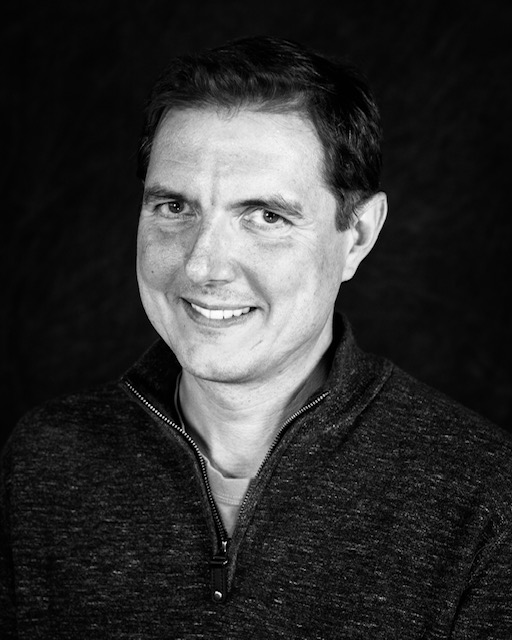
gualtiero piccinini


Department of Philosophy • University of Missouri – St. Louis

599 Lucas Hall (MC 73) 1 University Blvd. • St. Louis, MO 63121-4400

Office 314-516-6160

piccininig@umsl.edu • www.umsl.edu/~piccininig/


Employment

Assistant Professor, University of Missouri – Saint Louis, 2005-present.

James S. McDonnell Post Doctoral Research Fellow, Program in Philosophy, Neuroscience, and Psychology, Washington University in St. Louis, 2003-2005.


Visiting Positions

Visiting Assistant Professor, Politecnico di Torino, Italy, May 2007.


Education

Ph.D., History and Philosophy of Science, University of Pittsburgh, August 2003. 

B.A., Philosophy and Cognitive Science, summa cum laude, Università di Torino, Italy, 1994.


Areas of Specialization

Philosophy of Mind

Philosophy of Psychology and Neuroscience

Philosophy of Computation


Areas of Competence

Metaphysics

Philosophy of Language

Cognitive Science

History and Philosophy of Science


Edited Journal Issues

  1. Guest editor, Computational Explanation in Neuroscience, special issue of Synthese, 153.3 (2006).


Refereed Journal Articles

  1. “The Mind as Neural Software? Understanding Functionalism, Computationalism, and Computational Functionalism.”  Forthcoming in Philosophy and Phenomenological Research.  (52 pp. typescript.)
  2. “Some Neural Networks Compute, Others Don’t,” forthcoming in Neural Networks, invited submission to a special issue on “Advances in Neural Networks Research - IJCNN 2007 Orlando.”  (9,200 words.)

To be excerpted (2,300 words) in the abstract book of the XXII World Congress of Philosophy.

  1. “Computation without Representation,” forthcoming in Philosophical Studies, 137.2 (2008).  (42 pp. typescript.)
  2. “Computers,” Pacific Philosophical Quarterly, 89.1 (2008), 32-73.
  3. “Computing Mechanisms,” Philosophy of Science, 74.4 (2007), 501-526.
  4. “Computational Modeling vs. Computational Explanation: Is Everything a Turing Machine, and Does It Matter to the Philosophy of Mind?” Australasian Journal of Philosophy, 85.1 (2007), pp. 93-115.

Italian translation (slightly abridged, followed by a commentary by Simone Gozzano): “Modelli computazionali e spiegazioni computazionali,” in P. Cherubini, P. Giaretta, M. Marraffa, and A. Paternoster (eds.), Cognizione e Computazione: Problemi, metodi e prospettive delle spiegazioni computazionali nelle scienze cognitive, CLEUP, Padova (2006), pp. 103-125.

  1. “Computationalism, the Church-Turing Thesis, and the Church-Turing Fallacy,” Synthese, 154.1 (2007), pp. 97-120.
  2. “Splitting Concepts” (co-authored with Sam Scott), Philosophy of Science, 73.4 (2006), pp. 390-409 (followed by a response by Edouard Machery).
  3. “Functionalism, Computationalism, and Mental Contents,” Canadian Journal of Philosophy, 34.3 (2004), pp. 375-410.
  4. “Functionalism, Computationalism, and Mental States,” Studies in the History and Philosophy of Science, 35.4 (2004), pp. 811-833.
  5. “The First Computational Theory of Mind and Brain: A Close Look at McCulloch and Pitts’s ‘Logical Calculus of Ideas Immanent in Nervous Activity’,” Synthese, 141.2 (2004), pp. 175-215.
  6. “Data from Introspective Reports: Upgrading from Commonsense to Science,” invited submission to a special double issue of Journal of Consciousness Studies, 10.9-10 (2003), pp. 141-156. 

Reprinted in Anthony I. Jack and Andreas Roepstorff, eds., Trusting the Subject?  The Use of Introspective Evidence in Cognitive Science, Volume 1, Exeter: Imprint Academic (2003), pp. 141-156.

  1. “Epistemic Divergence and the Publicity of Scientific Methods,” Studies in the History and Philosophy of Science, 34.3 (2003), pp. 597-612.
  2. “Alan Turing and the Mathematical Objection,” Minds and Machines, 13.1 (2003), invited submission to a special issue on hypercomputation, pp. 23-48.
  3. “Turing’s Rules for the Imitation Game,” Minds and Machines, 10.4 (2000), invited submission to a special issue on the Turing test, pp. 573-582.

Reprinted in James H. Moor, ed., The Turing Test: The Elusive Standard of Artificial Intelligence, Dordrecht: Kluwer (2003), pp. 111-120.


Other Articles

  1. “Connectionist Computation.”  International Joint Conference on Neural Networks 2007 Conference Proceedings.  CD-ROM.  International Neural Network Society and IEEE Computational Intelligence Society (2007).
  2. “Allen Newell,” forthcoming in New Dictionary of Scientific Biography, Thomson Gale.  (15 pp. typescript.)
  3. “The Ontology of Creature Consciousness: A Challenge for Philosophy” (commentary on “Consciousness without a Cerebral Cortex: A Challenge for Neuroscience and Medicine,” by Björn Merker), Behavioral and Brain Sciences, 30.1 (2007), pp. 103-104.
  4. “Computational Explanation and Mechanistic Explanation of Mind,” in Cartographies of the Mind: Philosophy and Psychology in Intersection, M. de Caro, F. Ferretti, and M. Marraffa, eds., Dordrecht: Springer (2007), pp. 23-36.
  5. “Computational Explanation in Neuroscience,” Synthese, 153.3 (2006), pp. 343-353.
  6. “Artificial Intelligence,” in The Philosophy of Science: An Encyclopedia, J. Pfeifer and S. Sarkar, eds., New York: Routledge (2006), pp. 27-32.


Unpublished Manuscripts

  1. “The Physical Church-Turing Thesis: Modest or Bold?” 
  2. “First-person Data.”
  3. “Digits, Strings, and Spikes: Empirical Evidence against Computationalism.” 
  4. “Components of Computing Mechanisms and their Peculiar Functions.”
  5. “Access Denied to Zombies.”
  6. “Recovering What Is Said with Empty Names” (with Sam Scott).


Reviews

  1. Review of Describing Inner Experience? Proponent Meets Skeptic, by R. T. Hurlburt and E. Schwitzgebel, Notre Dame Philosophical Reviews (forthcoming).
  2. Review of Computationalism: New Directions, edited by M. Scheutz, Philosophical Psychology, 18.3 (2005), pp. 387-391.
  3. “The Computer That Started It All” (on Imitation of Life: How Biology Is Inspiring Computing, by N. Forbes), Cerebrum, 7.1 (2005), pp. 96-103.
  4. Review of The Computer and the Brain, by J. von Neumann, Minds and Machines, 13.2 (2003), pp. 327-332.
  5. Review of Sync: The Emerging Science of Spontaneous Order, by S. Strogatz, Popular Science, 262.4 (2003), p. 98.
  6. “Economics Takes a Run at Brain Science’s Toughest Problems” (on Decisions, Uncertainty, and the Brain: The Science of Neuroeconomics, by P. W. Glimcher), Cerebrum, 5.2 (2003), pp. 97-105.
  7. Review of The Mechanization of Mind: On the Origins of Cognitive Science, by J. Dupuy, Minds and Machines, 12.3 (2002), pp. 449-453.
  8. “The Perils of Prediction” (on The Next Fifty Years: Science in the First Half of the Twenty-First Century, edited by J. Brockman), Cerebrum, 4.2 (2002), pp. 89-98.
  9. Review of Theory and Method in the Neurosciences, edited by P. Machamer, R. Grush, and P. McLaughlin, Philosophy of Science, 68.4 (2001), pp. 584-588.
  10. “On a Critique of Strong Artificial Intelligence” (in Italian, on The Emperor's New Mind, by R. Penrose), Rivista di Filosofia, LXXXV (1994), pp. 141-146.


Refereed Presentations

1.      “Some Neural Networks Compute, Others Don’t,” XXII World Congress of Philosophy, Seoul, Korea, August 2008.

2.      “Access Denied to Zombies,” presented at:

APA Central Division, Chicago, IL, April 2008.

Tucson VII - Toward a Science of Consciousness 2006, Tucson, AZ, April 2006.

3.      “Connectionist Computation,” 2007 International Joint Conference on Neural Networks, Orlando, FL, August 2007.

4.      “Digits, Strings, and Spikes: Empirical Evidence against Computationalism,” North American Computing and Philosophy, Chicago, IL, July 2007.  Also invited at:

Modeling, Computation and Computational Science: Perspectives from Different Sciences, Helsinki, Finland, November 2007.

5.      “The Mind as Neural Software? Revisiting Functionalism, Computationalism, and Computational Functionalism.” SSPP, Atlanta, GA, April 2007.

6.      “Public Evidence from First-person Reports,” PSA Meeting, Vancouver, Canada, November 2006.  Also invited at:

University of Missouri St. Louis, October 2006.

Washington University in St. Louis, November 2006.

7.      “Splitting Concepts” (co-authored with Sam Scott), SPP, Winston-Salem, NC, June 2005.

8.      “The Functional Account of Computing Mechanisms,” SSPP, Durham, NC, March 2005.

9.      “Computation without Representation,” APA Eastern Division, Boston, MA, December 2004.

10.  “Functionalism, Computationalism, and Mental Contents,” First Joint Conference of the SPP and EuroSPP, Barcelona, Spain, July 2004.

11.  “The Mind as Neural Software:  Functionalism, Computationalism, and Computational Functionalism,” symposium session, APA Pacific Division, Pasadena, CA, March 2004.

12.  “Why Functionalism Does Not Entail Computationalism,” APA Pacific Division, San Francisco, CA, March 2003.

13.  “Is Everything a Turing Machine, and Does It Matter to the Philosophy of Mind?” APA Eastern Division, Philadelphia , PA, December 2002.

14.  “The Functional View of Computational States,” Northwest Philosophy Conference, Portland, OR, October 2002.

15.  “Computing Mechanisms II: A Functional Account,” Computing and Philosophy (CAP@CMU), Pittsburgh, PA, August 2002.

16.  “Experimental Epistemology: Warren McCulloch and the Philosophical Birth of Cognitive Science,” HOPOS 2002, Montreal, Canada, June 2002.

17.  “Computing Mechanisms I: Desiderata,” Canadian Society for the History and Philosophy of Science, Toronto, Canada, May 2002.

18.  “Mind Gauging: Introspection as a Public Epistemic Resource,” Grad Expo, University of Pittsburgh, Pittsburgh, PA, September 2001.

19.  “Turing’s Rules for the Imitation Game,” The Future of the Turing Test, Dartmouth College, Dartmouth, NH, January 2000.

20.  “Alan Turing and the Mathematical Objection,” Joint Atlantic Seminar in the History of the Physical Sciences, Washington, DC, September 1999.  Also invited at:

      Hypercomputation, University College, London, UK, May 2000.

Pugwash Conference, Carnegie Mellon University, September 1999.

Theoretical Cognition Group, University of Pittsburgh, Pittsburgh, PA, September 1999.


Invited Presentations

1.      “Computation vs. Information Processing,” Workshop on Computation in Cognitive Science, King’s College, Cambridge, UK, 7th-8th July 2008.

2.      “Mechanistic Functionalism,” Panel on Functionalism and Mechanisms, Society for the Metaphysics of Science, APA Central Division, Chicago, IL, April 2008.

3.      “The Physical Church-Turing Thesis: Modest or Bold?”  Presented at:

APA Eastern Division, New York City, December 2005.

University of Missouri – St. Louis (Department of Mathematics and Computer Science), February 2006.

4.      “Zombie Conceivability Arguments,” University of Missouri – St. Louis, October 2005.

5.      “The Functional Account of Computing Mechanisms (And Some of Its Payoff),” presented at:

University of Georgia, Athens, GA, January 2005.

Georgia State University, Atlanta, GA, January 2005.

6.      “Computational Explanation in Neuroscience,” Workshop on Computational Modeling and Explanation in Neuroscience, Washington University, St. Louis, MO, November 2004.

7.      “Computational Models and Computational Explanations” (in Italian), Cognition and Computation: Problems, Methods, and Prospects of Computational Explanations in the Cognitive Sciences, Padova, Italy, October 2004.

8.      “Computing Mechanisms,” 2nd Reichenbach Conference, St. Louis, MO, November 2003.

9.      “The First Computational Theory of Mind and Brain: A Close Look at McCulloch and Pitts’s ‘Calculus of Ideas Immanent in Nervous Activity’,” Washington University, St. Louis, MO, September 2003.

10.  “Science and Introspection,” Washington University, St. Louis, MO, September 2003.

11.  “How to Extract Scientific Data from Introspective Reports,” Università del Piemonte Orientale, Vercelli, Italy, February 2003.

12.  “The Functional Account of Computing Mechanisms,” University of Pittsburgh, Pittsburgh, PA January 2003.

13.  Commentary on “Connectionist Representation,” by David DeMoss, Northwest Philosophy Conference, Portland, OR, October 2002.

14.  “Computational Modeling of Computational Systems,” Modeling Workshop, University of Pittsburgh, Pittsburgh, PA, April 2002.

15.  “Mind-brains as Computers: Origin of an Idea at the Foundation of Psychology and Neuroscience,” Florida International University, Miami, FL, April 2001.

16.  “Epistemic Divergence, Introspection, and the Publicity of Scientific Methods,” Florida International University, Miami, FL, April 2001.


Other Media

Administrator of Brains, a group blog in the philosophy of mind, at http://philosophyofbrains.com/, December 2005-present.

Interview with KNPR – Nevada Public Radio, April 2006.


Grants

Research Board, University of Missouri, 2006-7, $10,000.

Research Award, University of Missouri – St. Louis, 2006, $10,265.

Small Grant, University of Missouri – St. Louis, 2005-6 ($1,000), 2006-7 ($500).

Doctoral Dissertation Improvement Grant, National Science Foundation, 2002-2003, $12,000.


Teaching

University of Missouri—Saint Louis

Metaphysics, spring 2008.  Advanced undergraduate survey, cross-listed with a graduate seminar.

Philosophy of Mind, spring 2008.  Advanced undergraduate survey.

Philosophy of Language, fall 2007.  Advanced undergraduate, cross-listed with a graduate seminar.  Focus on the semantics of proper names.

Topics in Philosophy of Mind—Consciousness, spring 2007.  Advanced undergraduate, cross-listed with a graduate seminar.

Topics in History and Philosophy of Science—Mechanisms and Functions, spring 2007.  Advanced undergraduate, cross-listed with a graduate seminar.

Philosophy of Cognitive Science, spring 2006.  Advanced undergraduate, cross-listed with a graduate seminar.  Focused on work by Herbert Simon and Allen Newell.

Minds, Brains, and Machines, fall 2005, fall 2007.  Introductory.

Ethics and the Computer, fall 2005 and spring 2006.  Advanced undergraduate seminar.

Topics in Philosophy of Mind—Mental Content, summer 2005.  Graduate seminar.

Politecnico di Torino

      Computation and Nature, May 2007.  Graduate seminar.

Washington University in St. Louis:

Philosophy of Mind, fall 2003 and spring 2005.  Advanced undergraduate survey.

Current Controversies in Cognitive Science—Intentionality, fall 2004 (with Sam Scott).  Advanced undergraduate seminar open to graduate students.

Theories of Concepts, fall 2004 (with Sam Scott).  Advanced undergraduate seminar open to graduate students.

Current Controversies in Cognitive Science—Computational Theories of Mind and Brain, spring 2004.  Advanced undergraduate seminar open to graduate students.

University of Pittsburgh:

Magic, Medicine, and Science, fall 2002.  Introductory.

Problem Solving: How Science Works, fall 1998.  Introductory.

Teaching assistant, Magic, Medicine and Science, spring 1998.  Introductory.

Teaching assistant, Mind and Medicine, fall 1997.  Advanced undergraduate.

Pennsylvania Governor's School for the Sciences, Carnegie Mellon University. 

Philosophy of Science, summer 2002, summer 2001, summer 2000, summer 1999.  Introductory for high school juniors.

Academic Enrichment Certificate Program, State Correctional Institution at Pittsburgh. 

Science and Religion, summer 2002.  Seminar.

Current Events, spring 2002.  Seminar.


M.A. Theses Directed

Blake Myers, in progress.

Michael Massey, “Transfer and the Fuzzy Trace Theory,” University of Missouri – St. Louis, December 2007.

Michael J. Ferreira, “Two Degrees of Intentionality: Approaching the Ascription of Psychological Content in Non-linguistic Creatures,” University of Missouri – St. Louis, July 2006.

Adam J. Arico, “Anti-individualism and Rationality,” University of Missouri – St. Louis, April 2006.


Honors

NEH Summer Seminar “Mind and Metaphysics, Washington University in St. Louis, June-July 2006.

Adelle and Erwin Tomash Fellowship, Charles Babbage Institute, 2002-2003.

Andrew Mellon Predoctoral Fellowship, University of Pittsburgh, 2001-2002.

Award for Outstanding Paper Presentation, Grad Expo, University of Pittsburgh, 2001.

Doctoral Scholarship, Regione Sardegna, Italy, 1995-1996 and renewed for the following six academic years.


Professional Service

Referee for Philosophy of Science, Australasian Journal of Philosophy, Philosophical Studies, Cognitive Science, Mind and Language, Dialectica, Studies in the History and Philosophy of Science, Journal of Consciousness Studies, Philosophical Psychology, Philosophical Explorations, Minds and Machines, IEEE Annals of the History of Computing, Journal of Intelligent Systems, Oxford University Press, Society for Philosophy and Psychology, and the Cognitive Science Society.

Organizer, Panel on “Functionalism and Mechanisms,” Society for the Metaphysics of Science, APA Central Division, Chicago, IL, April 2008 (with Carl Gillett).

Organizer, Symposium on “Can Introspective Reports Be Scientific Evidence?” PSA Meeting, Vancouver, Canada, November 2006 (with Anna Alexandrova).

Reviewer, University of Missouri Research Board Grant Application, 2005.

Organizer, PNP Medical School Lunch Seminar, 2004-2005.

Organizer, Workshop on Computational Modeling and Explanation in Neuroscience, Washington University in St. Louis, November 2004.

Organizer, WIPS (Work In Progress Sessions), Washington University, 2003-2004.